Octogenarian Israeli activist and four foreigners injured in northern West Bank when assailants arrived with crowbars, went on to burn hundreds of trees, Yesh Din says
by Jacob Magid
Gush Shalom
An 80-year-old Israeli activist said he “feared for his life” on Wednesday when a group of masked settler youth armed with crowbars charged at him and a group of largely foreign volunteers assisting Palestinian farmers with the annual olive harvest in the northern West Bank.
Rabbi Moshe Yehudai made the comments to Army Radio hours after he and fellow volunteers endured a brutal assault documented by rights groups at the scene.
Of the five volunteers who were injured, four were visiting from the US, UK and other European countries, said a field worker for the Yesh Din NGO. Yehudai, an Israeli activist from Rabbis for Human Rights, was the fifth person targeted, suffering blows to the arm and head. He was evacuated to the Meir Medical Center in Kfar Saba with a broken arm.
Rabbis for Human Rights recruits Israeli and foreign volunteers to accompany Palestinians, who say they face regular intimidation and violence while tending to crops located near settlements throughout the West Bank.
On Wednesday morning, roughly ten volunteers were assisting Palestinian farmers from the villages of Burin and Haware when a group of over 30 masked settlers descended from Yitzhar, a settlement identified by the Israeli security establishment as a hotbed for extremism, according to a Yesh Din field worker.
The Yesh Din field worker who spoke to The Times of Israel said that he arrived at the scene shortly after the assault began. After an IDF jeep was seen from a distance making its way to the field, the settler youth ignited a brushfire and retreated toward Yitzhar. At which point, the army vehicle turned around, the NGO staffer said.
Firefighter planes were dispatched to the scene to put out the fire which burned down hundreds of olive trees, some decades old, according to Yesh Din.
An IDF spokeswoman said she was looking into the incident, but was unable to provide any additional information.
A Yesh Din volunteer with wounds sustained during an altercation with settlers int he West Bank on October 16, 2019. (Courtesy Yesh Din/Lexie Botzum)
The foreign volunteers filed a report at a nearby police station in the settlement of Ariel, but a spokeswoman for law enforcement could not provide any details on whether an investigation had been opened.
A statement from Yitzhar settlement later Wednesday blamed the incident on “provocations caused by extreme-left activists,” who together with Palestinian approached the settlement, which the statement said created “a security hazard.”
Speaking from the Palestinian Red Crescent ambulance that tended to his injuries near the scene of the assault, Yehudai recalled assisting the Palestinian farmers with the other volunteers when the settlers charged at them.
“Suddenly, the settlers came with their faces [covered]. They started running at us, they surrounded me, threw rocks at me, hit me with crowbars, giving me a head injury,” he said.
“I told them I’m 80-years-old. Leave me alone,” he added, lamenting that the assailants refused to do so.
The incident came as the annual olive harvest was just beginning. More than 100,000 Palestinian families rely to some extent on the income they generate from their olives and some 18 percent of Palestinian agricultural production comes from olives, according to statistics from the United Nations Office for the Coordination of Humanitarian Affairs.
The harvest is a frequent site of clashes between Palestinians and Israeli settlers that the Israel Defense Forces says it seeks to prevent.
Palestinian media and rights groups have reported multiple cases of Israelis interfering with the annual harvest, attacking Palestinians, stealing olives and uprooting trees.
In many places, farmers say they face intimidation and violence from nearby extremist settlers and call in help from both foreign and Israeli supporters, including Jewish rabbis, to protect them and their crops.
Some of the incidents are seen as attempts at revenge following Palestinian attacks on Israelis, even if the farmers targeted were not involved.
In other cases, rights groups say, there is little motivation other than just to destroy Palestinian property.
Israeli settlers charge that their crops have also been damaged by Palestinians, including one incident in May 2018 when around 1,000 grapevines were destroyed.
Hate crime
Also Wednesday morning, residents of the central West Bank village of Deir Ammar woke up to find 10 vehicles vandalized and walls spray-painted with Hebrew slogans in the latest apparent hate crime targeting Palestinians over the Green Line.
Phrases daubed on cars and walls included: “When our brothers are being murdered, it is our obligation to not forget” and “The nation of Israel lives,” according to a Yesh Din field worker who arrived at the scene and provided photos of the damages.
Police said they were aware of the incident and were looking into the matter.
Last week, law enforcement opened an investigation after Palestinians in the northern West Bank village of Qira woke up to find 13 vehicles vandalized and Hebrew-language hate messages graffitied on walls throughout the town.
Among the phrases spray-painted in the town north of the Ariel settlement were “There is no room for enemies in Israel” and “When Jews are hurt, it is our obligation not to forget.”
Footage from security cameras in Qira caught several masked individuals walking through the village and slashing tires of a tractor and other vehicles in their path.
Abdullah Kamil, the Governor of the Salfit District in which Qira resides, told Haaretz that the Israeli government “bears responsibility for the crime and the repeated attacks by settlers.”
Despite the dozens of hate crimes targeting Palestinians and their property over the past year, few perpetrators are ever arrested or charged, according to rights groups.
The incidents, often referred to as price tag attacks, are usually limited to arson and graffiti, but have sometimes included physical assaults and even murder.
In December, the United Nations Office for the Coordination of Humanitarian Affairs released a report that showed a 69% increase in settler attacks on Palestinians in 2018 compared to 2017.
==========================================================================
Settlers attack olive harvesters, Israeli volunteers in West Bank villagehttps://972mag.com/settlers-attack-olive-harvest-west-bank/143950/
Masked settlers uproot olive trees, set groves ablaze, and beat several Israeli volunteers with stones and metal rods in the West Bank village of Burin.
Masked men from the settlement of Yitzhar wielding metal rods and stones attacked volunteers from Rabbis for Human Rights, a human rights organization based in Israel, while they were picking olives alongside Palestinian farmers in the West Bank village of Burin on Wednesday. According to a spokesperson for the organization, settlers set fire to the olive groves, causing a blaze that spread rapidly and burned for hours.
Rabbi Moshe Yehudai, a member of Rabbis for Human Rights’ board, was taken to Meir Medical Center after suffering severe wounds. He recounted the incident while lying on a gurney in an ambulance, as medics bandaged his head. One of the masked youths had hit him on the head with an iron rod, while another instructed him to leave. “I told them to leave me alone, that I am 80 years old and cannot run,” he said.
Avi Dabush, the executive director of Rabbis for Human Rights, said the incident highlighted the lawlessness in the West Bank, stressing that the volunteers would not be deterred from helping the Palestinian farmers as they harvest their olives. “For the last 17 years we have helped with the harvest, and we will continue to stand up against violent bullies,” he said, adding that this was the only way toward a peaceful joint future between Jews and Arabs living on the land.
AFP reported that Israel sent fire extinguishing planes to extinguish the fire set by the settlers. Researchers for Israeli human rights group Yesh Din estimate that the blaze consumed hundreds of acres of farmland in Burin and Huwara, both villages in the Nablus area.
The Rabbis for Human Rights spokesperson said that a group of settlers had threatened the farmers earlier in the week, threatening to beat them and vandalize their crops. The army has failed to protect the farmers from settler attacks, he noted. Israel’s occupation policies often prevent Palestinians from accessing their own lands, while violent settlers are allowed to roam freely.
Earlier on Wednesday morning, residents of the village of Deir Ammar woke up to discover that unknown vandals, most likely settlers from nearby outposts, had slashed tires and spray-painted Hebrew slogans and Stars of David on their homes and on their cars.

Showing posts with label Genocide. Show all posts
Showing posts with label Genocide. Show all posts
2019-10-18

2018-05-18
Stories of the Nakba: Exile
by Amena ElAshkar, Ali Ibrahim and Nadine Osama
Electronic Intifada
Seventy years ago, Palestinians suffered the Nakba, or catastrophe, when most fled or were forced by Zionist militias to flee Palestine to make room for the creation of the state of Israel and ensure a Jewish majority. Some 750,000 ended up as refugees registered with the United Nations. Many others fended for themselves. They were never allowed to return to their lands or homes which were confiscated by the nascent state, and many of their villages were subsequently destroyed.
Fatima Feisal, 78, Ein al-Hilweh refugee camp, Sidon, Lebanon. Originally from Tarshiha in the Galilee.
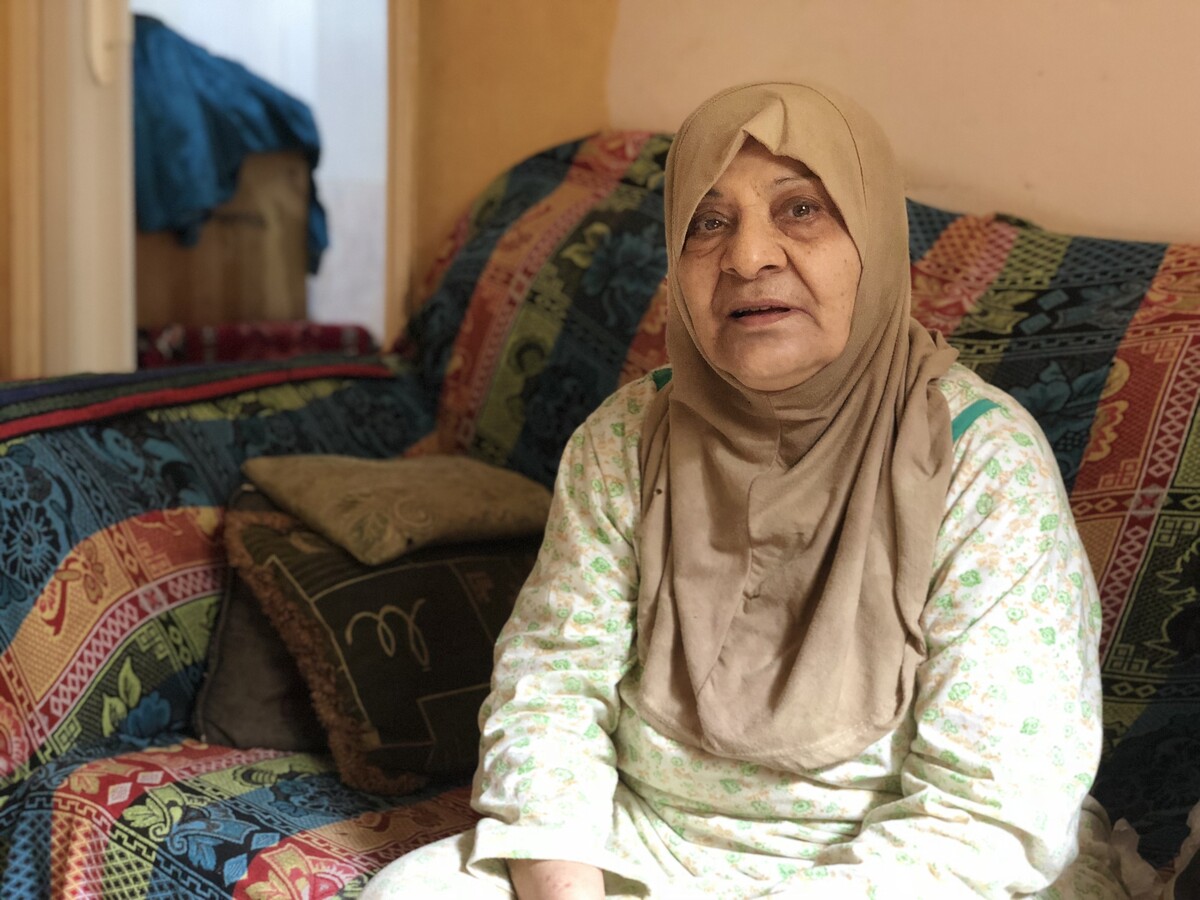 I can close my eyes and remember every single detail about that village. The streets, the neighborhood. The fig and berry trees. Every single detail. It is like I can see it right before my eyes. My family lived off farming. We had more than 100 goats. The biggest one was my favorite. I used to ride him like a bike. I called him “my bike.”
Once I was taking food for the shepherd who worked for us. The settlers saw me and asked me why I was there. I told them I was delivering food for the shepherd who was with our goats close to one of the settlements. I showed them the food, but they did not believe me. They thought I was passing information and that he was a freedom fighter. They captured him and tortured him. They burned his entire body.
I was 9 when the planes bombed Tarshiha. It was the worst night of my life. People were hiding in the mayor’s house. He was from the Huwari family and had a big house. I saw how the house got bombed. I also saw how the villagers were trying to save people from under the rubble.
I was separated from my family and my brother, Ali, and had no choice but to go look for him. He was younger than me. It was like doomsday. People running and screaming. I went to the caves on the border of the village. They were packed with people hiding from the strikes. I started calling his name. He finally answered. I held his hand and started walking away from the village. We walked for two hours to another village called Sabalan where we were reunited with our family. Then we continued on to Lebanon.
I have one last wish. I am 78. It will be my last wish. There was a berry tree right in front of our house in Tarshiha. I want to go back there and eat one berry. One last berry.
Reportage and photo by Amena ElAshkar
Naaseh Khaled Hamoudeh, 70, Wihdat Camp, Amman. Originally from Deir Tarif near Ramla.
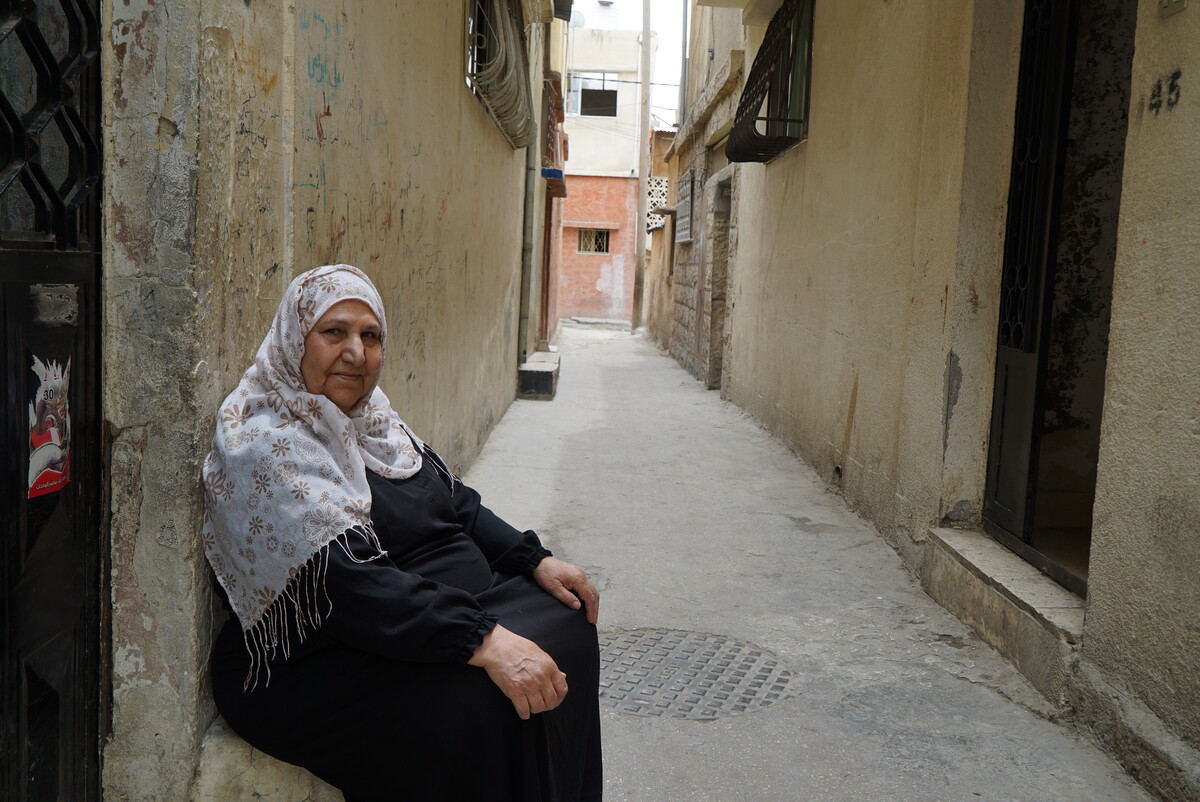 I was born in a village called Deir Tarif. My father owned camels he used to carry goods from place to place.
I was one or two months old when the Nakba happened. The villages in our area were getting attacked, one after the other, and the whole area was besieged and left with scarce food supplies. My parents went to get food from the nearest town and left me in the care of my brother and sister. My brother, at 15, was the oldest at the time. But our parents couldn’t come back because the road to our village was blocked and the Zionists were getting closer to our village.
The village mayor then gathered all the children in a big truck and drove us to a village called Shuqba. We stayed there for a while. Adults were taking care of children without parents. I was breastfed by different women with infants. We lost many on the way. My uncle and his newly engaged daughter were shot for no reason. There were corpses lying in the streets, and it was difficult to give them all a proper burial. Only the women and girls were being buried. My cousin’s corpse had to be retrieved at great risk at night.
Our parents found us after searching for days. We moved to different villages seeking food and shelter. We went to Qibya then to Kafr Thulth, then we moved to Deir Ammar.
My family went to Jordan afterwards and stayed near Wadi al-Seer in tents. Then we moved to the Wihdat camp around 1955. There were seven of us and we had to all sleep in one room. We couldn’t afford a metal roof so we covered our dwelling with a big cloth.
All my memories are from the camp. I consider it home but I will never give up my right of return. People at the camp live a hard life and suffer a lot but that also creates deep solidarity in our society. I try to be as active as I can in political and cultural activities in the camp. I joined the Arab nationalist movement in 1962 and later the Popular Front for the Liberation of Palestine. I used to host secret political meetings at my house.
I miss those days, people were more dedicated and loyal to their cause.
My son Ali went to study in Beirut. When the Israeli invasion happened, I called him and I told him he had no choice but to fight and defend Beirut. I was always worried about him but I was also equally worried about all the fighters who were defending Beirut.
Return will happen one day. The poor and the rich, the homeless and people in mansions and all different people will be able to go back. The right of return is sacred. And if I don’t live to return, you will return, my son. And if you don’t return, your children will eventually return.
Reportage by Ali Ibrahim, photo by Nadine Osama
Widad Kawar, 87, Amman. Originally from Bethlehem.
 I was born in Bethlehem, and I went to the Friends boarding school in Ramallah. I graduated a few weeks before the Nakba and was rushed home because of the escalating political situation. Some Jordanian students were escorted back to Jordan by the Jordanian army. I had to go to Jerusalem to get a taxi to Bethlehem.
After the Nakba, I went to study at the women’s college at the American University of Beirut. And when I came back, Bethlehem was a completely different place.
Bethlehem was unique in being both village and city, a place for tradition and modernity. It was a center for the many villages around it and the younger sister of Jerusalem. Women from the villages would come to our houses in Bethlehem to sell different products. I always enjoyed their wit and the liveliness with which they told stories of rural lives. The villagers also held weekly markets in the main towns on Saturdays. That’s where I originally started collecting small pieces of embroidery and later full dresses.
After the Nakba, Bethlehem was cut off from Jerusalem and many surrounding villages. Many villagers became refugees in Bethlehem, living in tiny spaces or in refugee camps. These people were accustomed to working lands they had cared for for centuries. They had different customs and traditions and different styles of embroidery that defined their identity. I started collecting these dresses along with the stories of the women behind them.
For me, Palestinian embroidery reflects identity, society and land. It reflects identity because every village in Palestine had their own style through which they proudly related to their heritage. It is a reflection of society, a kaleidoscope of diverse histories, threads, cultures and colors weaved together. The Palestinian dress tells of good old times when women were an active part of society, and in their own time would gather on breezy summer afternoons and work together on their dresses while trading expertise.
It also reflects the land because the symbols and colors were taken from the land. The cypress tree is a famous symbol that we often see in the designs of dresses. Most people used to plant cypresses around their land to mark borders and protect their crops from strong winds. The colors were usually derived from local plants, like sumac for red.
Reportage by Ali Ibrahim, photo by Nadine Osama
Khazna al-Sahli, 88, Burj al-Barajneh refugee camp, Beirut. Originally from Balad al-Sheikh near Haifa.
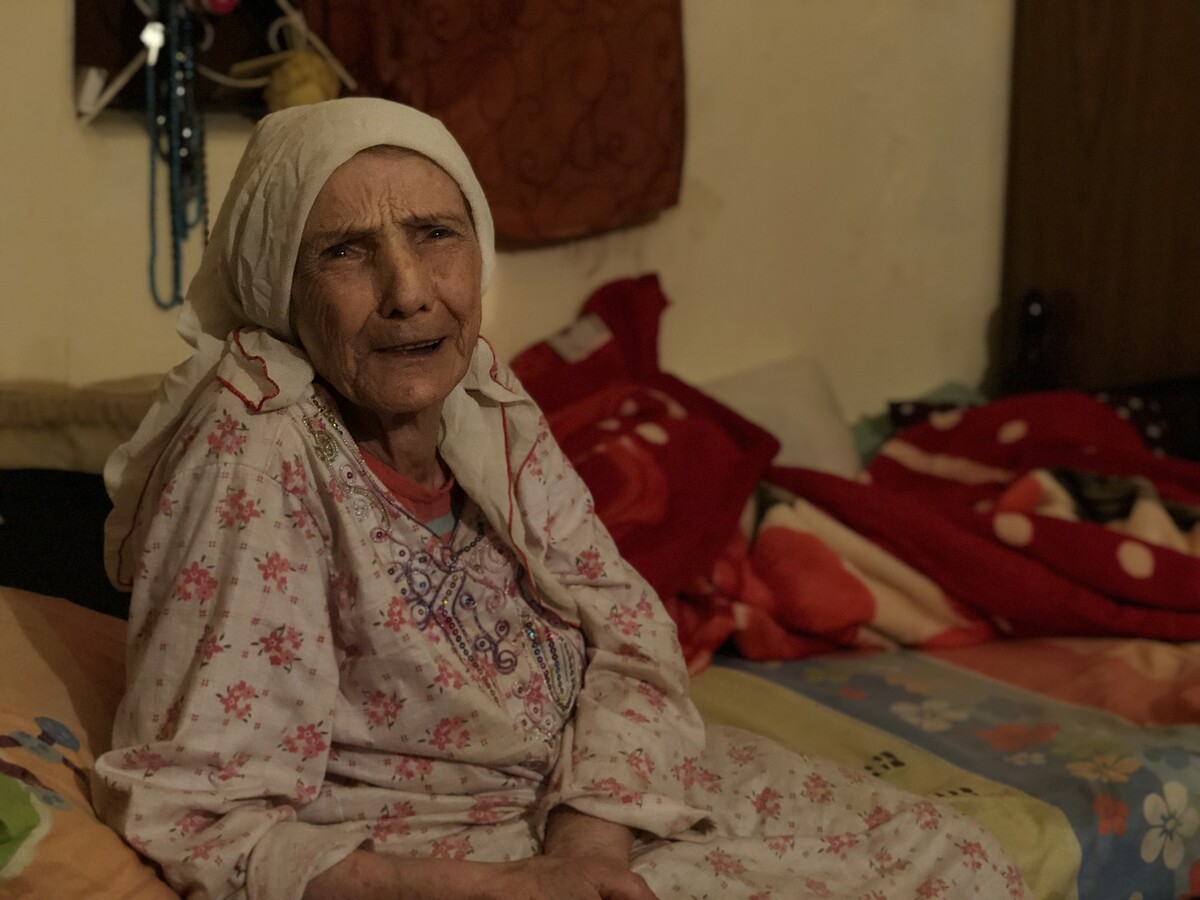 My village was so beautiful. I can still see the fields just like I can see you. We used to grow all kinds, eggplants, tomatoes, wheat. My father was a farmer, but my mother was from the city. She was from Haifa. I loved going with my father to Haifa to sell our produce. Once I could not find my slippers to go with him, so I went barefoot.
It all started when the mayor of the village came knocking at our house. He told us that the British gave everything to the Jews and now they’re coming to force us out. “You have to hide!” There had been no problems with the Jews of Neshar [a Zionist settlement] until then. The houses in the settlement looked nothing like ours. They lived in small, colored houses. The Jews sold their produce in our village and we sold ours in Neshar.
On the day we fled, the mayor came with three cars. He took us to Nazareth and from there we went to Syria, to Tel-Mnin. We stayed one whole month in a barn. Then we went to what later became known as the Yarmouk refugee camp in Damascus.
Reportage and photo by Amena ElAshkar
Wael Abdo al-Sajdi, 88, Amman. Originally from Jerusalem.
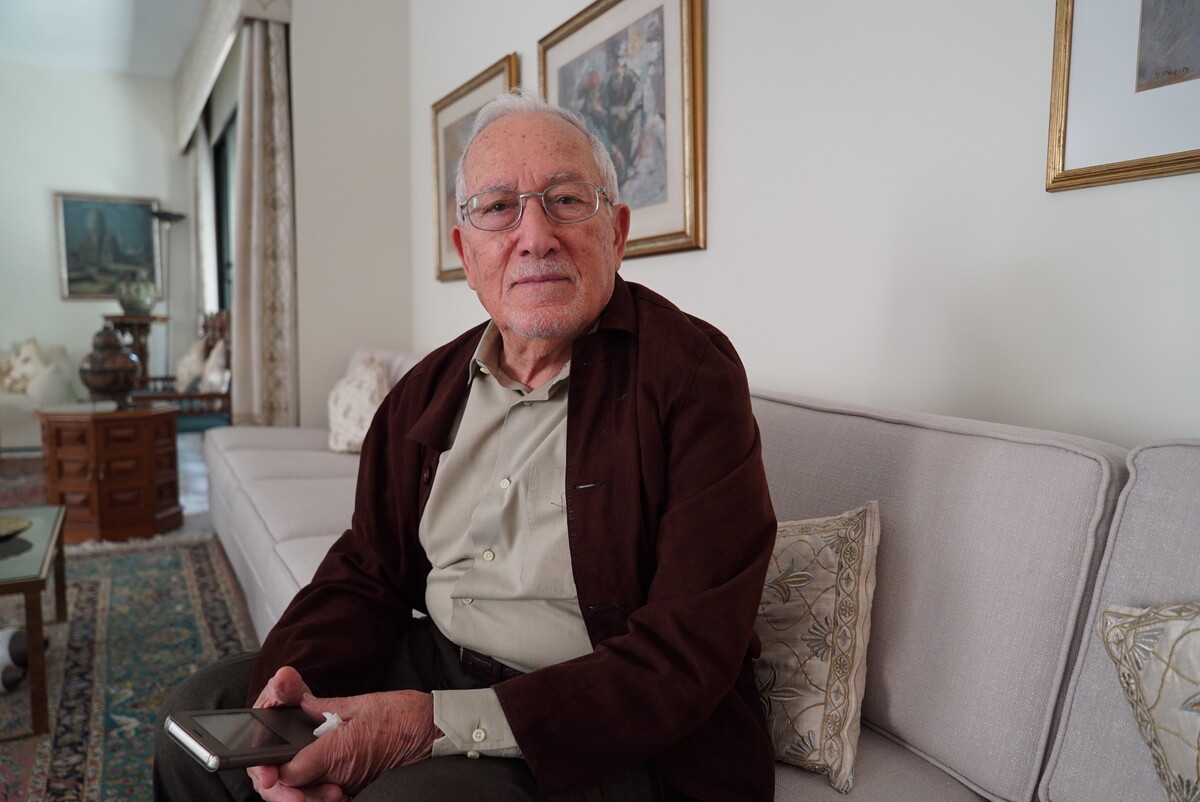 My father was a civil engineer with the British Mandate authorities and would work at different locations across Palestine. The family is originally from Nablus but I was born in Jerusalem in 1930 where my father was positioned at the time. I consider Jerusalem my home. I studied and spent my childhood there. I still remember every street and I can lead you through any path or shortcut.
The Nakba started before 1948. I remember once my father was positioned in Nablus for a year. There was an attack from the freedom fighters on British troops and they had announced a curfew in the town. I was bored, so I went to the balcony. All the streets were empty except for an armored army vehicle with a big gun on top patrolling the area.
An old man, known to the entire city to be deaf, must have not heard the curfew announcement. The soldier pointed the gun at him and warned him but he kept on walking. I still remember him falling to the ground. He was clearly not a threat but the soldier didn’t hesitate to shoot him. Nobody could remove his body until the next day.
I really wanted to visit Jerusalem in 2000 when I turned 70. It was nearly impossible to get a permit to enter the city at that time but I was determined to get in, one way or the other. I put on a quintessential Western tourist outfit -- shorts, a hat, a light shirt -- and slung my video camera around my neck. I made a point to pay full price for a shared taxi for the driver to take me through the sideroads to Jerusalem. I told him I could get us inside the city without a problem.
Unfortunately, there was a checkpoint after all. The soldiers talked to the driver, and when they asked for my ID I only responded in Italian and sign language. They believed it and let us go. I would only talk in Italian to soldiers inside the city. I went to my old house, which is now a Turkish cultural center. I asked them if I could roam around, and they agreed when I told them I used to live there with my family. I also visited my old school and restaurants I used to eat in with my family. I walked around still-familiar streets and markets.
I cried at each place.
Reportage by Ali Ibrahim, photo by Nadine Osama
------------
Amena ElAshkar is a journalist and photographer based in Burj al-Barajneh refugee camp in Beirut.
Ali Ibrahim is a journalist based in Amman.
Nadine Osama is a researcher and photographer in Amman.
Electronic Intifada
Seventy years ago, Palestinians suffered the Nakba, or catastrophe, when most fled or were forced by Zionist militias to flee Palestine to make room for the creation of the state of Israel and ensure a Jewish majority. Some 750,000 ended up as refugees registered with the United Nations. Many others fended for themselves. They were never allowed to return to their lands or homes which were confiscated by the nascent state, and many of their villages were subsequently destroyed.
Fatima Feisal, 78, Ein al-Hilweh refugee camp, Sidon, Lebanon. Originally from Tarshiha in the Galilee.
I can close my eyes and remember every single detail about that village. The streets, the neighborhood. The fig and berry trees. Every single detail. It is like I can see it right before my eyes. My family lived off farming. We had more than 100 goats. The biggest one was my favorite. I used to ride him like a bike. I called him “my bike.”Once I was taking food for the shepherd who worked for us. The settlers saw me and asked me why I was there. I told them I was delivering food for the shepherd who was with our goats close to one of the settlements. I showed them the food, but they did not believe me. They thought I was passing information and that he was a freedom fighter. They captured him and tortured him. They burned his entire body.
I was 9 when the planes bombed Tarshiha. It was the worst night of my life. People were hiding in the mayor’s house. He was from the Huwari family and had a big house. I saw how the house got bombed. I also saw how the villagers were trying to save people from under the rubble.
I was separated from my family and my brother, Ali, and had no choice but to go look for him. He was younger than me. It was like doomsday. People running and screaming. I went to the caves on the border of the village. They were packed with people hiding from the strikes. I started calling his name. He finally answered. I held his hand and started walking away from the village. We walked for two hours to another village called Sabalan where we were reunited with our family. Then we continued on to Lebanon.
I have one last wish. I am 78. It will be my last wish. There was a berry tree right in front of our house in Tarshiha. I want to go back there and eat one berry. One last berry.
Reportage and photo by Amena ElAshkar
Naaseh Khaled Hamoudeh, 70, Wihdat Camp, Amman. Originally from Deir Tarif near Ramla.
I was one or two months old when the Nakba happened. The villages in our area were getting attacked, one after the other, and the whole area was besieged and left with scarce food supplies. My parents went to get food from the nearest town and left me in the care of my brother and sister. My brother, at 15, was the oldest at the time. But our parents couldn’t come back because the road to our village was blocked and the Zionists were getting closer to our village.
The village mayor then gathered all the children in a big truck and drove us to a village called Shuqba. We stayed there for a while. Adults were taking care of children without parents. I was breastfed by different women with infants. We lost many on the way. My uncle and his newly engaged daughter were shot for no reason. There were corpses lying in the streets, and it was difficult to give them all a proper burial. Only the women and girls were being buried. My cousin’s corpse had to be retrieved at great risk at night.
Our parents found us after searching for days. We moved to different villages seeking food and shelter. We went to Qibya then to Kafr Thulth, then we moved to Deir Ammar.
My family went to Jordan afterwards and stayed near Wadi al-Seer in tents. Then we moved to the Wihdat camp around 1955. There were seven of us and we had to all sleep in one room. We couldn’t afford a metal roof so we covered our dwelling with a big cloth.
All my memories are from the camp. I consider it home but I will never give up my right of return. People at the camp live a hard life and suffer a lot but that also creates deep solidarity in our society. I try to be as active as I can in political and cultural activities in the camp. I joined the Arab nationalist movement in 1962 and later the Popular Front for the Liberation of Palestine. I used to host secret political meetings at my house.
I miss those days, people were more dedicated and loyal to their cause.
My son Ali went to study in Beirut. When the Israeli invasion happened, I called him and I told him he had no choice but to fight and defend Beirut. I was always worried about him but I was also equally worried about all the fighters who were defending Beirut.
Return will happen one day. The poor and the rich, the homeless and people in mansions and all different people will be able to go back. The right of return is sacred. And if I don’t live to return, you will return, my son. And if you don’t return, your children will eventually return.
Reportage by Ali Ibrahim, photo by Nadine Osama
Widad Kawar, 87, Amman. Originally from Bethlehem.
After the Nakba, I went to study at the women’s college at the American University of Beirut. And when I came back, Bethlehem was a completely different place.
Bethlehem was unique in being both village and city, a place for tradition and modernity. It was a center for the many villages around it and the younger sister of Jerusalem. Women from the villages would come to our houses in Bethlehem to sell different products. I always enjoyed their wit and the liveliness with which they told stories of rural lives. The villagers also held weekly markets in the main towns on Saturdays. That’s where I originally started collecting small pieces of embroidery and later full dresses.
After the Nakba, Bethlehem was cut off from Jerusalem and many surrounding villages. Many villagers became refugees in Bethlehem, living in tiny spaces or in refugee camps. These people were accustomed to working lands they had cared for for centuries. They had different customs and traditions and different styles of embroidery that defined their identity. I started collecting these dresses along with the stories of the women behind them.
For me, Palestinian embroidery reflects identity, society and land. It reflects identity because every village in Palestine had their own style through which they proudly related to their heritage. It is a reflection of society, a kaleidoscope of diverse histories, threads, cultures and colors weaved together. The Palestinian dress tells of good old times when women were an active part of society, and in their own time would gather on breezy summer afternoons and work together on their dresses while trading expertise.
It also reflects the land because the symbols and colors were taken from the land. The cypress tree is a famous symbol that we often see in the designs of dresses. Most people used to plant cypresses around their land to mark borders and protect their crops from strong winds. The colors were usually derived from local plants, like sumac for red.
Reportage by Ali Ibrahim, photo by Nadine Osama
Khazna al-Sahli, 88, Burj al-Barajneh refugee camp, Beirut. Originally from Balad al-Sheikh near Haifa.
It all started when the mayor of the village came knocking at our house. He told us that the British gave everything to the Jews and now they’re coming to force us out. “You have to hide!” There had been no problems with the Jews of Neshar [a Zionist settlement] until then. The houses in the settlement looked nothing like ours. They lived in small, colored houses. The Jews sold their produce in our village and we sold ours in Neshar.
On the day we fled, the mayor came with three cars. He took us to Nazareth and from there we went to Syria, to Tel-Mnin. We stayed one whole month in a barn. Then we went to what later became known as the Yarmouk refugee camp in Damascus.
Reportage and photo by Amena ElAshkar
Wael Abdo al-Sajdi, 88, Amman. Originally from Jerusalem.
The Nakba started before 1948. I remember once my father was positioned in Nablus for a year. There was an attack from the freedom fighters on British troops and they had announced a curfew in the town. I was bored, so I went to the balcony. All the streets were empty except for an armored army vehicle with a big gun on top patrolling the area.
An old man, known to the entire city to be deaf, must have not heard the curfew announcement. The soldier pointed the gun at him and warned him but he kept on walking. I still remember him falling to the ground. He was clearly not a threat but the soldier didn’t hesitate to shoot him. Nobody could remove his body until the next day.
I really wanted to visit Jerusalem in 2000 when I turned 70. It was nearly impossible to get a permit to enter the city at that time but I was determined to get in, one way or the other. I put on a quintessential Western tourist outfit -- shorts, a hat, a light shirt -- and slung my video camera around my neck. I made a point to pay full price for a shared taxi for the driver to take me through the sideroads to Jerusalem. I told him I could get us inside the city without a problem.
Unfortunately, there was a checkpoint after all. The soldiers talked to the driver, and when they asked for my ID I only responded in Italian and sign language. They believed it and let us go. I would only talk in Italian to soldiers inside the city. I went to my old house, which is now a Turkish cultural center. I asked them if I could roam around, and they agreed when I told them I used to live there with my family. I also visited my old school and restaurants I used to eat in with my family. I walked around still-familiar streets and markets.
I cried at each place.
Reportage by Ali Ibrahim, photo by Nadine Osama
------------
Amena ElAshkar is a journalist and photographer based in Burj al-Barajneh refugee camp in Beirut.
Ali Ibrahim is a journalist based in Amman.
Nadine Osama is a researcher and photographer in Amman.
2018-05-14
Killing Gaza
by Chris Hedges
Truthdig
 WASHINGTON, D.C.--Israel’s blockade of Gaza--where trapped Palestinians for the past seven weeks have held nonviolent protests along the border fence with Israel, resulting in more than 50 killed and 700 wounded by Israeli troops--is one of the world’s worst humanitarian disasters. Yet the horror that is Gaza, where 2 million people live under an Israeli siege without adequate food, housing, work, water and electricity, where the Israeli military routinely uses indiscriminate and disproportionate violence to wound and murder, and where almost no one can escape, is rarely documented. Max Blumenthal and Dan Cohen’s powerful new film, “Killing Gaza,” offers an unflinching and moving portrait of a people largely abandoned by the outside world, struggling to endure.
“Killing Gaza” will be released Tuesday, to coincide with what Palestinians call Nakba Day--“nakba” means catastrophe in Arabic--commemorating the 70th anniversary of the forced removal of some 750,000 Palestinians in 1948 by the Haganah, Jewish paramilitary forces, from their homes in modern-day Israel. The release of the documentary also coincides with the Trump administration’s opening of the new U.S. Embassy in Jerusalem.
● Starting Tuesday, May 15, “Killing Gaza” can be seen at Vimeo On Demand.
Because of Nakba Day and the anger over the transfer of the embassy to Jerusalem, this week is expected to be one of the bloodiest of the seven-week-long protest that Palestinians call the “Great Return March.” “Killing Gaza” illustrates why Palestinians, with little left to lose, are rising up by the thousands and risking their lives to return to their ancestral homes--70 percent of those in Gaza are refugees or the descendants of refugees--and be treated like human beings.
Cohen and Blumenthal, who is the author of the book “Goliath: Life and Loathing in Greater Israel,” one of the best accounts of modern Israel, began filming the documentary Aug. 15, 2014. Palestinian militias, armed with little more than light weapons, had just faced Israeli tanks, artillery, fighter jets, infantry units and missiles in a 51-day Israeli assault that left 2,314 Palestinians dead and 17,125 injured. Some 500,000 Palestinians were displaced and about 100,000 homes were destroyed. The 2014 assault, perhaps better described as a massacre, was one of eight massacres that Israel has carried out since 2004 against the 2 million Palestinians in Gaza, over half of whom are children. Israel, which refers to these periodic military assaults as “mowing the lawn,” seeks to make existence in Gaza so difficult that mere survival consumes most of the average Palestinian’s time, resources and energy.
The film begins in the Shuja’iyya neighborhood, reduced to mounds of rubble by the Israelis. The wanton destruction of whole neighborhoods was, as documented by the film, accompanied by the shooting of unarmed civilians by Israeli snipers and other soldiers of that nation.
“Much of the destruction took place in the course of a few hours on July 23,” Blumenthal, who narrates the film, says as destroyed buildings appear on the screen, block after block. “The invading Israeli forces found themselves under ferocious fire from local resistance forces, enduring unexpectedly high casualties. As the Israeli infantry fled in full retreat, they called in an artillery and air assault, killing at least 120 Palestinian civilians and obliterated thousands of homes.”
The film includes a brief clip of young Israelis in Tel Aviv celebrating the assault on Gaza, a reminder that toxic racism and militarism infect Israeli society.
“Die! Die! Bye!” laughing teenage girls shout at the celebration in Tel Aviv. “Bye, Palestine!”
“Fucking Arabs! Fuck Muhammad!” a young man yells.
“Gaza is a graveyard! Gaza is a graveyard! Ole, ole, ole, ole,” the crowd in Tel Aviv sings as it dances in jubilation. “There is no school tomorrow! There are no children left in Gaza!”
Terrified Palestinian families huddled inside their homes during the relentless shelling. Those who tried to escape in the face of the advancing Israelis often were gunned down with their hands in the air, and the bodies were left to rot in the scorching heat for days.
“I was inside when they started bulldozing my house,” Nasser Shamaly, a Shuja’iyya resident, says in the film. “They took down the wall and started shooting into the house. So I put my hands on my head and surrendered myself to the officer. This wasn’t just any soldier. He was the officer of the group! He didn’t say a word. He just shot me. I fell down and started crawling to get away from them.”
Shamaly, who hid wounded in his house for four days, was fortunate. His 23-year-old cousin, Salem Shamaly, who led a group of volunteers from the International Solidarity Movement to dig bodies out of the ruins in Shuja’iyya, was not.
“On the offensive’s 14th day, July 20th, 2014, four other activists and I went to the Shuja’iyya neighborhood, which Israel had bombed for days, to accompany rescue teams in the rubble during the two-hour cease-fire,” Joe Catron, one of the members of the International Solidarity Movement rescue team, says in the film. “A young Palestinian, whose name we later learned was Salem Shamaly, asked us to go with him to his house, where he hoped to find his family. It sounds ridiculous now, but at the time we thought the cease-fire would make it safe.”
“As we crossed an alley with a clear line of sight to Israeli positions by the separation barrier, a gunshot from their direction struck the ground between us. We scattered into two groups, sheltered behind buildings on either side. After a pause, Salem stepped into the alley, hoping to lead his group to our side, but was struck by another bullet. He fell to the ground.”
The film shows Shamaly wounded on the ground, barely able to move and crying out in pain.
“As he lay on his back, two more rounds hit him,” Catron continued. “He stopped moving. The gunfire kept us from reaching him. The Israeli artillery began flying overhead and striking the buildings behind us. We were forced to retreat, leaving him. We only learned his name two days later, when his mother, father, sister and cousin recognized him in a video I had tweeted.”
“We couldn’t retrieve his body for seven days,” Um Salem, the mother, says in the film. “His body was in the sun for seven days.”
Waseem Shamaly, Salem’s brother, who appears to be about 8 years old, is shown with his eyes swollen from crying. “He would take care of us, like our father,” the boy says. “Even at night, he would get us whatever we wanted. He used to buy us everything. Whatever we wished for, he would buy it. There was nothing he wouldn’t buy for us. He used to take us to hang out. He’d take us out with him just to kill our boredom a little.”
Waseem wipes his eyes.
“Now he is gone,” he continues weakly. “There is nobody to take us out and buy us treats.”
“This boy hasn’t been able to handle losing his brother,” says the father, Khalil Shamaly. “He couldn’t handle the news, seeing the way his brother died. He is in shock. It gets to the point where he goes lifeless. He collapses. When I pick him up he tells me his dying wishes. His dying wishes! As if he is leaving us. He is so young. But he gives us his dying wishes. If it weren’t for God’s mercy, I would have lost him too.”
“Destroyed cities and shattered homes can be rebuilt if the resources are there,” Blumenthal says. “But what about the survivors? How can they heal the scars imposed on their psyches? The youth of Gaza has grown up through three wars, each more devastating than the last. At least 90 percent of adolescents in Gaza suffer from post-traumatic stress disorder. With mental health services pushed to the brink, these unseen scars may never heal.”
The film turns to the town of Khuza’a, a farming community with 20,000 people, which was systematically blown up by Israel after three Israeli soldiers were killed in fighting with the al-Qassam Brigades, the armed wing of the ruling Hamas government in Gaza. The film shows a video from inside an Israeli tank as soldiers wait for explosives to bring down buildings in the town, including the mosque. When the explosions occur, the Israeli soldiers cheer and shout, “Long live the state of Israel!”
“We were shocked to see so many bodies in the streets,” Ahmed Awwad, a volunteer with the Palestinian Red Crescent, says in the film about Khuza’a. “Many were decomposing. We wanted to deal with it, but we didn’t know how. Once, when the Israelis let us in with our ambulance, we found about 10 corpses from different areas, scattered. As you approached a body, of course there is the odor, and there are worms. Hold it like this, and flesh comes off. Lift an arm and it pulls right off. We didn’t know what to do. There was nothing we could do. We had to stop. It would have been easier just to bury them. But we figured families would want the bodies. Bulldozers eventually loaded the bodies in trucks. We couldn’t pick up these bodies on our own. Most were executions, like an old lady at her front door. There was a young man, another man, and a little kid. The scenes, to be honest, were very ugly.”
The Rjeila family, including 16-year-old Ghadeer, who was physically disabled, attempts to escape the shelling. As a brother frantically pushes Ghadeer in her wheelchair (the scene, like several others in the film, is reconstructed through animation), the Israelis open fire. The brother is wounded. Ghadeer is killed.
The camera pans slowly through demolished houses containing blackened human remains. Walls and floors are smeared with blood.
Ahmed Awwad, a Palestinian Red Crescent volunteer, describes what happened after he and other volunteers finally receive permission from Israeli forces to retrieve bodies from Khuza’a. They find a man tied to a tree and shot in both legs. One of the volunteers, Mohammed al-Abadla, gets out of a vehicle and approaches the tree. When he switches on his flashlight, which the Israelis had instructed him to do, he is shot in heart and killed.
“For 51 days, Israel bombarded Gaza with the full might of its artillery,” Blumenthal says. “According to the Israeli military’s estimates, 23,410 artillery shells and 2.9 million bullets were fired into Gaza during the war.”
That’s one and a half bullets for every man, woman and child in the Gaza Strip.
There is footage of Israeli soldiers in an artillery unit writing messages, including “Happy Birthday to Me,” on shells being lobbed into Gaza. The soldiers laugh and eat sushi as they pound Palestinian neighborhoods with explosives.
Rafah is a city in Gaza on the border of Egypt. The film makes it clear that Egypt, through its sealing of Gaza’s southern border, is complicit in the blockade. Rafah was one of the first cities targeted by the Israelis. When Israeli troops took over buildings, they also kidnapped Palestinians and used them as human shields there and elsewhere, forcing them to stand at windows as the soldiers fired from behind.
“They blindfolded and handcuffed me and took me inside,” Mahmoud Abu Said says in the film. “They told me to come with them and put a M16 to my back. There were maybe six of them. They dropped their equipment and began searching. They started hitting me against the wall. And then sicced their dogs on me while I was handcuffed.”
“They put me here,” he says, standing in front of a window, “and stood behind me. Israeli soldiers placed me here while they stood behind me shooting. They took me to that window and that window too. Then they hit me against the wall and pushed me down. They put a mattress here,” he says, showing holes punched through the wall at floor level, “and sat down to shoot through these holes.”
“You see that car?” asks Suleiman Zghreibv, referring to a hunk of twisted metal that lies next to the ruins of his house. “He drove it,” he says of his 22-year-old son, who was executed by the Israelis. “This is the car we used to make our living. It wasn’t for personal use. It was a taxi. I can’t describe the suffering. What can I say? Words can’t express the pain. We have suffered and resisted for so long. We’ve been suffering our whole lives. We’ve suffered for the past 60 years because of Israel. War after war after war. Bombing after bombing after bombing. You build a house. They destroy it. You raise a child. They kill him. Whatever they do--the United States, Israel, the whole world, we’ll keep resisting until the last one of us dies.”
Israel intentionally targeted power plants, schools, medical clinics, apartment complexes, whole villages. Robert Piper, the United Nations Coordinator for Humanitarian Aid and Development Activities, said in 2017 that Gaza had “a long time ago” passed the “unlivability threshold.” Youth unemployment is at 60 percent. Suicide is epidemic. Traditional social structures and mores are fracturing, with divorce rising from 2 percent to 40 percent and girls and women increasingly being prostituted, something once seen only rarely in Gaza. Seventy percent of the 2 million Gazans survive on humanitarian aid packages of sugar, rice, milk and cooking oil. The U.N. estimates that 97 percent of Gaza’s water is contaminated. Israel’s destruction of Gaza’s sewage treatment plant means raw sewage is pumped into the sea, contaminating the beach, one of the very few respites for a trapped population. The Israelis did not even spare Gaza’s little zoo, slaughtering some 45 animals in the 2014 assault.
“I liked the monkeys best,” says a forlorn Ali Qasem, who worked at the zoo. “We laughed with them the most. We would laugh and play with them. They would take food right from your hand. They’d respond the most. There is a heavy feeling of sorrow. I used to spend 18 hours a day here. I was here all the time. I’d go home for five or six hours, then come back. I worked here as a volunteer. A few volunteers built this place little by little. We were excited to finish and invite visitors for free. To me, it was like humans were killed. It’s not OK because they were animals. It’s as if they were human beings, people we know. We used to bring them food from our homes.”
The film shows Palestinians, who have received little reconstruction aid despite pledges by international donors, camping out amid the ruins of homes, gathered around small fires for heat and light. Moeen Abu Kheysi, 54, gives a tour of the smashed house he had spent his life constructing for his family. He stops when he comes upon his 3-month-old grandson, Wadie. His face lights up in delight.
“Months passed and the cold rains of winter gave way to baking heat of spring,” Blumenthal says. “In Shuja’iyya, the Abu Kheysi family was still living in remnants of their home, but without their newest member. Born during the war, little Wadie did not make it through the harsh winter.”
“He was born during the war and he died during the war, well after the war,” a female member of the family explains. “He lived in a room without a wall. We covered the wall with tin sheets. We moved, but then we got kicked out. We couldn’t make rent. [We] had to come back, cover the wall and live here. Then the baby froze to death. It was very cold.”
“One day it suddenly became very cold,” Wadie’s mother says. “Wadie woke up at 9 in the morning. I started playing with him, gave him a bottle. Suddenly, he was shivering from the cold. I tried to warm him up but it wasn’t working.”
She begins to weep.
“There wasn’t even time to get to the hospital,” she says. “He stopped breathing before they left the house. His heart stopped beating instantly. His father started running in the street with him. He fainted when they yelled, “The baby is dead!” The baby’s uncle took over and carried him. He looked everywhere for a taxi but couldn’t find one. We couldn’t give him first aid ourselves. They finally found a car. They did all they could at the hospital, but he never woke up. He was dead. What can I say? We remember him all the time. I can’t get him off my mind. It’s as if I lost a piece of my heart. His sisters want to sleep in his cradle and wear his clothes. This one always asks to wear her brother’s clothes. We can’t forget him.”
“Grandpa!” Wadie’s small sister cries out. “Mama is crying again.”
Truthdig
“Killing Gaza” will be released Tuesday, to coincide with what Palestinians call Nakba Day--“nakba” means catastrophe in Arabic--commemorating the 70th anniversary of the forced removal of some 750,000 Palestinians in 1948 by the Haganah, Jewish paramilitary forces, from their homes in modern-day Israel. The release of the documentary also coincides with the Trump administration’s opening of the new U.S. Embassy in Jerusalem.
● Starting Tuesday, May 15, “Killing Gaza” can be seen at Vimeo On Demand.
Because of Nakba Day and the anger over the transfer of the embassy to Jerusalem, this week is expected to be one of the bloodiest of the seven-week-long protest that Palestinians call the “Great Return March.” “Killing Gaza” illustrates why Palestinians, with little left to lose, are rising up by the thousands and risking their lives to return to their ancestral homes--70 percent of those in Gaza are refugees or the descendants of refugees--and be treated like human beings.
Cohen and Blumenthal, who is the author of the book “Goliath: Life and Loathing in Greater Israel,” one of the best accounts of modern Israel, began filming the documentary Aug. 15, 2014. Palestinian militias, armed with little more than light weapons, had just faced Israeli tanks, artillery, fighter jets, infantry units and missiles in a 51-day Israeli assault that left 2,314 Palestinians dead and 17,125 injured. Some 500,000 Palestinians were displaced and about 100,000 homes were destroyed. The 2014 assault, perhaps better described as a massacre, was one of eight massacres that Israel has carried out since 2004 against the 2 million Palestinians in Gaza, over half of whom are children. Israel, which refers to these periodic military assaults as “mowing the lawn,” seeks to make existence in Gaza so difficult that mere survival consumes most of the average Palestinian’s time, resources and energy.
The film begins in the Shuja’iyya neighborhood, reduced to mounds of rubble by the Israelis. The wanton destruction of whole neighborhoods was, as documented by the film, accompanied by the shooting of unarmed civilians by Israeli snipers and other soldiers of that nation.
“Much of the destruction took place in the course of a few hours on July 23,” Blumenthal, who narrates the film, says as destroyed buildings appear on the screen, block after block. “The invading Israeli forces found themselves under ferocious fire from local resistance forces, enduring unexpectedly high casualties. As the Israeli infantry fled in full retreat, they called in an artillery and air assault, killing at least 120 Palestinian civilians and obliterated thousands of homes.”
The film includes a brief clip of young Israelis in Tel Aviv celebrating the assault on Gaza, a reminder that toxic racism and militarism infect Israeli society.
“Die! Die! Bye!” laughing teenage girls shout at the celebration in Tel Aviv. “Bye, Palestine!”
“Fucking Arabs! Fuck Muhammad!” a young man yells.
“Gaza is a graveyard! Gaza is a graveyard! Ole, ole, ole, ole,” the crowd in Tel Aviv sings as it dances in jubilation. “There is no school tomorrow! There are no children left in Gaza!”
Terrified Palestinian families huddled inside their homes during the relentless shelling. Those who tried to escape in the face of the advancing Israelis often were gunned down with their hands in the air, and the bodies were left to rot in the scorching heat for days.
“I was inside when they started bulldozing my house,” Nasser Shamaly, a Shuja’iyya resident, says in the film. “They took down the wall and started shooting into the house. So I put my hands on my head and surrendered myself to the officer. This wasn’t just any soldier. He was the officer of the group! He didn’t say a word. He just shot me. I fell down and started crawling to get away from them.”
Shamaly, who hid wounded in his house for four days, was fortunate. His 23-year-old cousin, Salem Shamaly, who led a group of volunteers from the International Solidarity Movement to dig bodies out of the ruins in Shuja’iyya, was not.
“On the offensive’s 14th day, July 20th, 2014, four other activists and I went to the Shuja’iyya neighborhood, which Israel had bombed for days, to accompany rescue teams in the rubble during the two-hour cease-fire,” Joe Catron, one of the members of the International Solidarity Movement rescue team, says in the film. “A young Palestinian, whose name we later learned was Salem Shamaly, asked us to go with him to his house, where he hoped to find his family. It sounds ridiculous now, but at the time we thought the cease-fire would make it safe.”
“As we crossed an alley with a clear line of sight to Israeli positions by the separation barrier, a gunshot from their direction struck the ground between us. We scattered into two groups, sheltered behind buildings on either side. After a pause, Salem stepped into the alley, hoping to lead his group to our side, but was struck by another bullet. He fell to the ground.”
The film shows Shamaly wounded on the ground, barely able to move and crying out in pain.
“As he lay on his back, two more rounds hit him,” Catron continued. “He stopped moving. The gunfire kept us from reaching him. The Israeli artillery began flying overhead and striking the buildings behind us. We were forced to retreat, leaving him. We only learned his name two days later, when his mother, father, sister and cousin recognized him in a video I had tweeted.”
“We couldn’t retrieve his body for seven days,” Um Salem, the mother, says in the film. “His body was in the sun for seven days.”
Waseem Shamaly, Salem’s brother, who appears to be about 8 years old, is shown with his eyes swollen from crying. “He would take care of us, like our father,” the boy says. “Even at night, he would get us whatever we wanted. He used to buy us everything. Whatever we wished for, he would buy it. There was nothing he wouldn’t buy for us. He used to take us to hang out. He’d take us out with him just to kill our boredom a little.”
Waseem wipes his eyes.
“Now he is gone,” he continues weakly. “There is nobody to take us out and buy us treats.”
“This boy hasn’t been able to handle losing his brother,” says the father, Khalil Shamaly. “He couldn’t handle the news, seeing the way his brother died. He is in shock. It gets to the point where he goes lifeless. He collapses. When I pick him up he tells me his dying wishes. His dying wishes! As if he is leaving us. He is so young. But he gives us his dying wishes. If it weren’t for God’s mercy, I would have lost him too.”
“Destroyed cities and shattered homes can be rebuilt if the resources are there,” Blumenthal says. “But what about the survivors? How can they heal the scars imposed on their psyches? The youth of Gaza has grown up through three wars, each more devastating than the last. At least 90 percent of adolescents in Gaza suffer from post-traumatic stress disorder. With mental health services pushed to the brink, these unseen scars may never heal.”
The film turns to the town of Khuza’a, a farming community with 20,000 people, which was systematically blown up by Israel after three Israeli soldiers were killed in fighting with the al-Qassam Brigades, the armed wing of the ruling Hamas government in Gaza. The film shows a video from inside an Israeli tank as soldiers wait for explosives to bring down buildings in the town, including the mosque. When the explosions occur, the Israeli soldiers cheer and shout, “Long live the state of Israel!”
“We were shocked to see so many bodies in the streets,” Ahmed Awwad, a volunteer with the Palestinian Red Crescent, says in the film about Khuza’a. “Many were decomposing. We wanted to deal with it, but we didn’t know how. Once, when the Israelis let us in with our ambulance, we found about 10 corpses from different areas, scattered. As you approached a body, of course there is the odor, and there are worms. Hold it like this, and flesh comes off. Lift an arm and it pulls right off. We didn’t know what to do. There was nothing we could do. We had to stop. It would have been easier just to bury them. But we figured families would want the bodies. Bulldozers eventually loaded the bodies in trucks. We couldn’t pick up these bodies on our own. Most were executions, like an old lady at her front door. There was a young man, another man, and a little kid. The scenes, to be honest, were very ugly.”
The Rjeila family, including 16-year-old Ghadeer, who was physically disabled, attempts to escape the shelling. As a brother frantically pushes Ghadeer in her wheelchair (the scene, like several others in the film, is reconstructed through animation), the Israelis open fire. The brother is wounded. Ghadeer is killed.
The camera pans slowly through demolished houses containing blackened human remains. Walls and floors are smeared with blood.
Ahmed Awwad, a Palestinian Red Crescent volunteer, describes what happened after he and other volunteers finally receive permission from Israeli forces to retrieve bodies from Khuza’a. They find a man tied to a tree and shot in both legs. One of the volunteers, Mohammed al-Abadla, gets out of a vehicle and approaches the tree. When he switches on his flashlight, which the Israelis had instructed him to do, he is shot in heart and killed.
“For 51 days, Israel bombarded Gaza with the full might of its artillery,” Blumenthal says. “According to the Israeli military’s estimates, 23,410 artillery shells and 2.9 million bullets were fired into Gaza during the war.”
That’s one and a half bullets for every man, woman and child in the Gaza Strip.
There is footage of Israeli soldiers in an artillery unit writing messages, including “Happy Birthday to Me,” on shells being lobbed into Gaza. The soldiers laugh and eat sushi as they pound Palestinian neighborhoods with explosives.
Rafah is a city in Gaza on the border of Egypt. The film makes it clear that Egypt, through its sealing of Gaza’s southern border, is complicit in the blockade. Rafah was one of the first cities targeted by the Israelis. When Israeli troops took over buildings, they also kidnapped Palestinians and used them as human shields there and elsewhere, forcing them to stand at windows as the soldiers fired from behind.
“They blindfolded and handcuffed me and took me inside,” Mahmoud Abu Said says in the film. “They told me to come with them and put a M16 to my back. There were maybe six of them. They dropped their equipment and began searching. They started hitting me against the wall. And then sicced their dogs on me while I was handcuffed.”
“They put me here,” he says, standing in front of a window, “and stood behind me. Israeli soldiers placed me here while they stood behind me shooting. They took me to that window and that window too. Then they hit me against the wall and pushed me down. They put a mattress here,” he says, showing holes punched through the wall at floor level, “and sat down to shoot through these holes.”
“You see that car?” asks Suleiman Zghreibv, referring to a hunk of twisted metal that lies next to the ruins of his house. “He drove it,” he says of his 22-year-old son, who was executed by the Israelis. “This is the car we used to make our living. It wasn’t for personal use. It was a taxi. I can’t describe the suffering. What can I say? Words can’t express the pain. We have suffered and resisted for so long. We’ve been suffering our whole lives. We’ve suffered for the past 60 years because of Israel. War after war after war. Bombing after bombing after bombing. You build a house. They destroy it. You raise a child. They kill him. Whatever they do--the United States, Israel, the whole world, we’ll keep resisting until the last one of us dies.”
Israel intentionally targeted power plants, schools, medical clinics, apartment complexes, whole villages. Robert Piper, the United Nations Coordinator for Humanitarian Aid and Development Activities, said in 2017 that Gaza had “a long time ago” passed the “unlivability threshold.” Youth unemployment is at 60 percent. Suicide is epidemic. Traditional social structures and mores are fracturing, with divorce rising from 2 percent to 40 percent and girls and women increasingly being prostituted, something once seen only rarely in Gaza. Seventy percent of the 2 million Gazans survive on humanitarian aid packages of sugar, rice, milk and cooking oil. The U.N. estimates that 97 percent of Gaza’s water is contaminated. Israel’s destruction of Gaza’s sewage treatment plant means raw sewage is pumped into the sea, contaminating the beach, one of the very few respites for a trapped population. The Israelis did not even spare Gaza’s little zoo, slaughtering some 45 animals in the 2014 assault.
“I liked the monkeys best,” says a forlorn Ali Qasem, who worked at the zoo. “We laughed with them the most. We would laugh and play with them. They would take food right from your hand. They’d respond the most. There is a heavy feeling of sorrow. I used to spend 18 hours a day here. I was here all the time. I’d go home for five or six hours, then come back. I worked here as a volunteer. A few volunteers built this place little by little. We were excited to finish and invite visitors for free. To me, it was like humans were killed. It’s not OK because they were animals. It’s as if they were human beings, people we know. We used to bring them food from our homes.”
The film shows Palestinians, who have received little reconstruction aid despite pledges by international donors, camping out amid the ruins of homes, gathered around small fires for heat and light. Moeen Abu Kheysi, 54, gives a tour of the smashed house he had spent his life constructing for his family. He stops when he comes upon his 3-month-old grandson, Wadie. His face lights up in delight.
“Months passed and the cold rains of winter gave way to baking heat of spring,” Blumenthal says. “In Shuja’iyya, the Abu Kheysi family was still living in remnants of their home, but without their newest member. Born during the war, little Wadie did not make it through the harsh winter.”
“He was born during the war and he died during the war, well after the war,” a female member of the family explains. “He lived in a room without a wall. We covered the wall with tin sheets. We moved, but then we got kicked out. We couldn’t make rent. [We] had to come back, cover the wall and live here. Then the baby froze to death. It was very cold.”
“One day it suddenly became very cold,” Wadie’s mother says. “Wadie woke up at 9 in the morning. I started playing with him, gave him a bottle. Suddenly, he was shivering from the cold. I tried to warm him up but it wasn’t working.”
She begins to weep.
“There wasn’t even time to get to the hospital,” she says. “He stopped breathing before they left the house. His heart stopped beating instantly. His father started running in the street with him. He fainted when they yelled, “The baby is dead!” The baby’s uncle took over and carried him. He looked everywhere for a taxi but couldn’t find one. We couldn’t give him first aid ourselves. They finally found a car. They did all they could at the hospital, but he never woke up. He was dead. What can I say? We remember him all the time. I can’t get him off my mind. It’s as if I lost a piece of my heart. His sisters want to sleep in his cradle and wear his clothes. This one always asks to wear her brother’s clothes. We can’t forget him.”
“Grandpa!” Wadie’s small sister cries out. “Mama is crying again.”
2017-11-30
The True Story of Pocahontas: Historical Myths Versus Sad Reality
Indian Country Today
Pocahontas had a Native husband and Native child; never married John Smith
Despite what many people believe due to longstanding and inaccurate accounts in history books and movies such as Disney’s Pocahontas, the true story of Pocahontas is not one of a young Native Powhatan woman with a raccoon friend who dove off of mountain-like cliffs off the coasts of Virginia. (Note: there are no cliffs on the coast of Virginia.)
The true story of Pocahontas is a tale of tragedy and heartbreak.

Disney / Everett Collection
Disney’s Pocahontas -Buena Vista/courtesy Everett Collection
It is time to bust up the misconceptions perpetuated over 400 years regarding the young daughter of Powhatan chief Wahunsenaca. The truth—gathered from years of extensive research of the historical record, books, and oral histories from self-identified descendants of Pocahontas and tribal peoples of Virginia —is not for the faint of heart.
A Warning To Our Readers: Mature Subject Matter Not Suitable for Children
The story of Pocahontas is a tragic tale of a young Native girl who was kidnapped, sexually assaulted and allegedly murdered by those who were supposed to keep her safe.
Pocahontas’ Mother, Also Named Pocahontas, Died While Giving Birth to Her
This is in many historical accounts, though not always. It is important to note that Pocahontas was born to her mother, named Pocahontas and her father Wahunsenaca, (sometimes spelled Wahunsenakah), who later became the paramount chief.

Her name at birth was Matoaka, which means “flower between two streams,” and according to Mattaponi history was likely given to her because she was born between the two rivers of Mattaponi and Pamunkey (York).

iStock
An image of a young Pocahontas.
Due to his wife’s death, Wahunsenaca was devastated and little Matoaka became his favorite because she looked like her mother. She was raised by her aunts and other women of the Mattaponi tribe at Werowocomoco.
As was custom at the time, as the Paramount Chief of the Powhatan Chiefdom, Wahunsenaca had other wives from the other villages and little Matoaka had many loving brothers and sisters.
Because of his lingering grief and due to the reminder she gave to him of her mother, Wahunsenaca often called his daughter the endearing name of Pocahontas.
John Smith Came to the Powhatan When Pocahontas Was about 9 or 10
According to Mattaponi oral history, little Matoaka was possibly about 10 years old when John Smith and English colonists arrived in Tsenacomoca in the spring of 1607. John Smith was about 27 years old. They were never married nor involved.
Pocahontas Never Saved the Life of John Smith
The children of the Powhatan were very closely watched and cared for by all members of the tribe. Since Pocahontas was living with her father, Chief Powhatan Wahunsenaca, at Werowocomoco, and because she was the daughter of a chief, she was likely held to even stricter standards and provided with more structure and cultural training.
When she was a child, John Smith and English colonists stayed near the Powhatan on the nearby Jamestown Island, but later began to explore outlying areas. Smith was feared by many Native people because he was known to enter villages and put guns to heads of chiefs demanding food and supplies.
In the winter of 1607, the colonists and Smith met with Powhatan warriors and Smith was captured by the chief’s younger brother.
Because the English and Powhatan feared the actions of the Spanish, they formed an alliance. Eventually and according to oral history and contemporary written accounts by the Mattaponi, Wahunsenaca grew to like Smith, eventually offering him the position of ‘werowance’ or leader of the colonists as recognized by the Powhatan as well as a much more livable area for his people with great access to game and seafood.

AP Images
A portrait of Pocahontas saving the life of John Smith with Father Wahunsenaca. Oral history from the descendants of Pocahontas dictate such a thing could never have happened.
Years later, Smith alleged that Pocahontas saved his life in the four-day process of becoming a werowance. But according to Mattaponi oral and contemporary written accounts, there would be no reason to kill a man designated to receive an honor by the chief.
Additionally, children were not allowed to attend any sort of religious ritual similar to the werowance ceremony.
She could not have thrown herself in front of John Smith to beg for his life for two reasons: Smith was being honored, and she would not have been allowed to be there.
Pocahontas Never Defied Her Father to Bring Food to John Smith or Jamestown

Library of Congress
Captain John Smith.
Some historical accounts claim Pocahontas defied her father to bring food to the colonists of Jamestown. According to the history of the Mattaponi tribe as well as simple facts, these claims could not be true.
Jamestown was 12 miles from Werowocomoco and the likelihood that a 10-year-old daughter would travel alone are inconsistent with Powhatan culture. She as well as other tribal members did travel to Jamestown, but as a gesture of peace.
Additionally, travel to Jamestown required crossing large bodies of water and the use of 400-pound dugout canoes. It took a team of strong people to lift them into the water.
It is likely Pocahontas served as a symbol of peace by simply being present as a child among her people to show no ill intentions when her people met with the Jamestown settlers.
Pocahontas Did Not Sneak Into Jamestown to Warn John Smith About a Death Plot
In 1608 and 1609, John Smith’s role as the werowance (chief) of the colonists had taken an ugly turn. The colonists made inadequate attempts to plant crops to harvest, and Smith violently demanded supplies from surrounding villages after once again holding a gun to the heads of village leaders.
Accounts from Mattaponi histories tell of one tribal woman proclaiming to Smith, “You call yourself a Christian, yet you leave us with no food for the winter.”
Pocahontas’ father, who had befriended Smith, once said to him, “I have not treated any of my werowances as well as you, yet you are the worst werowance I have!”
Smith claimed Wahunsenaca wanted to kill him, and asserted he knew of the plot because Pocahontas had come to warn him.
Due to the icy conditions at the time and because of the many watchful eyes attending to the daughter of a chief, as well as gestures of peace by the Powhatan to include additional provisions, Native historians rebuff the historical claims of Smith as completely fabricated.
To further prove Smith’s tale was a fabrication, a letter by Smith written in 1608 was published without Smith’s knowledge. The letter makes no claim of Pocahontas trying to save his life on two separate occasions. It wasn’t until Smith published his book General Historie of Virginia in 1624 that he claimed Pocahontas had twice saved his life. Any of the people who could have refuted Smith’s claims by that time were no longer alive.
As Colonists Terrorized Native People, Pocahontas Married and Became Pregnant
The early 1600’s were a horrible time for tribes near Werowocomoco. Native tribes once comfortable wearing clothing suitable for summer — including exposed breasts for Native women and little or nothing for children — found themselves being sexually targeted by English colonists.
Young children were targets of rape and Native women in the tribe would resort to offering themselves to men to keep their children safe. The Powhatan people were shocked by the behavior and were horrified that the English government offered them no protections.
In the midst of the horrible and atrocious acts committed by the colonists, Matoaka was coming of age. During a ceremony, Matoaka was to choose a new name, and she selected Pocahontas, after her mother. During a courtship dance, it is likely she danced with Kocoum, the younger brother of Potowomac Chief Japazaw.
She married the young warrior at about 14 and soon became pregnant.
It was at this time rumors began to surface that colonists planned to kidnap the beloved chief’s daughter Pocahontas.
Pocahontas Was Kidnapped, Her Husband Was Murdered and She Was Forced to Give Up Her First Child
When Pocahontas was about 15 or 16, the rumors of a possible kidnapping had become more of a threat and she was living with her husband Kocoum at his Potowomac village.
An English colonist by the name of Captain Samuel Argall sought to find her, thinking that a captured daughter of the chief would thwart attacks by Natives.
Hearing of her whereabouts, Argall came to the village and demanded Chief Japazaw, brother of Pocahontas’ husband, to give up Pocahontas or suffer violence against his village. Overcome with grief at a horrible choice, he relented with a hopeful promise that she would only be gone temporarily. That was a promise Argall quickly broke.
Before Argall left the village, he gave Chief Japazaw a copper pot. He later claimed to have traded it for her. This “trade” is still taught by historians. This is akin to the way that Smith ‘traded’ for corn by holding a gun to the heads of chiefs.
Before leaving the village, Pocahontas had to give her baby (referred to as little Kocoum) to the women of the village. Trapped onboard an English ship, she was not aware that when her husband returned to their village, he was killed by the colonists.
The tribal chiefs of the Powhatan never retaliated for the kidnapping of Pocahontas, fearing they would be captured and that the beloved daughter of the chief and the “Peace Symbol of the Powhatan” might be harmed.
Pocahontas Was Raped While in Captivity and Became Pregnant With Her Second Child
According to Dr. Linwood Custalow, a historian of the Mattaponi Tribe and the custodian of the sacred oral history of Pocahontas, soon after being kidnapped, she was suffering from depression and was growing more fearful and withdrawn. Her extreme anxiety was so severe her English captors allowed Pocahontas’ eldest sister Mattachanna and her husband Uttamattamakin to come to her aid.
Dr. Custalow writes in his book, The True Story of Pocahontas, The Other Side of History, that when Mattachanna and her husband Uttamattamakin, a spiritual advisor to Chief Wahunsenaca, Pocahontas confided in her sister.
When Mattachanna and Uttamattamakin arrived at Jamestown, Pocahontas confided in that she had been raped. Mattaponi sacred oral history is very clear on this: Pocahontas was raped. It is possible that it had been done to her by more than one person and repeatedly. My grandfather and other teachers of Mattaponi oral history said that Pocahontas was raped.
The possibility of being taken captive was a danger to be aware of in Powhatan Society, but rape was not tolerated. Rape in Powhatan Society was virtually unheard of because the punishment for such actions was so severe. Powhatan society did not have prisons. Punishment for wrongful actions often consisted of banishment from the tribe.
Historians differ on where Pocahontas was held, but tribal historians believe she was likely held in Jamestown, but was relocated to Henrico to when she was pregnant.
Pocahontas had a son, Thomas.
John Rolfe Married Pocahontas to Create a Native Alliance in Tobacco Production
Mattaponi history is clear that Pocahontas had a son out of wedlock, Thomas, prior to her marriage to John Rolfe. Prior to that marriage, the colonists pressed Pocahontas to become “civilized” and often told her that her father did not love her because he had not come to rescue her.
Pocahontas often tore off her English clothes, because they were uncomfortable. Eventually, Pocahontas was converted to Christianity and took the name Rebecca.

Pocahontas as Rebecca Rolfe.
In the midst of her captivity, the English colony of Jamestown was failing. John Rolfe was under a 1616 deadline to become profitable or lose the support of England. Rolfe sought to learn tobacco curing techniques from the Powhatan, but curing tobacco was a sacred practice not to be shared with outsiders. Realizing the political strength of aligning himself with the tribe, he eventually married Pocahontas.
Though some historians claim Pocahontas and Rolfe married for love, it is not a certainty, as Pocahontas was never allowed to see her family, child or father after being kidnapped.

Library of Congress
The Pocahontas wedding with John Rolfe.
After the two were married, the Powhatan spiritual leaders and family to Pocahontas shared the curing practice with Rolfe. Soon afterwards, Rolfe’s tobacco was a sensation in England, which saved the colony of Jamestown, as they finally found a profitable venture.
The Powhatan tribal lands were now highly sought after for the tobacco trade and the tribe suffered great losses of life and land at the hands of greedy tobacco farmers.
It is worth noting that though it was custom for a Powhatan father to give away his daughter at a marriage, Wahunsenaca did not attend the wedding of his daughter to Rolfe for fear of being captured or killed. He did send a strand of pearls as a gift.

Virginia Historical Society
Pocahontas Portrait by Thomas Sully. c. 1852
As Dr. Custalow wrote in The True Story of Pocahontas, The Other Side of History:
Although Wahunsenaca did not attend the wedding, we know through sacred Mattaponi oral history that he gave Pocahontas a pearl necklace as a wedding gift. The pearls were obtained from the Chesapeake Bay oyster beds. The necklace was notable for the large size and fine quality of the pearls. Pearls of the size were rare, making them a suitable gift for a paramount chief’s daughter. No mention of this necklace has been found in the English writings, but a portrait of Pocahontas wearing a pearl necklace used to hang in the Gov.’s mansion in Richmond.
Pocahontas Was Brought to England To Raise Money and Was Then Likely Murdered
Rumors of the colonists desire to bring Pocahontas made its way to the Powhatan, who feared for her well-being and considered an attempt to rescue her. But Wahunsenaca feared his daughter might be harmed.
Rebecca “Pocahontas” Rolfe traveled to England with John Rolfe, her son Thomas Rolfe, Captain John Argall (who had kidnapped her) and several Native tribal members, including her sister Mattachanna.
Though many settlers were committing atrocities against the Powhatan, many elites in England did not approve of the mistreatment of natives. The bringing of Pocahontas to England to show friendship with Native nations was a key to continued financial support for the colonists.

Library of Congress
Pocahontas at Court of King James.
According to the accounts of Mattachanna, she realized that she was being used and desperately desired to return home to her father and little Kocoum. During her travels in England, Pocahontas did meet John Smith and expressed outrage due to the mistreatment of his position as leader of the colonists and the betrayal to the Powhatan people.
After the journey and showing off of Pocahontas to the English elites, plans were made to return to Virginia in the spring of 1617. According to a recounting by Mattachanna, she was in good health while in England and on the ship preparing to go home.
Shortly after a dinner with Rolfe and Argall, she vomited and died. Those tribal members who were accompanying her, including her sister Mattachanna, said she was in previous good health and assessed she must have been poisoned due to her sudden death.
According to Mattaponi oral history, many of the Native people accompanying Pocahontas were sold as servants or carnival attractions or sent to Bermuda if they became pregnant after being raped and sold into slavery.

Wikipedia
Pocahontas grave, St. Georges Church Kent UK.
Pocahontas was just under 21 at the time of her death. Instead of being taken home and laid to rest with her father, Rolfe and Argall took her to Gravesend, England, where she was buried at Saint George’s Church, March 21, 1617. Though Virginia tribes have requested that her remains returned for repatriation, officials in England say the exact whereabouts of her remains are not known.
Wahunsenaca learned from Mattachanna that his beloved daughter had died but had never betrayed her people, as some historians claim. Heartbroken that he had not ever rescued his daughter, he died from grief less than a year after the death of Pocahontas.
The Descendants of Pocahontas
Oral histories of both the Mattaponi and Patawomeck and historical references say she mothered two children, Thomas Rolfe, who was left in England after the death of his mother, and ‘little Kocoum.’
According to Deyo, Little Kocoum was the name that Dr. Linwood Custalow used for the purpose of his book to reference a small child whose name was not yet known. In the sacred oral history of the Mattaponi, the child was raised by the Patawomeck Tribe. The name of that child was passed down in the Patawomeck oral history was discovered to be Ka-Okee, a daughter.
This lineage to Ka-Okee includes the world famous entertainer Wayne Newton, a member of the Virginia state-recognized Powhatan Patawomeck tribe.
Thomas Rolfe stayed in England and was educated there. He later returned to the Powhatan as an adult. He was married and had many descendants.

North Wind Picture Archives via AP Images
Statue of Pocahontas at the original site of Jamestown, in Colonial National Historical Park, Virginia.
Main Sources
A special thank you to the following sources:
Mattaponi Tribal Historian, Dr. Linwood ‘Little Bear’ Custalow, and Angela L. Daniel “Silver Star’ for the book The True Story of Pocahontas, The Other Side of History
Pamunkey Chief Robert Gray
Patawomeck Chief John Lightner
Powhatan Patawomeck Tribal Historian Bill Deyo
Countless council members and tribal members of the 11 Tribes in Virginia, who have been gracious in sharing their stories.
Follow the author of this article, Vincent Schilling (Akwesasne Mohawk) – ICMN’s Arts and Entertainment, Pow Wows and Sports Editor – Follow @VinceSchilling
Subscribe to:
Posts (Atom)