Ironically, as Americans commemorate how Native Americans helped save the Pilgrims in 1621, Indian-rights activists are under attack today in defense of land that a 1868 treaty guaranteed as theirs, observes Nat Parry.
By Nat Parry
Consortiumnews.com
Making official a quintessential American tradition dating back to the 1621 feast between the Pilgrims and the Wampanoag tribe, President Abraham Lincoln in 1863 declared the last Thursday of November to be the national day of Thanksgiving ? a vain attempt to unite the North and South at the height of the Civil War.
Five years later, continuing a closely paralleled American tradition, the U.S. government signed the Fort Laramie Treaty of 1868, which established the Great Sioux Reservation west of the Missouri River and promised no more white settlement in a huge, 18-million acre swath of land.
Over the next two decades, as Civil War Reconstruction was completed and a nationwide Thanksgiving date was finally agreed upon by Northern and Southern states, the U.S. continuously reneged on the Fort Laramie Treaty, eventually breaking the Great Sioux Reservation up into five smaller reservations: Cheyenne River Reservation, Lower Brule Indian Reservation, Rosebud Indian Reservation, Pine Ridge Reservation, and Standing Rock Reservation.
More than a century later, in 1980, the U.S. Supreme Court ruled that the government had illegally taken this land, and awarded $120.5 million to the Sioux Nation, based on the market value of the land in 1877, plus interest. For nearly four decades, however, the Lakota Sioux have refused to accept payment and instead continued to demand that the United States return the territory.
Today, the Sioux people are continuing to take a stand on these principles ? the flashpoint now being the Dakota Access Pipeline, which, upon its completion is expected to transport some 470,000 barrels of crude oil a day across several states. Sioux tribe members and their allies have protested this pipeline for months, raising concerns about the threat it poses to their water supply, the effects that the fracked oil will have on the climate, and the process by which the project was approved, saying that it failed to take into account Native rights.
“We live with so many broken promises, there’s no reason for it,” said Dave Archambault II, chairman of the Standing Rock Sioux tribe. “We understand what lands we own, and what lands were illegally taken from us.”
The government, of course, is responding the way it always has to Native American resistance ? through brute force. Over the past few months, police and private security forces have viciously suppressed the water protectors, siccing dogs on them and arresting them for “trespassing.” The repression, which a group of United Nations experts called “excessive” and “increasingly militarized,” culminated Sunday night in some of worst violence against Native people seen since the 1973 siege of nearby Pine Ridge Reservation in South Dakota.
Police fired tear gas, rubber bullets, pepper spray and water at hundreds of protesters in the subfreezing North Dakota weather late Sunday night and early Monday morning, following an attempt by protesters to remove burned vehicles blocking Backwater Bridge in order to enable emergency vehicles and local traffic to move freely.
The police assault led to several reported cases of life-threatening hypothermia. “It is below freezing right now and the Morton County Sheriff’s Department is using a water cannon on our people ? that is an excessive and potentially deadly use of force,” said activist Dallas Goldtooth.
Every aspect of this appears to violate the letter and spirit of the 1868 Laramie Treaty, in which the federal government not only promised to respect Sioux land rights, but also to come to the aid of Native people if they are wronged by outside forces.
“If bad men among the whites, or among other people subject to the authority of the United States, shall commit any wrong upon the person or property of the Indians, the United States will … proceed at once to cause the offender to be arrested and punished according to the laws of the United States, and also re-imburse the injured person for the loss sustained,” the treaty reads.
At this time of Thanksgiving, it would only be appropriate for President Barack Obama to insist that the “bad men” who are committing wrongs “upon the person or property of the Indians” stand down immediately, as well as to halt the construction of the Dakota Access Pipeline and reimburse the Sioux for losses already sustained.
Then, perhaps, the shameful tradition of breaking treaties while giving thanks might itself be broken, and Americans might be able to enjoy their turkey dinners and family reunions without a cloud of hypocrisy hanging over their heads.


2016-10-24
One Iraqi Family’s Struggle amid Chaos
Amid the mainstream U.S. media’s focus on Syria, the ongoing U.S.-provoked humanitarian crisis in Iraq get little attention as victims of the post-invasion chaos still suffer.
by Cathy Breen
Consortiumnews.com
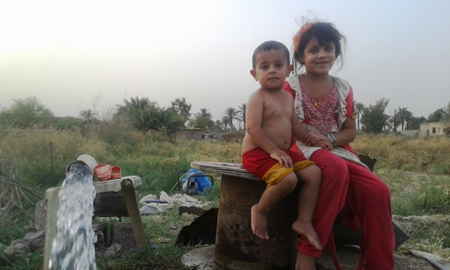 I’ve written often about our Iraqi refugee friend and his oldest son from Baghdad. I will call them Mohammed and Ahmed. They made the torturous flight last year from Baghdad to Kurdistan and then across Turkey. They were on three Greek islands before permission was granted them to continue their trip. They passed through several countries at the time the borders were being closed. They arrived finally at their destination in late September 2015. Finland.
Having lived with this family in Baghdad, I have the faces of the wife and each of the children before me.
Iraqi children caught in the ongoing chaos of Iraq. (Photo credit: Cathy Breen)
Mohammed’s children, caught in the ongoing chaos of Iraq. (Photo credit: Cathy Breen)
Generally, I use Mohammed’s words, quoting him in a first person narrative. He told the story of their desperate life-threatening journey over a year ago. They went to Finland with the hope that fewer refugees would travel so far, that they would get asylum quicker and be reunited with their family, Mohammed’s wife and the other six children in Iraq.
Together with a small group of friends, Kathy Kelly and I were able to visit them in Finland in the deep winter cold this past January. We were able to bring them for a few days from the camp to Helsinki where they were warmly received by many Finnish people involved in the peace movement, journalists among them.
In late June Mohammed wrote us about the depression and frustration among refugees in their camp as many of them were getting rejected for asylum. He wrote that even Iraqi refugees from Fallujah, Ramadi and Mosul were getting rejections. “I don’t know what I will do if I get a bad answer. For the last three weeks only bad answers are coming.” Then in late July came the crushing news that his own case had been denied.
“Today I got the immigration decision that my case was rejected. Me and Ahmed are not welcomed to Finland. Thanks for everything you did.” The next day he wrote again. “Today is one of the heaviest days of my life. Everybody, my son, my cousin and myself….we just kept silent. We are shocked from the decision. Losing my brother, jailed for 2 years, kidnapped, tortured, losing my house, parents, father-in-law, death threat letter and assassination attempt. Over 50 relatives killed. What more must I give them for them to believe me? Only one thing I forgot, to submit my death certificate. I feel I am being slaughtered. I don’t know what to tell my wife and children [in Baghdad].”
We have since learned that Finland is granting residency to only 10 percent of asylum seekers. An appeal is in progress, and several people have written letters on Mohammed’s behalf. It is by no means clear however that his request will be accepted.
In the meantime, the situation in Iraq and in Baghdad continues to worsen in terms of daily explosions, suicide bombings, assassinations, kidnappings, ISIS, police, army and militia activity. His wife lives in a particularly open and vulnerable rural area. His brother, who used to live a stone’s throw away, had to flee with his family several months ago due to death threats. This left Mohammed’s wife and children without protection.
During Ramadan Mohammed wrote: “The situation is really terrible during these days. My wife was planning to take the kids to her mother’s village during EID but she cancelled this idea.”
The U.S. military's "shock and awe" bombing of Baghdad at the start of the Iraq War, as broadcast on CNN.
The U.S. military’s “shock and awe” bombing of Baghdad at the start of the Iraq War, as broadcast on CNN.
On another occasion he wrote, “My wife is very worried about our second oldest son, afraid he will be kidnapped. She is thinking of moving from the village. Today we argued very hard as she blames me, telling me that I said we would be reunited within 6 months.”
On two recent occasions armed uniformed men came to Mohammed’s house seeking information about Mohammed and Ahmed. Mohammed wrote: “Yesterday at 5 a.m. the house was raided by armed official military guys in uniforms. Maybe the police? Maybe the militia or ISIS?”
It is hard to imagine the fright of Mohammed’s defenseless wife and the children, the youngest of whom is only 3 years old. It is hard to imagine Mohammed and Ahmed’s fright being so far away. At times Mohammed’s wife has hidden the oldest boy in the reeds by their house, afraid he will be recruited by force by ISIS or the militia! She has also been afraid to send the children to school because the security situation is so dangerous. She is angry at Mohammed, scared and not understanding why they have not been reunited after a year’s time.
Recently Mohammed emailed: “Honestly, Cathy, every night I am thinking of returning home and ending these arguments. Living away from your beloved kids is really hard. If I get killed alongside of my family, then everyone will understand why we had to leave and the arguments will finish. Even the Finnish immigration will understand that what I told them was true. But the next morning I changed my mind and decided to await the court’s final decision.”
“Every night I am afraid from the next morning’s news from my family. My daughter asked me by phone last week ‘Dad, when can we live together again. I am now 14 years and you have been away so long.’ She broke my heart.”
Just a few days ago he wrote: “I’m so happy because the ice has melted between my wife and I.” His little boy, 6 years, and his youngest daughter 8 years went to school today. My wife is so brave…. She decided to pay for a school bus for all of the kids. She said ‘I believe in God and I am sending the children and taking the risk.'”
I often ask myself how Mohammed gets up in the morning. How are he and his wife able to face the day? Their courage, their faith and their resilience inspires me, challenges me and pushes me to get out of my own bed in the morning.
Cathy Breen (newsfromcathy@gmail.com), lives and works at Maryhouse Catholic Worker in New York City. She is also co-coordinates Voices for Creative Nonviolence.
by Cathy Breen
Consortiumnews.com
Having lived with this family in Baghdad, I have the faces of the wife and each of the children before me.
Iraqi children caught in the ongoing chaos of Iraq. (Photo credit: Cathy Breen)
Mohammed’s children, caught in the ongoing chaos of Iraq. (Photo credit: Cathy Breen)
Generally, I use Mohammed’s words, quoting him in a first person narrative. He told the story of their desperate life-threatening journey over a year ago. They went to Finland with the hope that fewer refugees would travel so far, that they would get asylum quicker and be reunited with their family, Mohammed’s wife and the other six children in Iraq.
Together with a small group of friends, Kathy Kelly and I were able to visit them in Finland in the deep winter cold this past January. We were able to bring them for a few days from the camp to Helsinki where they were warmly received by many Finnish people involved in the peace movement, journalists among them.
In late June Mohammed wrote us about the depression and frustration among refugees in their camp as many of them were getting rejected for asylum. He wrote that even Iraqi refugees from Fallujah, Ramadi and Mosul were getting rejections. “I don’t know what I will do if I get a bad answer. For the last three weeks only bad answers are coming.” Then in late July came the crushing news that his own case had been denied.
“Today I got the immigration decision that my case was rejected. Me and Ahmed are not welcomed to Finland. Thanks for everything you did.” The next day he wrote again. “Today is one of the heaviest days of my life. Everybody, my son, my cousin and myself….we just kept silent. We are shocked from the decision. Losing my brother, jailed for 2 years, kidnapped, tortured, losing my house, parents, father-in-law, death threat letter and assassination attempt. Over 50 relatives killed. What more must I give them for them to believe me? Only one thing I forgot, to submit my death certificate. I feel I am being slaughtered. I don’t know what to tell my wife and children [in Baghdad].”
We have since learned that Finland is granting residency to only 10 percent of asylum seekers. An appeal is in progress, and several people have written letters on Mohammed’s behalf. It is by no means clear however that his request will be accepted.
In the meantime, the situation in Iraq and in Baghdad continues to worsen in terms of daily explosions, suicide bombings, assassinations, kidnappings, ISIS, police, army and militia activity. His wife lives in a particularly open and vulnerable rural area. His brother, who used to live a stone’s throw away, had to flee with his family several months ago due to death threats. This left Mohammed’s wife and children without protection.
During Ramadan Mohammed wrote: “The situation is really terrible during these days. My wife was planning to take the kids to her mother’s village during EID but she cancelled this idea.”
The U.S. military's "shock and awe" bombing of Baghdad at the start of the Iraq War, as broadcast on CNN.
The U.S. military’s “shock and awe” bombing of Baghdad at the start of the Iraq War, as broadcast on CNN.
On another occasion he wrote, “My wife is very worried about our second oldest son, afraid he will be kidnapped. She is thinking of moving from the village. Today we argued very hard as she blames me, telling me that I said we would be reunited within 6 months.”
On two recent occasions armed uniformed men came to Mohammed’s house seeking information about Mohammed and Ahmed. Mohammed wrote: “Yesterday at 5 a.m. the house was raided by armed official military guys in uniforms. Maybe the police? Maybe the militia or ISIS?”
It is hard to imagine the fright of Mohammed’s defenseless wife and the children, the youngest of whom is only 3 years old. It is hard to imagine Mohammed and Ahmed’s fright being so far away. At times Mohammed’s wife has hidden the oldest boy in the reeds by their house, afraid he will be recruited by force by ISIS or the militia! She has also been afraid to send the children to school because the security situation is so dangerous. She is angry at Mohammed, scared and not understanding why they have not been reunited after a year’s time.
Recently Mohammed emailed: “Honestly, Cathy, every night I am thinking of returning home and ending these arguments. Living away from your beloved kids is really hard. If I get killed alongside of my family, then everyone will understand why we had to leave and the arguments will finish. Even the Finnish immigration will understand that what I told them was true. But the next morning I changed my mind and decided to await the court’s final decision.”
“Every night I am afraid from the next morning’s news from my family. My daughter asked me by phone last week ‘Dad, when can we live together again. I am now 14 years and you have been away so long.’ She broke my heart.”
Just a few days ago he wrote: “I’m so happy because the ice has melted between my wife and I.” His little boy, 6 years, and his youngest daughter 8 years went to school today. My wife is so brave…. She decided to pay for a school bus for all of the kids. She said ‘I believe in God and I am sending the children and taking the risk.'”
I often ask myself how Mohammed gets up in the morning. How are he and his wife able to face the day? Their courage, their faith and their resilience inspires me, challenges me and pushes me to get out of my own bed in the morning.
Cathy Breen (newsfromcathy@gmail.com), lives and works at Maryhouse Catholic Worker in New York City. She is also co-coordinates Voices for Creative Nonviolence.
2016-09-29
Shimon Peres was no peacemaker. I’ll never forget the sight of pouring blood and burning bodies at Qana
by Robert Fisk
The Independent
Peres said the massacre came as a ‘bitter surprise’. It was a lie: the UN had repeatedly told Israel the camp was packed with refugees
When the world heard that Shimon Peres had died, it shouted “Peacemaker!” But when I heard that Peres was dead, I thought of blood and fire and slaughter.
I saw the results: babies torn apart, shrieking refugees, smouldering bodies. It was a place called Qana and most of the 106 bodies ? half of them children ? now lie beneath the UN camp where they were torn to pieces by Israeli shells in 1996. I had been on a UN aid convoy just outside the south Lebanese village. Those shells swished right over our heads and into the refugees packed below us. It lasted for 17 minutes.
Shimon Peres, standing for election as Israel’s prime minister ? a post he inherited when his predecessor Yitzhak Rabin was assassinated ? decided to increase his military credentials before polling day by assaulting Lebanon. The joint Nobel Peace Prize holder used as an excuse the firing of Katyusha rockets over the Lebanese border by the Hezbollah. In fact, their rockets were retaliation for the killing of a small Lebanese boy by a booby-trap bomb they suspected had been left by an Israeli patrol. It mattered not.
A few days later, Israeli troops inside Lebanon came under attack close to Qana and retaliated by opening fire into the village. Their first shells hit a cemetery used by Hezbollah; the rest flew directly into the UN Fijian army camp where hundreds of civilians were sheltering. Peres announced that “we did not know that several hundred people were concentrated in that camp. It came to us as a bitter surprise.”
It was a lie. The Israelis had occupied Qana for years after their 1982 invasion, they had video film of the camp, they were even flying a drone over the camp during the 1996 massacre ? a fact they denied until a UN soldier gave me his video of the drone, frames from which we published in The Independent. The UN had repeatedly told Israel that the camp was packed with refugees.
This was Peres’s contribution to Lebanese peace. He lost the election and probably never thought much more about Qana. But I never forgot it.
When I reached the UN gates, blood was pouring through them in torrents. I could smell it. It washed over our shoes and stuck to them like glue. There were legs and arms, babies without heads, old men’s heads without bodies. A man’s body was hanging in two pieces in a burning tree. What was left of him was on fire.
On the steps of the barracks, a girl sat holding a man with grey hair, her arm round his shoulder, rocking the corpse back and forth in her arms. His eyes were staring at her. She was keening and weeping and crying, over and over: “My father, my father.” If she is still alive ? and there was to be another Qana massacre in the years to come, this time from the Israeli air force ? I doubt if the word “peacemaker” will be crossing her lips.
There was a UN enquiry which stated in its bland way that it did not believe the slaughter was an accident. The UN report was accused of being anti-Semitic. Much later, a brave Israeli magazine published an interview with the artillery soldiers who fired at Qana. An officer had referred to the villagers as “just a bunch of Arabs” (‘arabushim’ in Hebrew). “A few Arabushim die, there is no harm in that,” he was quoted as saying. Peres’s chief of staff was almost equally carefree: “I don’t know any other rules of the game, either for the [Israeli] army or for civilians…”
Peres called his Lebanese invasion “Operation Grapes of Wrath”, which ? if it wasn’t inspired by John Steinbeck ? must have come from the Book of Deuteronomy. “The sword without and terror within,” it says in Chapter 32, “shall destroy both the young man and the virgin, the suckling also with the man of grey hairs.” Could there be a better description of those 17 minutes at Qana?
Yes, of course, Peres changed in later years. They claimed that Ariel Sharon ? whose soldiers watched the massacre at Sabra and Chatila camps in 1982 by their Lebanese Christian allies ? was also a “peacemaker” when he died. At least he didn’t receive the Nobel Prize.
Peres later became an advocate of a “two state solution”, even as the Jewish colonies on Palestinian land ? which he once so fervently supported ? continued to grow.
Now we must call him a “peacemaker”. And count, if you can, how often the word “peace” is used in the Peres obituaries over the next few days. Then count how many times the word Qana appears.
The Independent
Peres said the massacre came as a ‘bitter surprise’. It was a lie: the UN had repeatedly told Israel the camp was packed with refugees
When the world heard that Shimon Peres had died, it shouted “Peacemaker!” But when I heard that Peres was dead, I thought of blood and fire and slaughter.
I saw the results: babies torn apart, shrieking refugees, smouldering bodies. It was a place called Qana and most of the 106 bodies ? half of them children ? now lie beneath the UN camp where they were torn to pieces by Israeli shells in 1996. I had been on a UN aid convoy just outside the south Lebanese village. Those shells swished right over our heads and into the refugees packed below us. It lasted for 17 minutes.
Shimon Peres, standing for election as Israel’s prime minister ? a post he inherited when his predecessor Yitzhak Rabin was assassinated ? decided to increase his military credentials before polling day by assaulting Lebanon. The joint Nobel Peace Prize holder used as an excuse the firing of Katyusha rockets over the Lebanese border by the Hezbollah. In fact, their rockets were retaliation for the killing of a small Lebanese boy by a booby-trap bomb they suspected had been left by an Israeli patrol. It mattered not.
A few days later, Israeli troops inside Lebanon came under attack close to Qana and retaliated by opening fire into the village. Their first shells hit a cemetery used by Hezbollah; the rest flew directly into the UN Fijian army camp where hundreds of civilians were sheltering. Peres announced that “we did not know that several hundred people were concentrated in that camp. It came to us as a bitter surprise.”
It was a lie. The Israelis had occupied Qana for years after their 1982 invasion, they had video film of the camp, they were even flying a drone over the camp during the 1996 massacre ? a fact they denied until a UN soldier gave me his video of the drone, frames from which we published in The Independent. The UN had repeatedly told Israel that the camp was packed with refugees.
This was Peres’s contribution to Lebanese peace. He lost the election and probably never thought much more about Qana. But I never forgot it.
When I reached the UN gates, blood was pouring through them in torrents. I could smell it. It washed over our shoes and stuck to them like glue. There were legs and arms, babies without heads, old men’s heads without bodies. A man’s body was hanging in two pieces in a burning tree. What was left of him was on fire.
On the steps of the barracks, a girl sat holding a man with grey hair, her arm round his shoulder, rocking the corpse back and forth in her arms. His eyes were staring at her. She was keening and weeping and crying, over and over: “My father, my father.” If she is still alive ? and there was to be another Qana massacre in the years to come, this time from the Israeli air force ? I doubt if the word “peacemaker” will be crossing her lips.
There was a UN enquiry which stated in its bland way that it did not believe the slaughter was an accident. The UN report was accused of being anti-Semitic. Much later, a brave Israeli magazine published an interview with the artillery soldiers who fired at Qana. An officer had referred to the villagers as “just a bunch of Arabs” (‘arabushim’ in Hebrew). “A few Arabushim die, there is no harm in that,” he was quoted as saying. Peres’s chief of staff was almost equally carefree: “I don’t know any other rules of the game, either for the [Israeli] army or for civilians…”
Peres called his Lebanese invasion “Operation Grapes of Wrath”, which ? if it wasn’t inspired by John Steinbeck ? must have come from the Book of Deuteronomy. “The sword without and terror within,” it says in Chapter 32, “shall destroy both the young man and the virgin, the suckling also with the man of grey hairs.” Could there be a better description of those 17 minutes at Qana?
Yes, of course, Peres changed in later years. They claimed that Ariel Sharon ? whose soldiers watched the massacre at Sabra and Chatila camps in 1982 by their Lebanese Christian allies ? was also a “peacemaker” when he died. At least he didn’t receive the Nobel Prize.
Peres later became an advocate of a “two state solution”, even as the Jewish colonies on Palestinian land ? which he once so fervently supported ? continued to grow.
Now we must call him a “peacemaker”. And count, if you can, how often the word “peace” is used in the Peres obituaries over the next few days. Then count how many times the word Qana appears.
2016-09-08
America's Murderous Legacy in Laos
The Real News Network
As Barack Obama becomes the first sitting U.S. president to visit Laos, The Real News brings you an interview with Fred Branfman, the man who first exposed America's secret bombing campaign there.
JAISAL NOOR, TRNN: As Barack Obama, the first sitting U.S. president to visit Laos, we replay a report that looks at the legacy of the US bombing in Laos. We bring you an interview with the man that exposed the massive secret US bombing of Laos.
FRED BRANFMAN: From the Deputy Chief of Mission to Laos testifying to the U.S. Senate Foreign Relations Committee--this is an exact quote--when he was asked why they quadrupled the bombing of northern Laos, he said, quote, Well, we had all those planes sitting around and couldn't just let them sit there with nothing to do. unquote.
BARACK OBAMA: For the people of Laos, obviously this war was no secret. Over the course of roughly a decade the United States dropped more bombs on Laos than Germany and Japan during World War II
NOOR: President Obama visited the Cope Center that works with victims of explosives left from the Vietnam War era, providing them with prosthetic limbs and takes part in unexploded ordnance clearing efforts.
OBAMA: 270 million cluster bomblets were dropped on this country. For the people of Laos, the war did not end when the bombs stopped falling. 80 million cluster munitions did not explode.
NOOR: Despite Obama's visit the United States remains one of the handful of countries that continue to manufacture and sell cluster bombs, to its allies such as Saudi Arabia which is currently using them in Yemen.
This report is from 2008.
PETER HERBY: A cluster munition is a canister which is fired from an aircraft or an artillery position which contains many small sub munitions, the small munitions, which then explode. And some of these canisters can contain as many as 650 of these small sub munitions.
REKHA VISWANATHAN: Seventy-eight million unexploded cluster bombs are scattered across Laos to this day, active reminders of the Vietnam War. From 1964 to 1973, the US illegally bombed the country as part of a secret war to disrupt Vietcong supply routes into Vietnam.
HERBY: In Laos, they have been everywhere at the time of the war, in the 1960s and '70s, in villages. And the place was basically uninhabitable because of the degree of weapons contamination and, mainly, cluster munition contamination.
VISWANATHAN: The Laos National Unexploded Ordinance Program, or UXO, says Laos has the distinction of being per capita the most heavily bombed nation in the world.
MENG JUNLAMANEE: I went to the paddy field to work. I started ploughing the field, not knowing there was a bomb there. I ploughed the soil, hit the bomb and it exploded. I didn't know there was a bomb underneath.
JA-LOR: I was pulling the weeds in the paddy field. The hoe hit the bomb, and it exploded.
EDWIN FAIGMANE: People know about the dangers about this UXO, about these cluster munitions on the ground. But it's either they leave it on the ground and they will not be able to farm, or they take the risk just to be able to do some farming and plant rice.
HERBY: Our belief is it will be necessary and it's possible to prohibit perhaps more than 95 percent of existing cluster munitions, which means billions of sub munitions that are sitting in stocks around the world.
NOOR: We also interviewed the man that brought the US bombing of Laos to world attention in 1969, Fred Branfman. He passed away in 2014. This is part of our 2013 interview with Fred.
BRANFMAN: When I interviewed over 1,000 refugees from northern Laos who had had their homes and villages destroyed, tens of thousands of people murdered by U.S. bombing, the one thing I couldn't figure out was why the bombing had so increased after November 1968, when the U.S. had halted bombing over North Vietnam. All the peasants were telling me that the bombing had suddenly become four or five times greater. And I knew there was no military reason for it. It was only a few months later that I read--and this is a very important quote from the Deputy Chief of Mission to Laos testifying to the U.S. Senate Foreign Relations Committee--this is an exact quote--when he was asked why they quadrupled the bombing of northern Laos, he said, quote, Well, we had all those planes sitting around and couldn't just let them sit there with nothing to do. unquote.
Now the situation we have today is very similar. The Bush and Obama administrations have created the first US force of American assassins in our history. They've also created automated machines of war called drones. They have to come up with new missions. For example, President Obama stated as recently as last month that the drone strikes are only aimed at people whose names we know who are plotting to kill us back in America and who we can't get any other way.
This is an absolutely falsehood. The evidence is overwhelming that most of the drone strikes in Pakistan, in Yemen, in Somalia, are what they call signature strikes. These are strikes against people whose names they don't know. They have no idea what their names are. They're drone striking them on the basis of there's a crowd of people who they decide might be hiding a militant.
Now you might ask yourself why did they go from striking named people to striking unnamed people. Why did they go? They've only been able to name 77 senior Al-Qaeda leaders and Taliban leaders by name and they've killed 3-5,000 other people. Well the reason is obvious. They're all these drones sitting around out there. They don't know the names of that many Senior Al-Qaeda leaders. They ran out of targets so they then decided to start killing nameless people that both General McChrystal and the former Director of National Intelligence now tell us is infuriating the Muslim world.
NOOR: From Baltimore, this is Jaisal Noor.
As Barack Obama becomes the first sitting U.S. president to visit Laos, The Real News brings you an interview with Fred Branfman, the man who first exposed America's secret bombing campaign there.
JAISAL NOOR, TRNN: As Barack Obama, the first sitting U.S. president to visit Laos, we replay a report that looks at the legacy of the US bombing in Laos. We bring you an interview with the man that exposed the massive secret US bombing of Laos.
FRED BRANFMAN: From the Deputy Chief of Mission to Laos testifying to the U.S. Senate Foreign Relations Committee--this is an exact quote--when he was asked why they quadrupled the bombing of northern Laos, he said, quote, Well, we had all those planes sitting around and couldn't just let them sit there with nothing to do. unquote.
BARACK OBAMA: For the people of Laos, obviously this war was no secret. Over the course of roughly a decade the United States dropped more bombs on Laos than Germany and Japan during World War II
NOOR: President Obama visited the Cope Center that works with victims of explosives left from the Vietnam War era, providing them with prosthetic limbs and takes part in unexploded ordnance clearing efforts.
OBAMA: 270 million cluster bomblets were dropped on this country. For the people of Laos, the war did not end when the bombs stopped falling. 80 million cluster munitions did not explode.
NOOR: Despite Obama's visit the United States remains one of the handful of countries that continue to manufacture and sell cluster bombs, to its allies such as Saudi Arabia which is currently using them in Yemen.
This report is from 2008.
PETER HERBY: A cluster munition is a canister which is fired from an aircraft or an artillery position which contains many small sub munitions, the small munitions, which then explode. And some of these canisters can contain as many as 650 of these small sub munitions.
REKHA VISWANATHAN: Seventy-eight million unexploded cluster bombs are scattered across Laos to this day, active reminders of the Vietnam War. From 1964 to 1973, the US illegally bombed the country as part of a secret war to disrupt Vietcong supply routes into Vietnam.
HERBY: In Laos, they have been everywhere at the time of the war, in the 1960s and '70s, in villages. And the place was basically uninhabitable because of the degree of weapons contamination and, mainly, cluster munition contamination.
VISWANATHAN: The Laos National Unexploded Ordinance Program, or UXO, says Laos has the distinction of being per capita the most heavily bombed nation in the world.
MENG JUNLAMANEE: I went to the paddy field to work. I started ploughing the field, not knowing there was a bomb there. I ploughed the soil, hit the bomb and it exploded. I didn't know there was a bomb underneath.
JA-LOR: I was pulling the weeds in the paddy field. The hoe hit the bomb, and it exploded.
EDWIN FAIGMANE: People know about the dangers about this UXO, about these cluster munitions on the ground. But it's either they leave it on the ground and they will not be able to farm, or they take the risk just to be able to do some farming and plant rice.
HERBY: Our belief is it will be necessary and it's possible to prohibit perhaps more than 95 percent of existing cluster munitions, which means billions of sub munitions that are sitting in stocks around the world.
NOOR: We also interviewed the man that brought the US bombing of Laos to world attention in 1969, Fred Branfman. He passed away in 2014. This is part of our 2013 interview with Fred.
BRANFMAN: When I interviewed over 1,000 refugees from northern Laos who had had their homes and villages destroyed, tens of thousands of people murdered by U.S. bombing, the one thing I couldn't figure out was why the bombing had so increased after November 1968, when the U.S. had halted bombing over North Vietnam. All the peasants were telling me that the bombing had suddenly become four or five times greater. And I knew there was no military reason for it. It was only a few months later that I read--and this is a very important quote from the Deputy Chief of Mission to Laos testifying to the U.S. Senate Foreign Relations Committee--this is an exact quote--when he was asked why they quadrupled the bombing of northern Laos, he said, quote, Well, we had all those planes sitting around and couldn't just let them sit there with nothing to do. unquote.
Now the situation we have today is very similar. The Bush and Obama administrations have created the first US force of American assassins in our history. They've also created automated machines of war called drones. They have to come up with new missions. For example, President Obama stated as recently as last month that the drone strikes are only aimed at people whose names we know who are plotting to kill us back in America and who we can't get any other way.
This is an absolutely falsehood. The evidence is overwhelming that most of the drone strikes in Pakistan, in Yemen, in Somalia, are what they call signature strikes. These are strikes against people whose names they don't know. They have no idea what their names are. They're drone striking them on the basis of there's a crowd of people who they decide might be hiding a militant.
Now you might ask yourself why did they go from striking named people to striking unnamed people. Why did they go? They've only been able to name 77 senior Al-Qaeda leaders and Taliban leaders by name and they've killed 3-5,000 other people. Well the reason is obvious. They're all these drones sitting around out there. They don't know the names of that many Senior Al-Qaeda leaders. They ran out of targets so they then decided to start killing nameless people that both General McChrystal and the former Director of National Intelligence now tell us is infuriating the Muslim world.
NOOR: From Baltimore, this is Jaisal Noor.
2016-08-14
Just Five of the Worst Atrocities Carried Out by the British Empire
The Independent
A new YouGov poll has found the British public are generally proud of the British Empire and its colonial past.
YouGov found 44 per cent were proud of Britain's history of colonialism, with 21 per cent regretting it happened and 23 per cent holding neither view.
The same poll also found 43 per cent believed the British Empire was a good thing, 19 per cent said it was bad and 25 per cent said it was "neither".
At its height in 1922, the British empire governed a fifth of the world's population and a quarter of the world's total land area.
Although the proponents of Empire say it brought various economic developments to parts of the world it controlled, critics point to massacres, famines and the use of concentration camps by the British Empire.
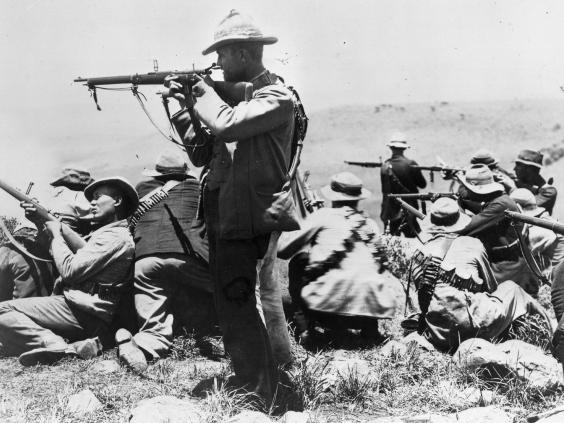 During the Second Boer War (1899-1902), the British rounded up around
a sixth of the Boer population - mainly women and children - and
detained them in camps, which were overcrowded and prone to outbreaks of disease, with scant food rations.
During the Second Boer War (1899-1902), the British rounded up around
a sixth of the Boer population - mainly women and children - and
detained them in camps, which were overcrowded and prone to outbreaks of disease, with scant food rations.
Of the 107,000 people interned in the camps, 27,927 Boers died, along with an unknown number of black Africans.
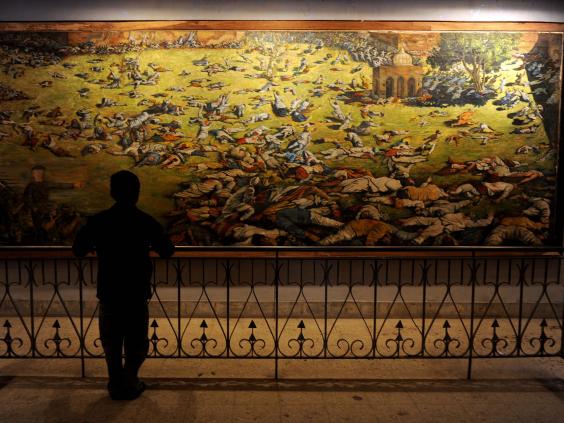
When peaceful protesters defied a government order and demonstrated against British colonial rule in Amritsar, India, on 13 April 1919, they were blocked inside the walled Jallianwala Gardens and fired upon by Gurkha soldiers.
The soldiers, under the orders of Brigadier Reginald Dyer, kept firing until they ran out of ammunition, killing between 379 and 1,000 protesters and injuring another 1,100 within 10 minutes.
Brigadier Dyer was later lauded a hero by the British public, who raised £26,000 for him as a thank you.
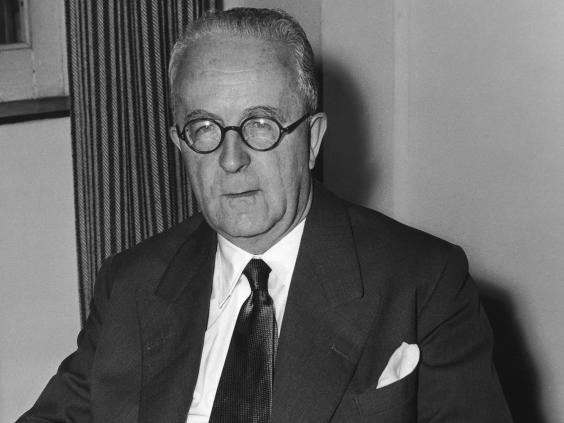 In 1947, Cyril Radcliffe was tasked with drawing the border between
India and the newly created state of Pakistan over the course of a
single lunch.
In 1947, Cyril Radcliffe was tasked with drawing the border between
India and the newly created state of Pakistan over the course of a
single lunch.
After Cyril Radcliffe split the subcontinent along religious lines, uprooting over 10 million people, Hindus in Pakistan and Muslims in India were forced to escape their homes as the situation quickly descended into violence.
Some estimates suggest up to one million people lost their lives in sectarian killings.
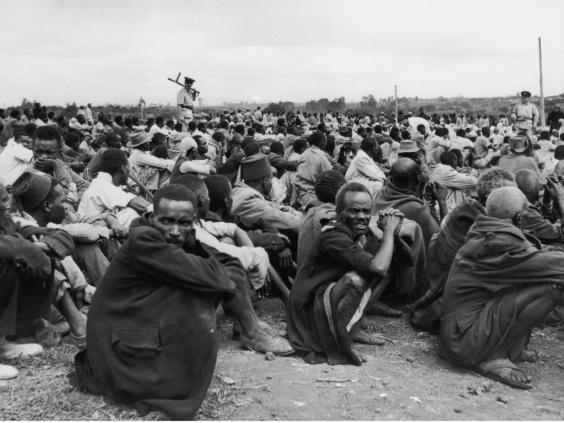 Thousands of elderly Kenyans, who claim British colonial forces mistreated, raped and tortured them during the Mau Mau Uprising (1951-1960), have launched a £200m damages claim against the UK Government.
Members of the Kikuyu tribe were detained in camps, since described as "Britain's gulags" or concentration camps, where they allege they were systematically tortured and suffered serious sexual assault.
Estimates of the deaths vary widely: historian David Anderson estimates there were 20,000, whereas Caroline Elkins believes up to 100,000 could have died.
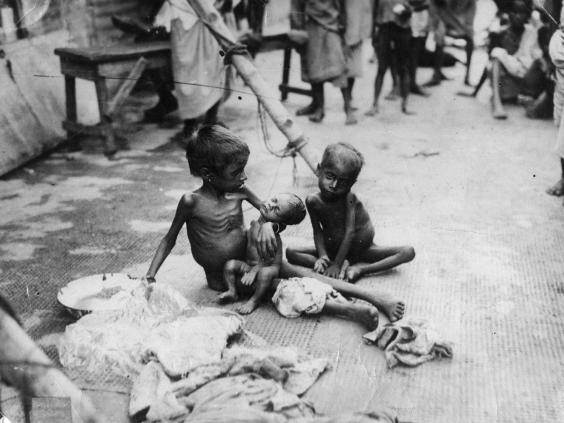
Between 12 and 29 million Indians died of starvation while it was under the control of the British Empire, as millions of tons of wheat were exported to Britain as famine raged in India.
In 1943, up to four million Bengalis starved to death when Winston Churchill diverted food to British soldiers and countries such as Greece while a deadly famine swept through Bengal.
Talking about the Bengal famine in 1943, Churchill said: “I hate Indians. They are a beastly people with a beastly religion. The famine was their own fault for breeding like rabbits.”
A new YouGov poll has found the British public are generally proud of the British Empire and its colonial past.
YouGov found 44 per cent were proud of Britain's history of colonialism, with 21 per cent regretting it happened and 23 per cent holding neither view.
The same poll also found 43 per cent believed the British Empire was a good thing, 19 per cent said it was bad and 25 per cent said it was "neither".
At its height in 1922, the British empire governed a fifth of the world's population and a quarter of the world's total land area.
Although the proponents of Empire say it brought various economic developments to parts of the world it controlled, critics point to massacres, famines and the use of concentration camps by the British Empire.
1. Boer concentration camps
Armed Afrikaners on the veldt near Ladysmith during the second Boer War, circa 1900
Of the 107,000 people interned in the camps, 27,927 Boers died, along with an unknown number of black Africans.
2. Amritsar massacre
A young visitor looks at a painting depicting the Amritsar Massare at Jallianwala Bagh in Amritsar
When peaceful protesters defied a government order and demonstrated against British colonial rule in Amritsar, India, on 13 April 1919, they were blocked inside the walled Jallianwala Gardens and fired upon by Gurkha soldiers.
The soldiers, under the orders of Brigadier Reginald Dyer, kept firing until they ran out of ammunition, killing between 379 and 1,000 protesters and injuring another 1,100 within 10 minutes.
Brigadier Dyer was later lauded a hero by the British public, who raised £26,000 for him as a thank you.
3. Partitioning of India
British lawyer and law lord Cyril Radcliffe, 1st Viscount Radcliffe (1899 - 1977) at the Colonial Office, London, July 1956
After Cyril Radcliffe split the subcontinent along religious lines, uprooting over 10 million people, Hindus in Pakistan and Muslims in India were forced to escape their homes as the situation quickly descended into violence.
Some estimates suggest up to one million people lost their lives in sectarian killings.
4. Mau Mau Uprising
Mau Mau suspects at one of the prison camps in 1953
Members of the Kikuyu tribe were detained in camps, since described as "Britain's gulags" or concentration camps, where they allege they were systematically tortured and suffered serious sexual assault.
Estimates of the deaths vary widely: historian David Anderson estimates there were 20,000, whereas Caroline Elkins believes up to 100,000 could have died.
5. Famines in India
Starving children in India, 1945
Between 12 and 29 million Indians died of starvation while it was under the control of the British Empire, as millions of tons of wheat were exported to Britain as famine raged in India.
In 1943, up to four million Bengalis starved to death when Winston Churchill diverted food to British soldiers and countries such as Greece while a deadly famine swept through Bengal.
Talking about the Bengal famine in 1943, Churchill said: “I hate Indians. They are a beastly people with a beastly religion. The famine was their own fault for breeding like rabbits.”
2016-07-19
The Problem With America
“The world outside our borders is a dark place, a scary place,” retired Navy Seal Michael Luttrell said to applause. “America is the light.”
I found this quote in a Guardian article on the Republican national convention. It surely can be found in many news stories about the convention. This quote (and the fact that many in the audience applauded) sums up much of what is wrong with America. That a member of the military who, for whatever misguided reasons, chose to partake in the slaughter of Afghans, as Mr. Luttrell apparently did, should feel fear in some parts of the world is not surprising, but to claim that the entire world outside the US is frightening is truly amazing.
Does this fear extend to Canada? How about Japan? Italy? Is Italy scary?
Or was the gentleman perhaps exaggerating a bit? Possibly he is not really scared of the Irish, for example. Maybe he only fears brown people. Or Muslims. Or could it be that he is only afraid of people from places where he and his comrades committed atrocities?
As I sit here writing this in my house in one of the "dark" places outside the "light" United States, I see out my window trees swaying in the gentle summer breeze and I hear children playing. On the television, I see they are showing news of yet another American mass shooting. Maybe I am missing something, but it seems to me that American is a much scarier, darker place than the country in which I have chosen to live.
It also seems to me that much of the darkness in the world is the result of America's efforts to spread its "light" or whatever it is that it is trying to bring to the dark places. Possibly, instead of invading other countries and drone attacking brown people, America needs to look inward and fix its own problems.
If being "light" means being like America, the rest of are better off left in the dark.
Subscribe to:
Posts (Atom)