2017-01-26

These are the Palestinian children killed by Israel in 2016


Maureen Clare Murphy - THE ELECTRONIC INTIFADA
For Palestinian children in the occupied West Bank, 2016 was the deadliest year in the past decade.
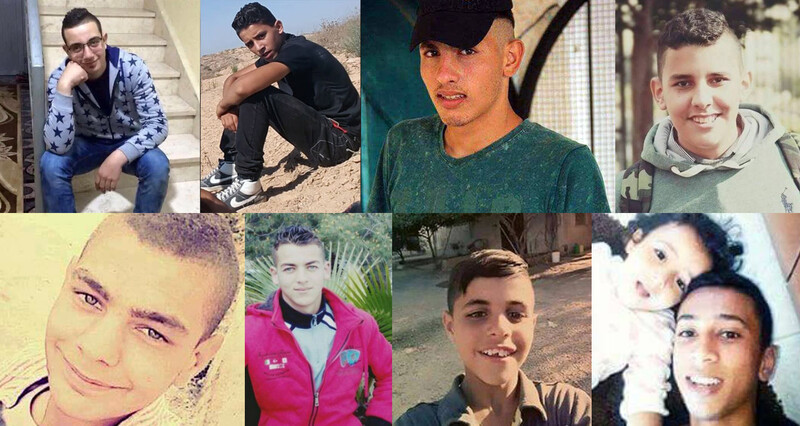
Thirty-five Palestinian children were killed by Israeli soldiers, police and armed civilians during the year, all but four of the deadly incidents taking place in the West Bank. Children account for a third of the 105 Palestinians killed by Israeli forces in the West Bank and Gaza Strip during 2016.
Most, but certainly not all, of those children were killed during the course of what Israel alleges were attacks or attempted attacks, mainly on soldiers at checkpoints in the West Bank.
Two Israeli civilians were killed in such incidents, one a 13-year-old girl stabbed to death in her bedroom in a West Bank settlement, the sole Israeli child killed by a Palestinian during the year.
But in the vast majority of alleged attacks that left a Palestinian child dead, no Israeli civilians or soldiers were injured. In a handful of cases, Israeli soldiers were reported to have suffered only light injuries.
In several incidents, there may not have been any attempted attack when a Palestinian child was shot and killed. Amnesty International has called for one such slaying to be investigated as an extrajudicial execution.
Other children were killed on their way to class, or coming home from a pool party. Several were shot dead while protesting the occupation. A brother and sister were killed in their Gaza home when their neighborhood was hit in an Israeli airstrike.
As Defense for Children International - Palestine (DCIP) points out, “Accountability for shootings [of Palestinian children] by Israeli forces is extremely rare. Only one incident since 2014 has resulted in an indictment.”
The group’s accountability program director Ayed Abu Eqtaish stated: “Intentional lethal force now appears to be routinely used by Israeli forces, even in unjustified situations, with no accountability, putting more and more children at risk.”
DCIP has summarized other ways Israel violated Palestinian children’s rights during the year.
These are the Palestinian children killed by Israeli forces in 2016:

Ahmad Younis Ahmad al-Kawazba, 17

Ahmad, from the village of Sair in the southern occupied West Bank, was shot dead by Israeli forces after allegedly stabbing and lightly wounding a soldier in the area of the Gush Etzion intersection near the city of Hebron on 5 January.
Hebron’s district attorney said the “autopsy suggested the 17-year-old had been left to bleed to death and had received no medical treatment,” the Ma’an News Agency reported.
Ahmad was buried next to his friend and schoolmate Mahmoud al-Shalalda, who was shot and killed by Israeli forces in November 2015.

Alaa al-Din Abd Muhammad al-Kawazba, 17

Israeli forces shot and killed Alaa al-Din along with two of his adult cousins near the Gush Etzion bloc of Israeli settlements north of Hebron on 7 January. The army claimed the three were “armed with knives” and attempted to attack soldiers. No soldiers were reported injured during the attack. Alaa al-Din was from the Hebron-area village of Sair.

Khalil Muhammad Issa Wadi, 15

Khalil was shot dead by Israeli forces after he allegedly attempted to stab a soldier at the Beit Einoun junction near Hebron on 7 January. No Israelis were reported injured during the incident. The boy’s adult brother, Mahmoud, was shot and killed by Israeli forces in the same location in November 2015.
Like Ahmad al-Kawazba and Alaa al-Din Kawazba, Khalil was from the Hebron-area village of Sair. He was at least the 10th resident of the village to be slain by Israeli forces since October 2015, including the November 2015 execution in a Hebron hospital room of Abdallah Azzam al-Shalalda and the killing of a disabled father of a young baby in December 2015.

Adnan Ayid Hamid al-Mashni, 17
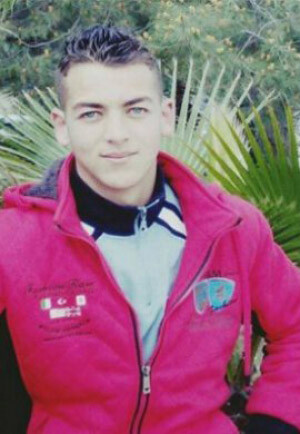
Youth wearing jacket stands in front of palm fronds
Adnan Ayid Hamid al-Mashni
An investigation by the Tel Aviv newspaper Haaretz found that Adnan, from the village of Shuyukh, was shot dead by Israeli soldiers at the Beit Einoun junction near the West Bank city of Hebron while on his way to physics class on 12 January.
Adnan had traveled to the junction in a taxi van and crossed the road and entered into a second van when another young man in the vehicle jumped out and yelled “God is great” while brandishing a knife or hatchet, according to Haaretz.
The armed young man, Muhammad Kawazba from the village of Sair, was immediately shot and killed. The driver of the van from which Kawazba emerged “tried to drive away as fast as he could, for fear that he too would be shot,” Haaretz added. “The soldiers, seeing the vehicle pulling out, opened fire at it, though they had no idea who was inside it.”
The driver managed to escape on foot while Adnan, still inside the van, was struck in the upper right side of his body and died soon after in hospital.

Ruqayya Abu Eid, 13

Ruqayya was shot dead by a private security guard after she allegedly attempted to stab him in the Anatot settlement near Jerusalem on 23 January.
A Palestinian member of Israel’s parliament, the Knesset, condemned the girl’s slaying. “Even if she had a knife, it would have been possible to arrest a girl that age instead of killing her,” Esawi Frej of the Meretz party said.
Haaretz reported that Ruqayya died of a single bullet wound to the heart.
“I have no explanation for her decision,” the girl’s father told the paper. “There were two guards there, and they could have overcome her. A little girl. They are trained and armed, you know, so how is it they could not arrest a little girl of 13? Was a girl of 13 a threat to them? Whatever she planned to do, they could still have arrested her.”
Ruqayya was laid to rest in the village of al-Karmel east of the West Bank town of Yatta, near Hebron.

Hussein Abu Ghosh, 17

Hussein was shot dead by an Israeli security guard at a supermarket in Beit Horon settlement near the central West Bank city of Ramallah on 25 January.
The youth was killed along with Ibrahim Usama Allan, 23, after stabbing two Israeli women; one of the women, 24-year-old Shlomit Krigman, died from her injuries the following day. Israeli media reported that Allan and Hussein were shot as they ran, suggesting the two may have been extrajudicially executed.
Israeli forces destroyed Hussein’s family home in Qalandiya refugee camp near Ramallah in April.
Punitive home demolitions, along with other acts of collective punishment, are considered a war crime under the Fourth Geneva Convention.

Ahmad Hassan Abd al-Latif Tubah, 17

Ahmad, from the village of Kufr Jammal, was killed by Israeli forces after allegedly attempting to stab a soldier near a settlement in the Tulkarm, West Bank, area on 1 February. No soldiers were reported to have been injured.
“According to media reports, he crossed the [Israel’s wall in the West Bank] without an entry permit and was discovered by soldiers who tried to apprehend him. He then pulled a knife on them and was shot,” the Israeli human rights group B’Tselem reported.

Haitham Saada, 14

Haitham died after he was hit by two bullets fired by soldiers near the entrance to Halhoul village, near Hebron, on 5 February. The army said that the boy was preparing to throw a Molotov cocktail at soldiers when he was killed.
“Other than Haitham’s younger cousin, Wajdi, who was also in his class and was with him when he died, and the soldiers, of course, there are no eyewitnesses who can relate what happened and why Haitham was shot and killed,” the Tel Aviv newspaper Haaretzreported at the time. “Wajdi was arrested on the spot and is still incarcerated in Ofer Camp, near Ramallah. He has not been allowed visitors.”

Omar Yousif Ismail Madi, 15

Omar was slain by a bullet when Israeli soldiers fired on youths who were throwing stones at them in Arroub refugee camp near Hebron on 9 February. The city’s district attorney told the Ma’an News Agency that the boy “died after being hit by a single bullet that entered his body from the right side of his chest.” The bullet “penetrated the teen’s liver, kidneys, and spleen before exiting his body from the lower left side of his rib cage.”

Nihad Raed Muhammad Waked, 15, and Fuad Marwan Kamal Waked, 15

Nihad and Fuad were shot and killed by Israeli forces after they allegedly opened fire at soldiers on 14 February. No Israelis were injured during the incident near the village of al-Araqa, west of the northern West Bank town of Jenin. Palestinian emergency medics were reportedly prevented from providing treatment at the scene.
“Soldiers reported that one of the Palestinians was armed with a makeshift weapon and another was carrying a knife,” Haaretz reported. The boys’ families “vehemently denied the army’s claim they had fired at the soldiers and said the two were roaming farming lands owned by the family that are adjacent to [Israel’s] West Bank barrier,” the paper added.
“I know the families and the two youths, these are not families that deal with arms or have access to arms,” a teacher in al-Araqa who knew the teens told Haaretz. “These are just kids and to attribute an attempted shooting to them sounds highly unlikely or believable.”

Naim Ahmad Yousif Safi, 16

Naim was shot and killed after he allegedly attempted to stab an Israeli soldier at a checkpoint north of the West Bank city of Bethlehem on 14 February. Israeli police told media the teen approached soldiers while carrying a knife. No Israelis were reported injured during the incident. Naim was from the nearby village of al-Ubediya.

Qusay Abu al-Rub, 16
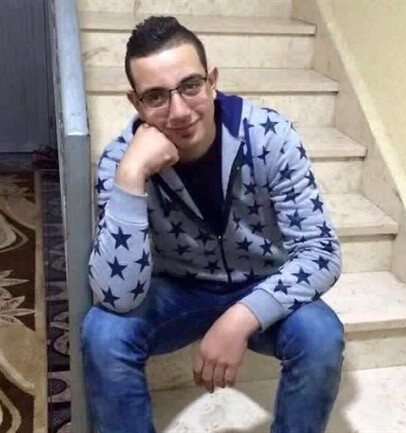
Qusay Abu al-Rub (via Ma’an News Agency)
Soldiers fired on Qusay after he allegedly attempted to stab one of them at the Beita checkpoint near Nablus in the northern West Bank on 21 February. No Israelis were injured during the incident. Palestinian medics were reportedly prevented from accessing the wounded boy. Qusay, from Qabatiya village in the northern West Bank, was the 10th youth from the town to be slain since October 2015.

Mahmoud Shaalan, 16

Mahmoud, a Palestinian American resident of the Ramallah-area village of Deir Dibwan, was shot dead by Israeli forces near a checkpoint in the central West Bank on 26 February. Israel claimed that the boy had tried to stab soldiers when he was killed.
Amnesty International has stated that his death – as well as that of more than a dozen other Palestinians killed by Israeli forces over the past year – should be investigated as a possible extrajudicial execution.
An eyewitness testified to the Israeli human rights group B’Tselem that Mahmoud had attempted to cross a checkpoint and was turned away by soldiers.
“As he was walking away from the soldiers, one soldier shot Mahmoud Muhammad Ali Shaalan from some distance away with around three bullets. He immediately fell to the ground, and the soldier then approached and shot him twice more, according to the witness,” Amnesty states.
An autopsy found that no bullets had been fired from close range, throwing into question Israel’s claim that Mahmoud was attempting to stab soldiers when he was killed.
Witnesses told Haaretz that soldiers prevented a Palestinian ambulance from evacuating the boy, and that his naked body lay on the road for more than two hours.
Fifteen rights and faith groups in the US have called on the Obama administration to investigate the killing. A top US diplomat told concerned groups that the US embassy in Tel Aviv asked Israel to investigate Mahmoud’s death.

Labib Khaldoun Anwar Abd al-Azzam, 17 and Muhammad Hashim Ali Zaghlawan, 17

Labib and Muhammad, both from Qaryut village near the West Bank city of Nablus, were shot dead by Israeli forces on 2 March after allegedly attacking and lightly injuring a settler as he was leaving his home in the Eli colony. The settler was wearing his army uniform, and was en route to the military reserve unit he serves in, Israeli media reported.

Abd al-Rahman Radad, 17

Abd al-Rahman, from al-Zawiya village near the West Bank town of Salfit, was shot and killed by police after he allegedly stabbed and wounded an Israeli man near Petah Tikva, a city in Israel, on 18 March. Graphic video shows Abd al-Rahman lying on the floor of a liquor store, gravely injured and apparently struggling to breathe, as Israelis curse him and call for him to die.

Ahmad Yousif Ismail Amer, 16

Ahmad was shot dead by Israeli forces at a military checkpoint outside of al-Zawiya village near the West Bank town of Salfit on 9 March. The village was blockaded by the military after one of its residents, Abd al-Rahman Radad, allegedly stabbed an Israeli before being shot dead by police.
An army spokesperson told media that an “assailant armed with a knife” approached the checkpoint and soldiers “thwarted” the attack by shooting him dead. No Israelis were injured during the incident.
Another Palestinian was shot during the incident, and a local official said that both wounded Palestinians were left bleeding while Palestinian emergency medics were prevented from reaching them.
Ahmad, from the nearby village of Masha, reportedly left a note bidding farewell to his parents, asking them for their forgiveness.

Yasin Abu Khusa, 9, and Isra Abu Khusa, 6

Yasin and Isra, brother and sister, were killed during an Israeli air strike on their neighborhood in northern Gaza on 12 March.
The Abu Khusa family home, located on the outskirts of Beit Hanoun, had been previously attacked twice by Israel in recent years. They had asked the authorities in Gaza that they be relocated somewhere safer, but their request went unanswered, the family told The Electronic Intifada. They said they did not receive any financial aid to repair damage caused during previous attacks.

Yusif Walid Mustafa al-Tarayra, 17

Yusif, from the village of Bani Naim, was shot dead by soldiers after he hit a military officer with his car in Kiryat Arba settlement near Hebron on 14 March. The officer was lightly injured, according to the Israeli human rights group B’Tselem.

Abdallah al-Ajluni, 16

Abdallah, from the West Bank city of Hebron, was shot dead by Israeli Border Police after he stabbed and lightly injured a soldier at at checkpoint near the Ibrahimi mosque in Hebron’s Old City on 19 March.

Ibrahim Salih Hassan Taha, 16

Ibrahim was killed along with his pregnant adult sister, Maram Salih Hassan Abu Ismail, a 23-year-old mother of two small children, at the Qalandiya military checkpoint between Ramallah and Jerusalem on 27 April.
Israeli police claimed the siblings were carrying knives and attempted to attack soldiers. No Israelis were injured during the incident.
Israel’s justice ministry declined to open an investigation after an initial probe found that the brother and sister were shot by civilian security guards and not by police.

Mahmoud Badran, 15

Mahmoud, from the central West Bank village of Beit Ur al-Tahta, was killed when Israeli forces opened fire on a car of young Palestinians returning from a late-night pool party celebrating Ramadan on 21 June. Five others were injured during the incident, including the driver of the car, who lost control of the vehicle and crashed into a wall.
The army admitted the Palestinians were “mistakenly hit” while soldiers were responding to reports of rock-throwing and firebombing on a highway used by settlers in the West Bank.
The Palestine Red Crescent Society said that soldiers prevented paramedics from providing first aid to the injured Palestinians for more than 90 minutes.
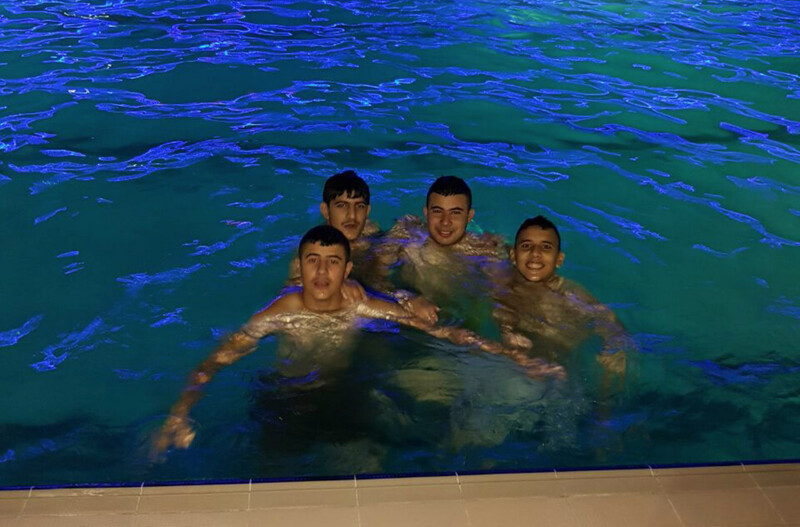
Four boys pose for camera while in a swimming pool
Mahmoud Badran, at right, during the pool party he attended shortly before he was killed. (B’Tselem)
One of the survivors told B’Tselem that the shooting came from a civilian car.
“Everything was normal and there was nothing suspicious,” Hadi Badran testified. “Suddenly we were under fire. I looked at the direction the fire was coming from and saw a white civilian car. There were two people there, in civilian clothing, and they were the ones shooting at us.”
“Media reports indicate that the soldiers and officer who opened fire belonged to the Duchifat regiment of the Kfir brigade, and that they were passing by, on their way to take care of logistical matters,” B’Tselem stated, adding that “the soldiers arbitrarily fired at the car, having no indication that any of its passengers had been involved in stone or Molotov cocktail throwing.”
According to the rights group, “This shooting incident is a direct result of military policy which enables, despite the official prohibition in the [Israeli military’s] open-fire regulations, to use deadly fire even in cases where there is no threat to life and even when the soldiers have other, non-lethal, means at their disposal. This policy is backed by the most senior ranking military and government officials who do nothing do change it, despite the lethal results.”

Muhammad Nasir Mahmoud Khalil al-Tarayra, 16

Muhammad was shot dead after after stabbing a 13-year-old girl, Hallel Yaffa Ariel, in her home in the Kiryat Arba settlement near Hebron on 30 June.
The New York Times reported that Muhammad then locked himself in the girl’s house for some time while armed residents of the settlement, including the girl’s father, tried to track down who had breached the settlement’s fence.
When they forced their way into her home, Muhammad, from the nearby village of Bani Naim, stabbed one of the armed settlers before being shot dead.
Ariel was rushed to a hospital, where she died a short time later. The US State Department confirmed the girl held American citizenship. Ariel was the only Israeli child killed by Palestinians during 2016.
Israeli forces demolished the home belonging to Muhammad’s family in August.

Muhyee al-Din Muhammad Sudqi Sadiq Tibakhi, 10
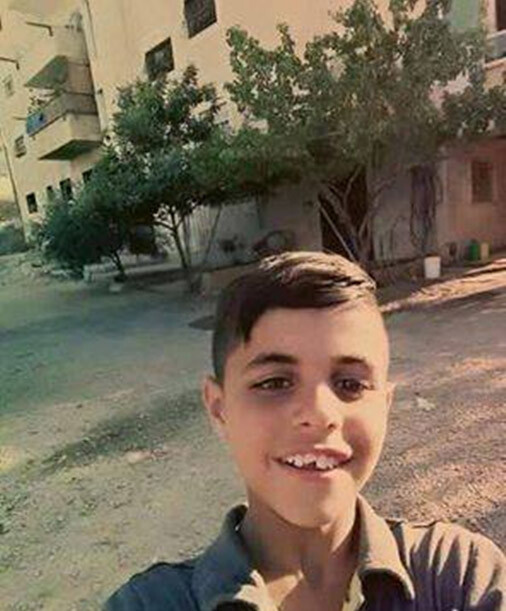
Muhyee Sidqi al-Tibakhi
Muhyee died after he was shot in the chest and head during confrontations that broke out when Israeli forces raided al-Ram town near Jerusalem on 19 July.
Defense for Children International - Palestine stated that the “boy died from a sponge-tipped bullet to the chest fired by Israeli forces.”
Muhyee is the second Palestinian child to be killed by a sponge-tipped bullet, according to the group. Muhammad Sinokrot, 16, died of his injuries in 2014 after an Israeli Border Police combatant shot the right side of his head, causing a skull fracture and brain hemorrhage. An Israeli investigation of Muhammad’s case was closed without charging the Border Police officer responsible, Defense for Children said.

Abd al-Rahman Ahmad al-Dabbagh, 15
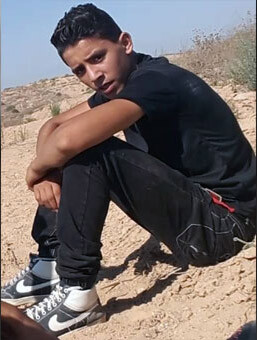
Abd al-Rahman Ahmad al-Dabbagh (DCIP)
Abd al-Rahman was killed instantly after he was directly hit by a flare bomb fired by an Israeli soldier during a protest near the boundary between Gaza and Israel on 9 September.
After the teen was hit, “Abd al-Rahman was then seen lying on the ground, with his head on fire,” a report on the incident by the human rights group Al-Haq stated.
“His shocked friends ran to help him, but the Israeli soldiers pointed their weapons at them, and stated, ‘whoever will dare and try to approach will suffer the same fate as him,’” Al-Haq added.
Defense for Children International - Palestine published a video still showing Abd al-Rahman lying on the ground, flames and smoke coming from his head.
“An X-ray image shared with DCIP … appears to show the flare punctured and lodged in Abd al-Rahman’s skull above his left eyebrow,” the group stated. The projectile that killed Abd al-Rahman is produced by Chemring Ordnance and AMTEC Corporation, both based in the US, DCIP added.

Firas al-Khadour, 17

A witness to the slaying of Firas denied Israel’s claim that the teen was attempting to attack soldiers with his car when he was killed on 16 September.
The witness, who was riding in the car with Firas when he was killed, said that the vehicle had faulty brakes which failed when it approached the Kiryat Arba settlement near the West Bank city of Hebron, causing it to crash into a bus stop.
After the car was stopped, soldiers opened fire on it from multiple directions, killing Firas and critically wounding the witness.
“Firas began slowing down, but the brakes were not responding at all. The car’s speed was increasing, and he tried to use the handbrakes to stop but that did not work out either,” Raghad, the witness, told Defense for Children International - Palestine. “I was very scared, and the scary part was that we were approaching the entrance of the settlement.”
Both Firas and the witness are from Bani Naim village.

Muhammad Thalji Kayid Thalji al-Rajabi, 15

Muhammad was shot dead after allegedly stabbing and lightly injuring an Israeli soldier near the Tel Rumeida area of the Old City of Hebron in the West Bank on 16 September. Israeli forces reportedly prevented an ambulance from reaching al-Rajabi after he was shot.

Amir Jamal al-Rajabi, 16

Amir was shot and fatally wounded along with Muhannad Jamal al-Rajabi, 21, while brandishing a knife at the Ibrahimi mosque checkpoint in the West Bank city of Hebron on 19 September. The Palestine Red Crescent Society told the Ma’an News Agency that one of their ambulances was “denied access” to the scene. An Israeli soldier was reportedly lightly injured in the hand during the incident.

Issa Salem Mahmoud al-Tarayra, 15

Issa as slain by soldiers who claimed that the boy was carrying a knife and intended to stab them at a checkpoint near the West Bank town of Bani Naim on 20 September. No Israelis were injured during the incident.

Faris Ziyad Ata al-Bayid, 15
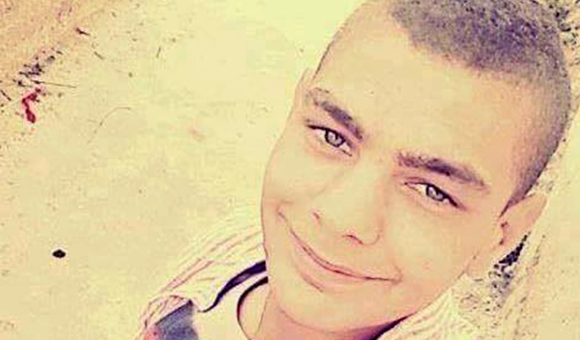
Close-up of adolescent boy's smiling face
Faris al-Bayed (DCIP)
Faris died on 23 December after he was in a coma for 69 days as a result of being shot during confrontations with Israeli forces at the entrance of Jalazone refugee camp near the West Bank city of Ramallah.
Doctors told Defense for Children International - Palestine that a rubber-coated metal bullet pierced the front of Faris’ head and lodged in his brain, “causing severe damage and bleeding.”
Faris had attended a march commemorating the killing of Ahmad Sharaka, 14, also from Jalazone camp, shot by soldiers one year prior.
A military inquiry found that the soldiers were justified in opening fire at Faris. The Israeli rights group B’Tselem stated, however, that the shooting was “unlawful,” and that the boy did not pose a lethal danger to soldiers when he was shot.

Khalid Bahr Ahmad Bahr, 15

Aerial view shows smiling adolescent boy lying next to baby sister
Khalid Bahr Ahmad Bahr (DCIP)
Khalid was shot in the back from a distance of approximately 20 meters while running away from soldiers, who accused the teen of throwing stones at them, at the entrance to a grove near Beit Ommar, a village in the southern occupied West Bank, on 20 October.
A military inquiry into the incident determined that “the soldiers’ lives were not in danger, and that they could have acted differently in this case,” according to the Tel Aviv newspaper Haaretz. An Israeli army spokesperson said that the incident is being investigated by the Military Police Investigation Unit, and will then be referred to the Military Advocate General.
The Israeli rights group B’Tselem stated that Israeli forces “acted without any justification and did not face lethal danger” when they shot the boy.
Israel withheld Khalid’s body for several weeks, preventing his family from burying him.

Muhammad Nabil Jawdat Salam, 14

Young man wears T-shirt and baseball cap
Ahmad Zeidani (DCIP)
Muhammad was shot dead by a private security guard near the Shuafat checkpoint in the Jerusalem area on 25 November. Israeli police claimed that the youth had attempted to carry out a stabbing attack. No Israelis were injured during the incident.

Ahmad Zeidani, 17

Israeli forces shot Ahmad when he was running away from them on 18 December, security camera footage released by B’Tselem shows.
Ahmad was among a group of youths attempting to repel the forces from entering Beit Rima, a village near the West Bank city of Ramallah.
B’Tselem stated that the youths were “some 10 to 20 meters away from the soldiers and officers, and they were running away from them” when they were fired on. “There was no justification for shooting them and this action was unlawful.”
Names and ages reported here may vary from earlier reporting by The Electronic Intifada. All names, ages and dates of deadly incidents presented here have been verified with Defense for Children International - Palestine, which obtains the child’s government-issued ID card or birth certificate, or both in some cases, typically from the child’s immediate family, to verify name and age.

2016-12-29

California Blames Incarcerated Slave Laborers for Unsafe Conditions and Amputations

by Spencer Woodman
The Intercept


IN SEPTEMBER, AFTER months of organizing via smuggled cellphones and outside go-betweens, prisoners across the country launched a nationwide strike to demand better working conditions at the numerous facilities that employ inmate labor for little or no pay.
The strike, which spread to dozens of institutions in 22 states, briefly called attention to a fact about prison labor that is well-understood in America’s penal institutions but scarcely known to the general public: Inmates in America’s state prisons — who make everything from license plates to college diploma covers — are not only excluded from the U.S. Constitution’s prohibition on slave labor, but also exist largely outside the reach of federal safety regulations meant to ensure that Americans are not injured or killed on the job. Excluded from the U.S. Occupational Safety and Health Administration’s mandate of protecting American workers, these inmates lack some of the most basic labor protections other workers take for granted.
This vacuum of oversight causes the labor performed behind prison walls to be doubly invisible because it excludes inmates from federal record-keeping rules requiring non-prison employers to report serious job-site injuries to the federal government.
Yet injury logs generated by the California Prison Industry Authority (CALPIA) — the agency in charge of overseeing the prison work programs in the country’s second largest prison system — provide a rare window into the varied dangers that face inmate laborers. Since 2012, inmates in California have reported more than 600 injuries while working for as little as a 35 cents an hour, according to the documents obtained by The Intercept. The logs contain a wide range of job-site harms, from fingers being smashed in steel molds or sucked under sewing machine needles to less serious maladies like carpel tunnel syndrome and other common overuse conditions.
In some severe cases, inmates’ appendages were amputated after being crushed or severed in machinery. “[The inmate’s] sleeve became caught in gear and pulled hand into assembly,” one log reads, “resulting in amputation of r. hand.”
California generally pays its some 7,000 inmate workers between 35 and 95 cents an hour for their labor, and it is unclear whether any of the inmates listed as having lost appendages while working in California prisons have yet received any compensation for the amputations. A CALPIA spokesperson told The Intercept that the state had provided each of the inmate amputees with workers’ compensation forms, but the injured prisoners could take no action to pursue their claims until released from prison. California state law prohibits inmates from receiving workers’ compensation while still incarcerated, meaning that inmates serving life without parole sentences would never be entitled to a penny of compensation even for losing limbs on the job.
A common theme running among throughout the logs is the potential for many of the injuries to have been averted. “I did not really see anything in here that wouldn’t have been preventable,” said Linda Delp, the director of University of California Los Angeles’s Labor Occupational Safety and Health program, who reviewed the injury logs. Delp said that entries in the CALPIA logs conform to patterns she has seen on non-prison worksites where there is too little training of workers or where the employees are impelled to cut corners because management is requiring too much work to be done in too little time — or both.
A variety of recurring and preventable injury-types caught Delp’s attention. For instance, repeated entries describe objects becoming lodged in inmates’ eyes while they use industrial grinders. A possible solution, according to Delp, would be to ensure that inmate workers wear appropriate safety goggles or visors and have adequate training. Many other logs involve workers losing control of unwieldy objects, which then fall on workers, causing injuries in which body parts are strained, crushed, or lacerated. A solution to this, said Delp, would be to make sure inmates have enough help lifting and maneuvering heavy objects. There are also recurring cases where workers’ fingers become stitched through under sewing machine needles, or have their hands pulled into moving parts on sanders or other machinery — all of which could be prevented by proper machine guarding mechanisms and training, Delp said.
“In looking at these,” Delp said, “there’s something going on in terms of not providing the training and equipment that they need.”
Michele Kane, a CALPIA spokesperson told The Intercept that the office reports all inmate injuries to the state’s department of labor. “They implement and enforce safety regulations over all employers in California,” Kane said, “including state agencies such as CALPIA.”  In response to questions from The Intercept regarding the potential preventability of injuries, a CALPIA spokesperson assigned workers responsibility for their injuries. “In spite of training and proper safety equipment provided by CALPIA,” Kane said in a statement, “there are times when inmates violate training protocols.”
While Delp cannot say anything for certain about CALPIA management practices by reviewing the logs alone, she took notice of the agency’s tendency to blame workers for their injuries.
“I always look for how these things are described and whether individual workers are blamed for what happened,” Delp said. “What’s fairly common across different types of jobs is for management to look the other way when people are breaking the safety rules because they want them to work faster, until someone gets hurt. And then that person is blamed for not following the safety rules.”
A typical example of CALPIA’s allocation of blame appears in one of the several logs that describe an incident resulting in an inmate suffering an amputation, in this case, a finger in garment machinery at the California Men’s Colony prison in San Luis Obispo County in April 2014. “While inmate was cutting fabric, inmate removed his glove to adjust machine, and failed to put his glove back prior to operating the machine,” the log reads, adding no additional information other aside from its result: amputation of “Finger(s)/Thumb(s).”
Top photo: James Dickert, age 68, sews socks together in a prison factory at California Men’s Colony prison on December 19, 2013 in San Luis Obispo, California.

2016-11-28

Arrests of Journalists at Standing Rock Test the Boundaries of the First Amendment

by Alleen Brown
The Intercept

PAT BOYLE, A Denver-based journalist, was shot in the abdomen last Sunday by a rubber bullet as he reported from North Dakota on a clash between demonstrators and police that would end with 26 protesters sent to hospitals and 300 requiring other medical treatment. One woman was severely injured and underwent emergency surgery on her arm after officers unleashed “less than lethal” weapons, including rubber bullets, icy cold water, and, reportedly, concussion grenades on the crowd. Police were reacting to an attempt by Dakota Access pipeline opponents to tow away burned vehicles that officers had secured in place to act as a highway blockade, preventing access to pipeline construction sites down the road. The rubber bullet that hit Boyle tore right through his press pass, leaving a jagged hole through the words “Unicorn Riot,” his news organization’s name.

This wasn’t Unicorn Riot’s first run-in with police while covering the pipeline conflict, nor was it the media collective’s most serious. Reporters for Unicorn Riot have been arrested three times in North Dakota and twice while covering Dakota Access pipeline protests in Iowa. In North Dakota, at least seven journalists in total have been arrested while covering the clashes, according to a count by the Bismarck Tribune. Others have been stung by tear gas, pepper spray, or rubber bullets.

The arrests of journalists and filmmakers covering the front lines of the Dakota Access pipeline fight highlight the limits of press protections and the central role of police, prosecutor, and court discretion in deciding whether or not members of the press should face legal consequences when covering protests. The arrests and violent crowd suppression tactics also reflect the refusal of police to discriminate between peaceful protesters, aggressive agitators, and journalists.

Unicorn Riot was one of the few media outlets that showed up on April 1, when members of the Standing Rock Sioux tribe arrived on horseback to set up a camp called Sacred Stone as a base for prayer and protest against the planned Dakota Access Pipeline, which if completed will transport half a million barrels of oil per day from the Bakken shale region of North Dakota to a hub in Illinois. And the media collective has remained a presence as the standoff reaches into the winter months with few signs of abating.

On Friday, the Army Corps of Engineers issued the Standing Rock Sioux tribe an eviction notice, demanding that thousands of people clear out of a second camp, known as Oceti Sakowin, located on land the Corps controls. “This decision is necessary to protect the general public from the violent confrontations between protesters and law enforcement officials that have occurred in this area, and to prevent death, illness, or serious injury to inhabitants of encampments due to the harsh North Dakota winter conditions.” The letter directed inhabitants to a site farther away from the pipeline construction area, dubbed a “free speech zone.”

“They’re giving us notice because the Corps of Engineers wants to reduce their liability when something serious happens,” said Standing Rock tribal chairman Dave Archambault during a press conference Saturday. “If [the Morton County Sheriff’s Department] wanted to, they would be able to come in and remove us. I don’t think that will happen.”

Nick Tilsen, co-founder of the Indigenous Peoples Power Project, which trains native people in direct action tactics, added, “Indigenous people are here to stay. And we’re not going to move unless it’s on our own terms, because this is our treaty land, this is our ancestral land, this is where our people have been for thousands of years.”

If nothing else, the eviction notice is likely to amplify tensions between pipeline opponents and police. The dynamic will play out on the front lines of protest actions, a space Unicorn Riot specializes in covering. It’s a space that can be legally precarious for journalists, where citizens with grievances meet publicly funded police straining (or failing) to balance law and order with constitutional speech rights. These situations often test the limits of the First Amendment, so video dispatches from the front lines provide distinct information about public life and the use of force to control a dissenting citizenry.

For example, video published by Unicorn Riot and others of tear gas canisters and water cannons sprayed directly into crowds of protesters last Sunday night, when temperatures stood well below freezing, countered police claims that the water was being used primarily to protect people from fire.

By comparison, footage published by the local Morton County Sheriff’s Department of a projectile landing on the far side of the police line came off as tame.

Unicorn Riot’s coverage is sympathetic to the pipeline opponents and is rarely favorable to the police, and its members are often mistaken for activists. They can be counted on to provide live-streams of pipeline protests that are later edited into more easily digestible short pieces. More immersive than mainstream media and more polished than the work of most activist documentarians, the collective’s coverage has been essential to understanding the events in North Dakota.

Yet police have repeatedly questioned the press status of Unicorn Riot reporters, and during mass arrests, they and other journalists have often been swooped up with protesters. “I’m not participating. I’m not building the barricade. I’m not pushing off against the police. I’m not going to pray at the water ceremony. I’m literally there observing,” said Lorenzo Serna, another Unicorn Riot reporter.

“If you come from too radical perspective, your right to report is somehow in question, because you’re outside the ideological frameworks,” said Chris Schiano, who has also been arrested covering the protests. “Most news organizations assume that nation states are legitimate and should exist. We try to report things outside of some of the central assumptions.”

The first time members of Unicorn Riot were detained in North Dakota was on September 13, during one of the earliest mass arrests. Pipeline protesters had locked themselves to construction equipment, and 26-year-old Chris Schiano came with Niko Georgiades, 34, to film it. By the end of the day, 23 people were arrested, including the two reporters.

As police moved in, Unicorn Riot’s Facebook live-feed was cut off. Facebook told Motherboard it was because of a mistake by an automatic spam filter. In a video of their arrests, Schiano can be seen standing apart from a throng of police clad in riot gear as he points to his press ID before he’s cuffed. Georgiades, filming the arrest, was detained shortly afterward and can be heard declaring, “I’m press, sir. I’m press.”

Georgiades’s press status didn’t count for much: The First Amendment does not protect journalists from trespassing charges. Ultimately, whether or not to arrest a journalist covering a protest on private property is up to the cops, and that day the two men were treated as protesters.

A month later, another Unicorn Riot reporter, 30-year-old Jenn Schreiter, was arrested and charged with trespassing while covering a lockdown at a Dakota Access construction site in Iowa.

Chief Deputy Scott Bonar of the Lee County Sheriff’s Office said deputies don’t distinguish between protesters and journalists when it comes to trespassing. “They were told by security and deputies to leave the property. They could have walked to the roadway and did reporting there. They stayed on property and were arrested.”

In response, Schreiter said, “It’s part of the organization I work for, a nonprofit, educational media organization, to report from the front lines. The equipment I had was my cellphone. In order to capture audio and video, I needed to be where the action was.”

When Schreiter’s colleagues went to inquire about the reporter’s whereabouts, a deputy replied, “You don’t have a journalist. You claim you’re press; you don’t even have credentials.”

This AM, when asked about our journalist he arrested, Lee County,Iowa Sheriff Deputy Dakota Foley says "you don't have a journalist" #NoDAPL pic.twitter.com/8Mq2t1PlOu

His words echoed those of Ladd Erickson, the McLean County state attorney in North Dakota who charged Democracy Now host Amy Goodman with trespassing on September 3. Goodman and a film crew had followed a group of people opposing the pipeline onto private land, where they were met with pepper spray and biting dogs.

“She’s a protester, basically. Everything she reported on was from the position of justifying the protest actions,” Erickson told the Bismarck Tribune, arguing that Goodman’s reporting hadn’t noted alleged injuries to private security guards. “Is everybody that’s putting out a YouTube video from down there a journalist down there, too?” The charges against Goodman were eventually changed to rioting, then dropped entirely.

“In the old days you could count on them dismissing those charges,” said Lucy Dalglish, dean of the University of Maryland’s journalism school. “But increasingly public officials are not cutting journalists much slack.”

Dalglish blames the shift on “a lot more people having cameras and saying I’m not a journalist, I’m a documentarian. I’m going to document police brutality. This kind of puts cops on edge. They’re thinking, ‘You’re going to think the worst of me? Well guess what, buddy, I’m going to get you, too.’ Plus, you cannot dismiss the tension that is out there in situations like Dallas, where there is a demonstration and cops end up being assassinated.”

Dalglish agreed that political objectivity is not a prerequisite for calling a product journalism. “This country was founded by a bunch of folks who were crusading journalists. There’s nothing that says you can’t do that,” she said. However, she added, “If [police] see you being really friendly with some folks that they have their eyes on, it probably does put you at risk.”

Unicorn Riot came together as a project in 2014. Some of the founding members met while filming direct actions in support of movements like Occupy Wall Street and Tar Sands Blockade. The idea for a collective grew out of a desire to control the production and publication of their work but also out of an interest in watching out for one another when undertaking legally risky reporting. They are volunteer-run, and their meager budget comes from viewer donations.
The project drew early attention for its coverage in 2015 of protests in Minneapolis after Jamar Clark was shot and killed by local police. While covering the shut-down of Interstate 94, Georgiades was arrested along with 33 others. Unlawful assembly and traffic charges were eventually dropped.

“There’s been a lot of times where one of these guys will get arrested and our team is remotely getting us out of jail,” said 33-year-old Andrew Neef, another reporter for the collective. “We keep track of each other and make sure that we’re watching out for each other.”

Unicorn Riot reporters carry cards identifying them as members of the press, but the bullet hole in the card Boyle carried is a pretty good metaphor for how police view the IDs. And a document recently uncovered by the collective via a public records request provides insight into law enforcement’s approach to interpreting press badges. It’s a Federal Emergency Management Agency (FEMA) manual that was recently emailed to the director of training for the North Dakota Department of Corrections and Rehabilitation, declaring, “Some protesters will attempt to design fictitious media credentials to gain access to events or special consideration by law enforcement.”

At the Oceti Sakowin camp in North Dakota, which serves as a base for opposing the pipeline, volunteers distribute press IDs that give journalists permission to take photos on camp premises, after they attend an orientation. When I was at the camp recently, pass distributors suggested putting the passes away during protest actions, saying that pass carriers seemed to become police targets.

Others believe it’s less about targeting and more about police who decline to discriminate between journalists and activists. “I think that as the boundaries between journalists and non-journalists continue to erode, and any definition of journalism becomes more elusive, journalists have to realize that their rights are not protected by the special realm of press freedom,” said Carlos Lauria, the Committee to Protect Journalists’ program director for the Americas. Instead, he said, reporters should seek protection by “guaranteeing that the rights of free expression are extended to all.”

As of November 14, according to the Morton County Sheriff’s Department, 473 people had been arrested attempting to stand in the oil pipeline’s way. Freelance reporters, documentary filmmakers, producers of movement-building media, and independent activists armed with cellphones have all been swept up in mass arrests that have been carried out almost weekly since October.

Sara Lafleur-Vetter, a filmmaker who has been covering the pipeline fight since August, was charged on October 22 with trespassing and engaging in a riot in one of the largest mass arrests, when 127 were detained. Her camera was confiscated and eventually returned without its memory cards, and she said her bail agreement stipulated that she should not have any direct or indirect contact with Dakota Access pipeline property. “I can still go out,” she said. “I just have to be really careful.”

Serna was arrested that day, too, and issued the same charges as Lafleur-Vetter. It was more than a week before his camera was returned.

“By the time we go to court, we’ll have a new president,” Lafleur-Vetter said. “It’s scarier now. The risks are bigger now.”

Human Rights observers have also been prevented from monitoring protests. Twenty-five people were arrested on November 15 for protesting at a Dakota Access equipment site against the disappearances and murders of indigenous women. Demonstrators blocked a road used to access the equipment yard, and police in turn blocked off a public thoroughfare adjacent to the site, preventing journalists and human rights observers from monitoring the events.

In response, Amnesty International director Margaret Huang wrote a letter to Morton County Sheriff Kyle Kirchmeier. “Our observers are wearing yellow shirts clearly identifying them as human rights observers and carry with them authorization letters from Amnesty International USA explaining their role in the observation of protests taking place in North Dakota,” she wrote. “Providing access to legal and human rights observers and journalists is a necessary component of policing protests to ensure that police facilitate the right to protest and that the rights to peaceful assembly and association are protected as required under international law and standards.”

The Morton County Sheriff’s Department did not respond to requests for comment.

Amnesty has visited Dakota Access protests during two other visits. “It’s worrisome and troubling when you have law enforcement really overzealously engaging in mass arrests that are actually geared at shutting down a protest,” said spokesperson Eric Ferrero. “If the whole mindset is that protesters are the enemy, and they’re on some kind of a battlefield, those are not police that are being set up to facilitate peaceful protest.”

“Ultimately our concern is that these interactions chill people’s human rights to free speech,” he said.

Unicorn Riot reporter Neef predicted Donald Trump’s election victory would increase the frequency of protests the collective covers. It has certainly diminished the chances that an executive branch order will halt the pipeline, but he was less sure that Trump would significantly alter the dynamics of the front line. “We might go through more tear gas filters for our gas masks, but it’s pretty much the same stuff that we’re dealing with,” he said.

“There’s a militarized fortress around the drill pad, enforced by mercenaries with automatic weapons, supported by the Morton County Sheriff’s Department,” said Serna. “Where does it go from here?”

Top photo: Members of the Oceti Sakowen security team monitor police activity.

2016-11-25

Still Not Thanking Native Americans

Returned to its historical roots, Thanksgiving would be a day to express thanks to Native Americans whose generosity saved the Pilgrims, but that never seems to be a lesson learned, as Dennis J Bernstein reports on the Dakota pipeline standoff.

By Dennis J Bernstein
ConsortiumNews.com

Late Sunday night -- at the start of Thanksgiving week -- Native American protesters were attacked by law enforcement agents near the site of the Dakota Access pipeline, a project that Native Americans and environmentalists have been trying to block.

Police and other security forces deployed tear gas, rubber bullets, percussion grenades and water hoses to stop about 400 protesters from crossing the Blackwater Bridge on state Highway 1806, about a mile from an uncompleted section under Lake Oahe, a Missouri River reservoir, where work has been on hold by order of federal agencies.

“As medical professionals, we are concerned for the real risk of loss of life due to severe hypothermia under these conditions,” the Standing Rock Medic & Healer Council said in a statement posted on Facebook. One hundred sixty-seven people were injured and seven were taken to the hospital, according to Jade Begay, a spokeswoman for the Indigenous Environmental Network.

Sunday’s standoff began around 6 p.m. local time, when a group of about 100 “water protectors” attempted to clear burned out trucks that were blocking the bridge, which is on the most direct route from the Standing Rock Sioux Reservation to Bismarck, North Dakota. The trucks have been in place for several weeks, and law enforcement has constructed a barricade behind them, forcing all traffic to take an approximately 20-mile detour.

“The purpose of this action was to do something to remove that barricade because it’s dangerous,” said Begay, a member of the Tesuque Pueblo and Dine, who has been at the Standing Rock encampments since September. “That barricade poses a danger not just to everyone at the camp, but also to Cannon Ball and other communities that are south.”

“They’re using that barricade as an excuse for us not to be able to lawfully protest,” said Frank Archambault, a member of the Standing Rock Sioux Tribe from Little Eagle, South Dakota. “We got word that the drill is now on the pad so tensions are high right now.”

The 1,200-mile, four-state pipeline is intended to carry oil from western North Dakota to a shipping point in Illinois. But construction of the $3.8 billion pipeline has been protested for months by the Standing Rock Sioux, whose reservation lies near the pipeline route and there are fears a leak could contaminate the drinking water. They also worry that construction could threaten sacred sites.

Cheryl Angel, an Elder member of the Rosebud Nation, was an eyewitness to what happened Sunday night [Nov. 20] in sub-freezing weather with water hoses.

Cheryl Angel: I’m a member of the Rosebud Sioux Tribe. I am Sasusaku, Lakota. I currently live at Cannonball, to support Standing Rock, in their efforts to save the water that millions of Americans [depend upon]. [On the evening of November 20th], after a day of prayer and ceremony at all three camps, our security attempted to open the bridge by removing the burnt out trucks that the North Dakota authorities had put there themselves, and had started on fire themselves and left on the bridge.

So our security forces tried to remove them from the bridge and the North Dakota authorities then decided to escalate their presence by calling in a militarized vehicle, and I’m going to say … maybe 100 more law enforcement vehicles. There were so many you couldn’t even count them. You need to understand that … what separates the tribe from the pipeline area that’s being excavated is the Cannonball River. At some points it’s about 40 feet wide, at other points it’s only 20 feet wide. But there is a bridge that connects between those two lands, those two boundaries. And that’s where the armored vehicles were parked that were already burnt out.

Dennis Bernstein: And, in terms of what happened… we understand that a number of people were wounded with these tear gas canisters. We understand that they were using water hoses in, I guess, 20 - 25 degree [Fahrenheit] weather. Tell us more about that kind of violence. So people can really, you know, get a human face on what’s going on there.

CA: I felt like I was in a war zone. I had … been called to a meeting so I was heading for the meeting. I could hear young warriors running through the camps, saying “Everybody to the north bridge.” So everybody answered the call. They got in their vehicles and they drove to the north bridge. So both sides of the road had cars facing north. People were walking on the sides of the road.

I had taken a back path that the deer, the wildlife, use and I entered from between two hills on a deer path. And I walked through the trees up along the fence and then from that point on … there was flood lights, there was at least 40 floodlights on the north side of the river, about a quarter mile apart, along the entire path of that pipeline. So it’s like moonlight… it’s like daylight on the north side of the river. On the south side, not so much. And people had gathered there, they had… they were singing at the front line. They were playing music at the front line. They were chanting “Water is life.”

By the time I had gotten there, people were coming back, soaked in water, and it was really cold out, and the wind had picked up. And truckloads of people with assistance had brought blankets and jackets, and water, and goggles and face masks. So when you entered the bridge you could look to your right and pick up a blanket, and pick up a goggle, and pick up a face mask, and you could walk further to where the encounter was taking place.

So, I kept to the right of the bridge, and I went down to where the razor wire is, because it’s like a war zone there. I’m not kidding. They have floodlights, they have the tank right centered on the bridge, and there was no instructions. They … had a water cannon there. I heard throughout the night that they had used seven fire engine trucks. They emptied seven of them. It was unbelievable. I didn’t think that they would continue to water cannon people. And I asked them… I went to the front lines and said “Stop this… please go home. We’re here praying for you. We’ll find you new jobs. Pray with us, stand with us. We’re protecting the water for millions.”

And they didn’t listen, they stood behind the barbed wire and they continued … they would lift their rifles and they would pick out, literally pick out, individuals in the crowd and they would shoot them. And so water protectors had plastic container tops, and they were using those as shields. And they were protecting people whenever they could. I was on the front line. I was very, very lucky, because I didn’t get shot. I got maced, I got peppered sprayed, I got water cannoned.

The force of a water cannon if you haven’t had one… it knocks you off your feet. And we had built fires to warm up the people who were soaking wet, in the frigid weather, people are shaking, they were drenched in water and tear gas.
Our medics were out there in full force, doing what was necessary to keep people breathing. People were sharing their inhalers. Those who couldn’t breathe… it was unbelievable. I didn’t think that things would come to this end. But unless Obama stands up, unless people start calling their senators, our lives are in danger, not only the water, but our lives, are physically in danger. So, it hurts me to talk like this.But a call needs to be made. Hundreds of calls need to be made.

Our water needs to be protected. We need support up here. We need wool blankets. We need wool clothes. We need to replenish our first aid kits. We need more thermal blankets. We need batteries. We need jerky. We need those snack bars that you eat, when you’re not able to eat a hot meal. Thermoses. We need… I think we need hundreds of thermoses, because we can’t even carry hot water with us anywhere we go. It was just unbelievable. It was… between being shot with water and then dodging bullets, I’m trying to deliver a peaceful message, and saying prayer. It was hard.

I mean, I slid down the hill, I was knocked off the hill by a water cannon, people picked me up. There was a man standing right next to … a military vehicle, without any face protection, without any blanket and he was singing. And he kept singing, and they just kept spraying him over and over. I picked up an army blanket, I covered him up with it. I stood beside him. We sang together, we prayed together. And they still shot at us, they still maced us, and they still used the water cannon on whoever they wanted to… on everybody that was within their reach, everybody.

And the fires that were started to protect everybody, to warm people up… those fires that were set to warm people up because there was no warming station at that site, were targeted by the police… were targeted by the water cannons. […] The fires that were keeping us warm, they intended on [extinguishing the fires that were there for warmth] and that was there intent.

We didn’t start the fires, only the warming stations. The fires that were started randomly out in the field those were by the tear gas canisters that they were shooting off there. They were shooting canisters at us, into the crowd, everybody at one point thought they were trapped on the bridge because lights were coming over from the south of us. And those turned out to be our own warriors, our own water protectors, our own horse riders to support us. They stood up on the hill, on both sides of the bridge, on the south end, and we were down at the bottom on the bridge, up against the razor wire. I asked them to stop, repeatedly, repeatedly. They wouldn’t stop. They just kept going.

But the thing that really hurt me the most, is when they were trying to put out the fires that were literally saving peoples’ lives. I had got knocked down and was totally drenched in water, I walked over to the fire to warm up and I was only there long enough to empty the water out of my shoes and then they started targeting the fires. So the protectors put up a shield. And for thirty seconds they stood there with a continuous blast of water, and they were totally drenched. And then they all split. First the water hit the fire and there was so much steam and smoke that came out of there. We were blinded.

But there were two of us and we grabbed one of those Teflon, Mylar body armors, and we stretched it between us, and we knelt down on it, and held it between us, we crouched together, we covered one end of the fire. And we just sat there and we prayed. And they kept putting the water over us, until we were completely drenched, again, over and over.

And I could hear a young girl, when the smoke cleared, she was saying “grab the logs, grab the logs” and so people ran over, they grabbed the logs out of the fire and they ran a few yards south, put them together and started another fire, so people could warm up before they were taken to the medic tents. Because there were hundreds of people soaking wet. They weren’t dressed in wool.

When I make a call out for clothing it’s not for any cotton, it’s not for polyester, it’s for waterproof jackets and there’s hardly any waterproof tents at all, snow pants, snow bibs, anything that’s waterproof, and wool. We need wool sweaters, wool socks, wool gloves, wool jackets. Those are the things that we need right now.

I wish the Red Cross would show up. I really do wish that whoever has power to send the Red Cross over there [would]. We could do that because we are in a state of emergency. That’s how it was on the front line.

DB: It’s really important … you sort of hit this really hard but just to underline it… because places like NPR and the local police are saying that they had the water there because you all were starting fires, and that you were throwing Molotov cocktails. That was the story that was coming out of the police, and the local press. You want to talk a little bit more about that?

CA: I’m not afraid to call a liar to their face. If they’re going to post things like that they should be standing on the front lines, getting eyewitness testimony, instead of just passing on the lies [that] the sheriff, … and the governor of North Dakota, and the DAPL are putting out. Because they are taking their own words and using them against the people, to not know the truth. And that should be a crime. It should be.

If I was lying to get people to hurt other people, would I be called a good person? Would I be fit to wear a uniform? Would I be fit to lead a state? I don’t think so. Not according to the values that America claims that it follows. And so, NPR, get on the front line, take your own video, because you weren’t there. So I would like all these major media outlets to quit reprinting lies that are undocumented, undocumented statements from the police.

All that happened is our security wanted to open that road, because it is a public road. And that’s what they said to us when we had our vehicles parked on it. On October 24th they said “go on” they said “we need to open the road. It’s a public road. Move your cars.” So why can’t we move those 3 trucks off the bridge? It’s a public road. That’s how it all started.

DB: But those are two burnt trucks?

CA: That the military forces had placed there themselves. The North Dakota officials put those there and they started them on fire. And before they left they said, “Please stay away from the vehicles. They have propane inside of them, they’re explosive devices.” Which, of course, made everybody to move back from the bridge. And they left them there. And then they put razor wire, which is also unconstitutional. You cannot use that type of razor wire. I mean you only see those in war zones. You don’t see them in the United States. But I’m starting to feel we’re in a war zone. So it’s a battle, people. We need bodies, up front.

We need the world to know that water is a precious commodity and it is sacred to natives. When you understand its relationship to life you will understand the sacredness of it. And we need your support. We need this economy to stop being the oil and gas industries, it’s not good for our country. We need to divest from fossil fuels, and start being a leader in the world by adopting a green policy and getting new jobs for these people who are in the oil industry. Thank you for listening to me. My flight is about to leave. And I’m leaving for ceremony. I’ll be in ceremony for four days. And I’ll be available after four days. And things will probably change by then too.