2010-04-08

Child kidnap boom that shames Pakistan

by Robert Fisk

Herald.ie

Thousands die from bombs but now, says Robert Fisk, the young are targets

Pakistan ambushes you. The midday heat is also beginning to ambush all who live in Peshawar, the capital of the North West Frontier Province.

Canyons of fumes grey out the vast ramparts of the Bala Hisar fort. "Headquarters Frontier Force" is written on the ancient gateway. I notice the old British cannon on the heights -- and the spanking new anti-aircraft gun beside it, barrels deflected to point at us, at all who enter this vast metropolis of pain.

There are troops at every intersection, bullets draped in belts over their shoulders, machine guns on tripods erected behind piles of sandbags, the sights of AK-47s brushing across rickshaws, and rubbish trucks and buses with men clinging to the sides. There are beards that reach to the waist. The soldiers have beards, too, sometimes just as long.

I am sitting in a modest downstairs apartment. A young Peshawar journalist sits beside me, talking in a subdued but angry way, as if someone is listening to us, about the pilotless American aircraft which now slaughter by the score -- or the four score -- along the Afghanistan border.

GUNSHIPS

"I was in Damadola when the drones came. They killed more than 80 teenagers -- all students -- and, yes they were learning the Koran, and the madrasah, the Islamic school, was run by a Taliban commander. But 80! Many of them came from Bajaur, which would be attacked later. Their parents came afterwards, all their mothers were there, but the bodies were in pieces. There were so many children, some as young as 12. We didn't know how to fit them together."

The reporter -- no name, of course, because he still has to work in Peshawar -- was in part of the Bajaur tribal area, to cover negotiations between the government and the Taliban.

"The drones stayed around for about half an hour, watching," he says. "Then two Pakistani helicopter gunships came over. Later, the government said the helicopters did the attack. But it was the drones."

An Islamabad garden now, light with bright oak trees and big birds that bark at us from the branches, beneath which sit two humanitarian workers, both Europeans who have spent weeks in the Swat valley during and after the Pakistani army's offensive against the Taliban.

"There were dozens -- perhaps hundreds -- executed by the army. They were revenge killings by the soldiers, no doubt about it. A number of people we had reported to us as arrested -- they were later found dead. What does that mean? The Americans and the Brits were aware of this, of course they were, and they intervened with the government. But what does this say about the army? In one village, two bodies lay in the street for two days -- it was a way of showing the local people what would happen to them if they supported the Taliban. What does this say about the army? Can they control Pakistan like this?"

The drones dominate the tribal lands.

They killed 14 men in just one night last month, at Datta Khel in north Waziristan. The drones come in flocks, and five of them settled over the village, firing a missile each at a pick-up truck, splitting it in two and dismembering six men aboard.

When local residents as well as Taliban arrived to help the wounded, the drones attacked again, killing all eight of them. The drones usually return to shoot at the rescuers.

But where do the drones come from?

When Afghan President Hamid Karzai flew into Islamabad last month, what struck Pakistanis was his astonishing statement that the devastating missile attacks by pilotless US drone aircraft were not being launched from inside Afghanistan. Karzai was (for once) telling the truth. The drones attacking Pakistan come from -- Pakistan.

POOR

The Institute for Peace Studies in Pakistan has been recording every act of violence in the country since the 2001 attack on America, and concludes that just in 2009 12,632 men and women -- civilians, soldiers, Taliban militants, even victims of inter- tribal battles -- were killed. But perhaps it is Pakistan's ability to do harm to itself that most struck me -- symbolised, I fear, by the latest and most terrible affliction to strike it: child-kidnapping. Steal a little boy or a little girl, ask the parents for money, and kill the infant if they don't pay.

When Sahil Saeed, the British-Pakistani boy, was taken, the police and the British embassy helped to bring him home. But journalists covering the story found that the family home was sometimes overwhelmed with other parents, like those of six-year-old Mahnoor Fatima, who was stolen from his family in October of last year and never seen again.

"This shows the difference between rich and poor," Mahnoor's mother said. "No one even came to my house to console me. Everything is done here for the rich, but nothing for Pakistanis and the poor."

Near Peshawar, a three-year old girl called Fariha was taken from a wedding party last month, her kidnappers demanding £8,000 (€9,100) for her life. The parents couldn't pay. So Fariha was killed and thrown into a canal.

In Faisalabad two days later, another kidnapped child, seven-year-old Samina Ali, was found dead in a drain after her parents failed to pay a ransom for her. They complained that the police later demanded £120 for handing over her body.

A kidnapped boy, a six-year-old identified only as Sharjeel, was also found dead in a drain a few hours earlier.

In the first two months of this year, 240 people -- almost all of them children -- have been kidnapped in Pakistan. Only 74 have been recovered alive.

There -- not in the suicide attacks and the venality of politicians-- lies the worst statistic in Pakistan.

hnews@herald.ie

Three hospitalized, one arrested as An Nabi Saleh celebrates Land Day

International Solidarity Movement

On Friday, the village of An Nabi Saleh combined Land Day celebrations with their weekly demonstration against the illegal expansion of the Hallamish settlement onto village land. Speeches were held before the demonstration, and activists marched and resisted Israeli forces until sunset. Three demonstrators were injured and hospitalized, and another was arrested.

Land Day celebrations delayed the start of the demonstration for nearly two hours, as speeches of liberation, anti-occupation and perseverance were given by Popular Committee members, PLO and Fatah representatives in the town square. Hopes were high that the military would be fooled and not make their weekly, violent appearance in the town. After the celebrations ended, a crowed of over 100 people marched through the town and towards the illegally confiscated land and spring. Demonstrators succeeded in coming within 50 meters of their land and spring before Israeli forces rained tear gas onto the nonviolent crowd. The military then began their ascent of the road leading to the village. Clashes broke out along the road as the demonstration tried to stop the military invasion of An Nabi Saleh. Israeli forces used rubber coated steel bullets, stun grenades and tear gas to advance their attack. Soldiers surrounded the village, indiscriminately attacking homes, demonstrators and village residents.

Ten Palestinian demonstrators were hit with rubber coated steel bullets, hospitalizing three. Walid Abdullah Barghouthi, 20, was arrested during the invasion of the village.

The hilltop village of An Nabi Saleh has a population of approximately 500 residents and is located 30 kilometers northeast of Ramallah along highway 465. The demonstrations protest the illegal seizure of valuable agricultural land and the uprooting in January 2010 of hundreds of the village resident’s olive trees by the Hallamish (Neve Zuf) settlement located opposite An Nabi Saleh. Conflict between the settlement and villagers reawakened in the past month due to the settlers’ attempt to re-annex An Nabi Saleh land despite an Israeli court decision in December 2009 that awarded the property rights of the land to the An Nabi Saleh residents. The confiscated land of An Nabi Saleh is located on the Hallamish side of Highway 465 and is just one of many expansions of the illegal settlement since it’s establishment in 1977.

Israeli settlers throw stones at Palestinian cars

The Palestine Telegraph

Israeli settlers threw stones today at Palestinian cars in south of Nablus, no injuries were reported.

The official of West Bank settlements file, Ghassan Douglas, said that Israeli settlers gathered in a road adjacent to village of Yetma and stoned the Palestinian cars which were passing there.

The Israeli settlers continue their attacks of the civilian Palestinians specially the villages in the south of the West Bank, he added.

2010-04-07

Chagos marine reserve decision 'ignored exiled islanders'

by David Hughes and Ben Padley

The Independent

The decision to create the world's largest marine reserve around the British-owned Chagos Islands failed to take account of the needs of the territory's exiled inhabitants, it was claimed today.

Labour's Jeremy Corbyn, chairman of the all-party parliamentary Chagos Islands group, said the inhabitants who were "driven out" by the creation of a US military base wanted to return and carry out "sustainable" fishing in the Indian Ocean.

The Marine Protected Area (MPA) will cover some quarter-of-a-million square miles of sea around the archipelago in the Indian Ocean and include a "no-take" reserve banning commercial fishing.

Asking an urgent question in the Commons, Mr Corbyn (Islington North) said Government had given an assurance that there would be consultation before the announcement was made.

He said "no such consultation has taken place" and added: "A terrible wrong was committed against the Chagos Islanders in the 1970s and 1980s when they were driven out to make way for a US base.

"Every other marine protection area that is proposed, anywhere in the world by anybody, always includes a local human element to protect that zone."

The Chagos islanders "support the MPA - not, however, the no-take policy but with one of sustainable fishing to enable a sustainable community to return to their islands and live there", he added.

Foreign Office minister Chris Bryant apologised for the lack of consultation before last week's announcement.

But he insisted a no-take policy was the only way to protect the natural biodiversity in the waters around the British Indian Ocean Territory.

The Chagos have been the subject of a long-running controversy as the islanders exiled to make way for the Diego Garcia US airbase have fought for the right to return home.

Mr Corbyn said: "Later this year there is to be a hearing at the European Court of Human Rights in which the long fight of the islanders for justice and human rights to enable them to return to the islands is going to be heard in Strasbourg.

"Many of us believe they are going to be victorious. At that point, will you accept that the islanders' return can be also protective of that environment that they were so cruelly snatched away from all those years ago?"

Mr Bryant said the decision was "entirely without prejudice" to the European Court case.

He apologised for the lack of consultation before the final announcement was made but said "we got to the position where ... it was clear to us there was no further information that could now come in that would make any difference to the decision".

Defending the "no-take" policy, he said: "The truth is very few sustainable fishing arrangements around the world have ever been successful at actually being sustainable.

"That is why we believe it is vital that this is a no-take arrangement within the area."

There had been extensive consultation about the proposals to create the MPA, Mr Bryant said.

Shadow foreign office minister Keith Simpson said the interests of the Chagossians "must be placed at the heart of any decisions taken about their homeland" but supported the creation of the MPA.

He asked what the cost would be and what measures would be put in place to ensure "effective enforcement of the ban" on fishing.

"How will it ensure that the MPA is not simply a paper proposal without practical impact?"

Mr Bryant said three licences for fishing in the waters were currently issued and the loss of revenue from those would be some £1 million a year.

Japan, U.N. share blind spot on 'migrants'

by Debito Arudou

The Japan Times

On March 23, I gave a speech to Jorge Bustamante, United Nations Special Rapporteur on the Human Rights of Migrants, for NGO FRANCA regarding racial discrimination in Japan. Text follows:

I wish to speak about the treatment of those of "foreign" origin and appearance in Japan, such as white and non-Asian people. Simply put, we are not officially registered — or even counted sometimes — as genuine residents. We are not treated as taxpayers, not protected as consumers, not seen as ethnicities even in the national census. According to government polls and surveys, we do not even deserve the same human rights as Japanese. The view of "foreigner" as "only temporary in Japan" is a blind spot even the United Nations seems to share, but I will get to that later.

First, an overview: The number of non-Japanese (NJ) on visas of three months or longer has increased since 1990 from about 1 million to over two. Permanent residents (PR) number over 1 million, meaning about half of all registered NJ can stay here forever. Given how hard PR is to get — about five years if married to a Japanese, 10 years if not — a million NJ permanent residents are clearly not a temporary part of Japanese society.

Moreover, this does not count the estimated half-million or so naturalized Japanese citizens (I am one of them). Nor does this count children of international marriages, about 40,000 annually. Mathematically, if each couple has two children, eventually that will mean 80,000 more ethnically diverse Japanese children; over a decade, 800,000 — almost a million again. Not all of these children of diverse backgrounds will "look Japanese."

What's more, we don't know Japan's true diversity because the Census Bureau only surveys for nationality. This means when I fill out the census, I write down "Japanese" for my nationality, but I cannot indicate my ethnicity as a "white Japanese," or a "Japanese of American extraction" (amerikakei nihonjin). I believe this is by design — because the politics of identity in Japan are all about "monoculturality and monoethnicity." Given modern Japan's emerging immigration and assimilation, this is a fiction. The official conflation of Japanese nationality and ethnicity is incorrect, yet our government refuses to collect data that would correct that.

The point is we cannot tell who is "Japanese" just by looking at them. This means that whenever distinctions are made between "foreigner" and "Japanese," be it police racial profiling or "Japanese only" signs, some Japanese citizens will also be affected. Thus we need a law against racial discrimination in Japan — not only because it will help noncitizens assimilate into Japan, but also because it will protect Japanese against xenophobia, bigotry and exclusionism, against the discrimination that is "deep and profound" and "practiced undisturbed in Japan," according to U.N. Rapporteur Doudou Diene in 2005 and 2006.

There are some differences in viewpoint between my esteemed colleagues here today and the people I am trying to speak for. Japan's minorities as definable under the U.N. Convention on the Elimination of Racial Discrimination (CERD), including Ainu, Ryukyuans, zainichi special-permanent- resident ethnic Koreans and Chinese, and burakumin, will speak to you as people who have been here for a long time — much longer than people like me, of course. Their claims are based upon time-honored and genuine grievances that have never been properly redressed. For ease of understanding, I will call them the "oldcomers."

I will try to speak on behalf of the "newcomers," i.e., people who came here relatively recently to make a life in Japan. Of course both oldcomers and newcomers contribute to Japanese society, in terms of taxes, service and culture, for example. But it is we newcomers who really need a Japanese law against racial discrimination, because we, the people who are seen because of our skin color as "foreigners," are often singled out for our own variant of discriminatory treatment. Examples in brief:

1. Housing, accommodation

One barrier many newcomers face is finding an apartment. According to the Mainichi Shimbun (Jan. 8), on average in Tokyo it takes 15 visits to realtors for an NJ to find an apartment. Common experience — this is all we have because there is no government study of the problem — dictates that agents generally phrase the issue to landlords as, "The renter is a foreigner, is that OK?" This overt discrimination happens with impunity in Japan. One Osaka realtor even advertises apartments as "gaijin allowed," a sales point at odds with the status quo. People who face discriminatory landlords can only take them to court. This means years, money for lawyers and court fees, and an uncertain outcome — when all you need is a place to live, now.

Another barrier is hotels. Lodgings are expressly forbidden by Hotel Management Law Article 5 to refuse customers unless rooms are full, there is a clear threat of contagious disease, or an issue of "public morals." However, government surveys indicate that 27 percent of all Japanese hotels do not want foreign guests, period. Not to be outdone, Fukushima Prefecture Tourist Information advertised the fact that 318 of their member hotels refuse NJ. Thus even when a law technically forbids exclusionism, the government will not enforce it. On the contrary, official bodies will even promote excluders.

2. Racial profiling by police

Another rude awakening happens when NJ walk down the street. All NJ (but not citizens) must carry ID cards at all times or face possible criminal charges and incarceration. So Japanese police will target and stop people who "look foreign" in public, sometimes forcefully and rudely, and demand personal identification. This very alienating process of "carding" can happen when walking while white, cycling while foreign-looking, using public transportation while multiethnic, or waiting for arrivals at airports while colored. One person has apparently been "carded," sometimes through physical force, more than 50 times in one year, and 125 times over 10 years.

Police justify this as a hunt for foreign criminals and visa over-stayers, or cite special security measures or campaigns. However, these "campaigns" are products of government policies depicting NJ as "terrorists, criminals and carriers of infectious diseases." None of these things, of course, is contingent upon nationality. Moreover, since 2007, all noncitizens are fingerprinted every time they re-enter Japan. This includes newcomer PRs, going further than the US-VISIT program, which does not refingerprint Green Card holders. However, the worst example of bad social science is the National Research Institute of Police Science, which spends taxpayer money on researching "foreign DNA" for racial profiling at crime scenes.

In sum, Japan's police see NJ as "foreign agents" in both senses of the word. They are systematically taking measures to deal with NJ as a social problem, not as fellow residents or immigrants.

3. Exclusion as 'residents'

Japan's registration system, meaning the current koseki family registry and juminhyo residency certificate systems, refuse to list NJ as "spouse" or "family member" because they are not citizens. Officially, NJ residing here are not registered as "residents" (jumin), even though they pay residency taxes (juminzei) like anyone else. Worse, some local governments (such as Tokyo's Nerima Ward) do not even count NJ in their population tallies. This is the ultimate in invisibility, and it is government-sanctioned.

4. 'Japanese only' exclusion

With no law against racial discrimination, "No foreigners allowed" signs have appeared nationwide, at places such as stores, restaurants, hotels, public bathhouses, bars, discos, an eyeglass outlet, a ballet school, an Internet cafe, a billiards hall, a women's boutique — even in publicity for a newspaper subscription service. Regardless, the government has said repeatedly to the U.N. that Japan does not need a racial discrimination law because of our effective judicial system. That is untrue.

For example, in the Otaru onsen case (1999-2005), where two NJ and one naturalized Japanese (myself) were excluded from a public bathhouse, judges refused to rule these exclusions were illegal due to racial discrimination. They called it "unrational discrimination." Moreover, the judiciary refused to enforce relevant international treaty as law, or punish the negligent Otaru City government for ineffective measures against racial discrimination. The Supreme Court refused to hear the case.

Furthermore, in 2006, an openly racist shopkeeper refused an African-American customer entry, yet the Osaka District Court ruled in favor of the owner! Japan needs a criminal law, with enforceable punishments, because the present judicial system will not fix this.

5. Unfettered hate speech

There is also the matter of the cyberbullying of minorities and prejudiced statements made by our politicians over the years. Other NGOs will talk more about the anti-Korean and anti-Chinese hate speech during the current debate about granting local suffrage rights to permanent residents.

I would instead like to briefly mention some media, such as the magazine "Underground Files of Crimes by Gaijin" (Gaijin Hanzai Ura Fairu (2007)) and "PR Suffrage will make Japan Disappear" (Gaikokujin Sanseiken de Nihon ga Nakunaru Hi (2010)). Both these books stretch their case to talk about an innate criminality or deviousness in the foreign element, and "Underground Files" even cites things that are not crimes, such as dating Japanese women. It also includes epithets like "nigger," racist caricatures and ponderings on whether Korean pudenda smell like kimchi. This is hate speech. And it is not illegal in Japan. You could even find it on sale in convenience stores.
Conclusion

In light of all the above, the Japanese government's stance towards the U.N. Convention on the Elimination of Racial Discrimination is easily summarized: The Ainu, Ryukyuans and burakumin are citizens, therefore they don't fall under the CERD because they are protected by the Japanese Constitution. However, the zainichis and newcomers are not citizens, therefore they don't get protection from the CERD either. Thus, our government effectively argues, the CERD does not cover anyone in Japan.

Well, what about me? Or our children? Are there really no ethnic minorities with Japanese citizenship in Japan?

In conclusion, I would like to thank the U.N. for investigating our cases. On March 16, the CERD Committee issued some very welcome recommendations in its review. However, may I point out that the U.N. still made a glaring oversight.

During the committee's questioning of Japan last Feb. 24 and 25, very little mention was made of the CERD's "unenforcement" in Japan's judiciary and criminal code. Furthermore, almost no mention was made of "Japanese only" signs, the most indefensible violations of the CERD.

Both Japan and the U.N. have a blind spot in how they perceive Japan's minorities. Newcomers are never couched as residents of or immigrants to Japan, but rather as "foreign migrants." The unconscious assumption seems to be that 1) foreign migrants have a temporary status in Japan, and 2) Japan has few ethnically diverse Japanese citizens.

Time for an update. Look at me. I am a Japanese. The government put me through a very rigorous and arbitrary test for naturalization, and I passed it. People like me are part of Japan's future. When the U.N. makes their recommendations, please have them reflect how Japan must face up to its multicultural society. Please recognize us newcomers as a permanent part of the debate.

The Japanese government will not. It says little positive about us, and allows very nasty things to be said by our politicians, policymakers and police. It's about time we all recognized the good that newcomers are doing for our home, Japan. Please help us.

Debito Arudou coauthored the "Handbook for Newcomers, Migrants and Immigrants." Twitter arudoudebito. More on this meeting and photos at www.debito.org/?p=6256. Just Be Cause appears on the first Community Page of the month.

2010-04-06

Australia: Look Different And Risk Being Assaulted

by Ghali Hassan

Countercurrents.org

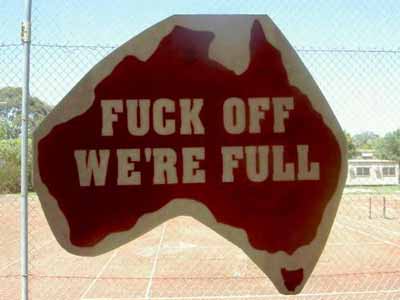
The ongoing, racially-motivated attacks on international students and people from non-Anglo-Saxon backgrounds, and concerted efforts by the Australian Government and the media to downplay racism, prove that Australians are unable and unwilling to live as a civilised society without racism. In white Anglo-Saxon Australia, it remains as deeply-entrenched as ever.

On February 6, 2010, at an international students' safety forum organised by the Victorian Immigrant and Refugee Women's Coalition in Melbourne, the Victoria Police Chief Commissioner Mr Simon Overland said: ”Don't display your iPods, don't display your valuable watch, and don’t display your valuable jewellery. Try to look as poor as you can or risk being assaulted.” (The Age, February 7, 2010). Mr Overland was referring to a spate of racially-motivated attacks against Indians in Melbourne. In reality, Mr Overland was saying: ‘If you look different (i.e., not white Anglo-Saxon), you risk being assaulted and it is your fault.’ Mr Overland was denying the existence of deeply-entrenched racism in Australia and blaming the victims of racially-motivated crimes.

The Australian government and media are refusing to acknowledge racially-motivated violence and continue to play down its horrendous effects on people from non-Anglo-Saxon backgrounds. The Government is concerned that racially-motivated violence on international students will damage Australia’s manufactured image and undermine Australia’s multimillion-dollar “education industry”, which is destroying Australia’s education system (For more, see my: “Australia’s Predatory Education”).

To be clear about Australia’s chronic racism, Indian students are not the only victims of racially-motivated violence in Australia. Violence against Indian students is reflected in racially-motivated crimes against anyone who looks different, whether Indigenous Australians, Muslim Australians, or people from ethnic minorities, including refugees. However, the majority of racially-motivated crimes are covered-up and excluded because they are considered politically unpalatable. Racially-motivated crimes against Indian students took centre stage, because of wide coverage by the vocal Indian media and the Indian community in Australia.

The primary victims of racially-motivated violence and discrimination in Australia are Australians of non-English speaking backgrounds, Muslims Australians, Indigenous Australians and refugees, including Africans.

On September 26, 2007, Liep Gony, a 19-year old Sudanese-Australian was murdered in Melbourne in an unprovoked and cowardly attack by two white Australians who were motivated by hatred of “blacks”. Kevin Andrews, the bigoted former Immigration minister in the Howard’s government, linked the murder of a young man who spent half of his life in Australia, to lack of “integration” on the part of the Sudanese refugees in Australia who continue to suffer discrimination.

In February 2010, an Australian student from non-English speaking background at a regional university in Southern Queensland was seriously assaulted by a white Anglo-Australian landlord. After the police arrived on the scene, the police immediately took sides to protect the white landlord. The student was removed from the property which he was renting and made homeless by the police despite the fact that the landlord was holding the student’s bond and rent money. The student was taken to the hospital and spent the night there. The landlord remains free and continues his illegal business preying on unprotected people.

When the student called the Residential Tenancy Authority, he was informed that the police acted unlawfully and that he should insist on laying charges against the landlord and demand compensation for damage. “Queensland is like the rest of Australia, extremely racist and extremely violent state”, wrote the student in an email. There is no doubt, if the crime had been committed by a non-Anglo Australian, the offender would have been arrested and charged.

The perception that the police were doing everything they could to stop assaults on non-Anglo-Saxon Australians and foreign students doesn’t stand up to scrutiny. Police inaction and Policing are part of the problem of racism in Australia.

On February 14, 2007, Ahmed Dini, an 18-year old youth of Somali origin was assaulted by a police officer at Flemington police station in Melbourne. The assault was so violent, the young man required dental surgery. Recently, an out-of-court settlement awarded the Somali man more than $70,000 in compensation for his ordeal. In another civil case, eight police officers based at Moonee Ponds police station are facing assault and false imprisonment charges after it was alleged that a 19-year-old African youth was assaulted by police and lost part of his sight in one eye. (The Age, March 17, 2010).

A new report by the Springvale Monash Legal Service (SMLS) revealed that police in Melbourne were assaulting and racially abusing young Africans, particularly [1]. Although the report covered only three regions in Melbourne (Braybrook, Flemington and Greater Dandenong), it is a good representative sample of Australia as a whole. In addition, the Australian Broadcasting Corp (ABC) revealed recently that a large number of Victoria Police, including senior officers, are involved in serious racial discrimination after a racist email was circulated state widely on the police email system. While not all police are racist and there are many honest and professional police, the vast majority of police in Australia are white Anglo-Saxon and like the rest of Anglo-Saxon Australia, racism is deeply entrenched in the police force.

A study by the Institute for Community, Ethnicity and Policy Alternatives (ICEPA) of Victoria University in Melbourne found that; “More than half (57%) of international students (not just Indian students) surveyed said they found Australia less safe than they have expected.” A majority (more than three-quarters) of international students reported “threats to their safety”, ranging from verbal abuse to violence that they believed was motivated by “a racial, religious or cultural element”, and even felt that “police at time displayed ethnic and racial bias” towards them, according to the ICEPA study.

Despite the disproportionately low rate of “ethnic” crimes, police across Australia are known to target certain groups. Australians from non-Anglo-Saxon background were more than three times likely to experience discrimination in policing than those white Australians born in Australia.

According to data gathered by the Human Rights and Equal Opportunity Commission – a government funded department – Indigenous Australians are 15 times more likely to be imprisoned and 26 times more likely to be held in police custody than Anglo-Saxon Australians. Indigenous children are 18.6 times more likely to be held in detention.

In Western Australia – the nation’s redneck state – the rate is 32.4 times higher than for Indigenous children. In Queensland – the nation’s most corrupt state – more than half (55.7%) of young Australians in detention were Indigenous. In 2007, 432 of Australia's 742 juvenile prisoners were Indigenous.

Twenty years after the Royal Commission in Aboriginal Death in Custody, Indigenous Australians continue disproportionately to risk arrest, detention, assault and death in custody. In Queensland alone, there have been four deaths in custody in just over a month this year, one on February 20 and three in March 2010.

Discrimination against Muslims Australians (1.8 of Australia’s population) is on the rise. Muslim women have been an obvious target of racially-motivated attacks by racist Anglo Australians because their traditional dress makes them visible. On November 5, 2005, “[a Muslim woman] was punched, kicked, spat on and abused, told to ‘go home to her own country and left with an injury to her right eye’. Her sister, she said, had a knife thrust towards’ her face.” The family was picnicking at a Williamstown’s park near Melbourne. (The Age, November 13, 2005). ”I think families are staying home and avoiding going out, particularly women who wear the hijab, because we have seen that they are particularly targeted”, said Australian Arabic Council deputy chairman, Mr Taimor Hazou.

In February 2009, a Muslim student at the University of Western Sydney – the cesspool of Australian universities – was racially abused and assaulted by one of the University’s unskilled general staff. Despite overwhelming evidence of racially-motivated attack and the fact that the staff has admitted using racist language and violence, the University concocted and used baseless allegations to justify the student’s exclusion from the University just a few months before he was scheduled to complete his graduate study. The student was accused of calling another staff a “racist”, a form of bullying employed by Anglo-Australians not only to intimidate their victims of racism, but also to legitimise and normalise racism. While the student was denied the right to view the “evidence” against him, the accused staff continues to enjoy the University’s protection and support. Anglo Australians do not like to be called racist, but they love to preach “tolerance” with bigotry. When the student made a complaint to the NSW Ombudsman against the unfair and racist conduct of the University, the Ombudsman declined to investigate the case, because it would be against the Ombudsman’s role to act in public interest. The case highlights a policy that forms part of Australia’s systemic racism in higher education and employment.

For a decade, John Howard’s right-wing Liberal (Party) government reinvented and nurtured widespread racism and bigotry against Muslims. The September 11 events in America – which had nothing to do with Muslim nations – were a convenient tool used by the Howard’s government to enact anti-Muslim repressive and draconian “Anti-Terrorism” laws.

The current right-wing Labor Government of Prime Minister Kevin Rudd has adopted the same laws and discriminatory policy of its predecessor. On February 23, 2010, the Rudd Government unveiled its “Counter-Terrorism White Paper”, specifically targeted Muslims in Australia and people from a list of Muslim nations. Mr Rudd alleges that Australia is “under permanent terror threat” and “faces an increased terrorist threat from people born or raised in Australia”. Mr Rudd also announced tougher visa checks of people from ten nations. The Rudd government is refusing to name these nations, and no one knows if Israel, the world’s leading terrorist sate, is on the list.

To date, not a single Australian has been killed by “terrorists” in Australia. It is the Australian army that is participating (as a mercenary force to enforce U.S.-Zionist ideology) in the slaughter of innocent Muslims in Afghanistan and Iraq. In poor Afghanistan, the massacres of school children and women have become a daily ritual. In Iraq, an estimated 1.5 million innocent Iraqis (mostly women and children) have been slaughtered since 2003 – the third phase of a long holocaust that began in 1991 – in one of the most premeditated mass murders of civilians in modern history with the full support of the Australian government. Furthermore, during the Israeli attacks on the population of Gaza (under Israeli military siege since 2006) in December 2008-January 2009, when more than 1,420 defenceless Palestinians (mostly women and children) were massacred in cold blood, Australia was one of a handful of Western governments that supported Israel’s terror and war crimes, and continues to do so unconditionally.

Australia’s “Anti-Terrorism” laws are aimed at manipulating the public, fomenting fear and stoking up resentment against Muslims. Indeed, Muslim men in Australia were rounded-up, imprisoned, put on show trials and convicted of “terrorism”. Recently, some Muslim men were found guilty on preposterous charges – with no victims and no known targets. The aim is to intimidate and bully the entire Muslims community, and to send a message that Muslims are dangerous and that Muslim Australians do “not belong” to this country.

To make the situation worse for Muslims, the Australian media – a collection of anti-Muslim Zionist and proto-fascist outlets competing with each other to promote Israel-U.S. ideology – play an important role in the construction of racialised communities as “ethnic” and in inciting hatred and promoting Islamophobia among Anglo-Saxon Australians. Muslim Australians are demonised and presented as a ‘threat to the Australian values’. Adolf Hitler and his Nazi propagandists would have been pleased to have such racist propaganda organs on their side, inflaming xenophobia and promoting fascist ideology.

On the surface, Australia is a friendly and “multicultural” (best defined as anti-cultural) country until you scratch the surface. Most, if not all, Anglo-Saxon Australians see themselves as being uniquely pure and superior to all ‘other’ people by virtue of their Anglo-Saxon origin. It is a very backward thinking. Racially-motivated violence and discrimination formed the foundation of Anglo-Australia and were forged into the Australian national character, and remain so today alive and thriving throughout Australian culture.

Australia’s manufactured image of a “fair-go for all” is an illusion designed to project Australia as an equal society and cover-up deeply-entrenched racism. Just take a look at who is doing what. Privileged employments are reserved for the white Anglo-Saxon majority, with few places for those exotic faces that are chosen to tick the so-called “equal opportunity” box. White Anglo-Saxon middle-class and rich males “shape legislation, administration and judicial texts in their own image and to their own advantage”, wrote Margaret Thornton, a legal scholar and professor of law at the Australian National University (ANU). One of the many places to watch white Anglo-Saxon Australians indulging in keeping their privilege and defending their white ideology is the exclusively white clubs of the Australian federal and state parliaments, they are white only territories.

A survey on racial and ethnic discrimination in Australia by the Research School of Economics at the Australian National University released in June 2009 found clear evidence of racism in employment. The study revealed that Australians with “foreign” sounding names had greater difficulty of finding employment than those Australians with Anglo-Saxon names. According to the study, people with a Middle Eastern background (i.e., Muslims) had to send 127 per cent more applications for a waiter’s position than their Anglo-Saxon contenders [2]. As a result, unemployment among Australians from non-Anglo-Saxon background is significantly high. As a nation, Australia has no ‘Bill of Rights’, but it has ‘anti-discrimination’ legislation to legitimise racial discrimination.

A civilised Australia rests on the pillars of non-discriminatory equality and justice for all of its citizens, regardless of skin colour, race, religion, wealth and political affiliation. The best solution is for Australia to adopt non-discriminatory policies and makes people’s safety and wellbeing its top priority.
Ghali Hassan is an independent writer living in Australia. Notes: [1] Smith B. & Reside, S. (2010, March). ‘Boys, You Wanna Give Me Some Action?’ Intervention into Policing of Racialised Communities in Melbourne. Melbourne: Legal Services Board of Victoria. (PDF).

[2] Booth, A., Leigh, A., & Varganova, E. (2009, June). Does Racial and Ethnic Discrimination Vary Across Minority Groups? Evidence from a Field Experiment, (Working paper). Canberra: Australian National University, Research School of Economics. (PDF).

US special forces 'tried to cover-up' botched Khataba raid in Afghanistan

by Jerome Starkey

Times Online

US special forces soldiers dug bullets out of their victims’ bodies in the bloody aftermath of a botched night raid, then washed the wounds with alcohol before lying to their superiors about what happened, Afghan investigators have told The Times.

Two pregnant women, a teenage girl, a police officer and his brother were shot on February 12 when US and Afghan special forces stormed their home in Khataba village, outside Gardez in eastern Afghanistan. The precise composition of the force has never been made public.

The claims were made as Nato admitted responsibility for all the deaths for the first time last night. It had initially claimed that the women had been dead for several hours when the assault force discovered their bodies.

“Despite earlier reports we have determined that the women were accidentally killed as a result of the joint force firing at the men,” said Lieutenant-Colonel Todd Breasseale, a Nato spokesman. The coalition continued to deny that there had been a cover-up and said that its legal investigation, which is ongoing, had found no evidence of inappropriate conduct.

The Kabul headquarters of General Stanley McChrystal, the commander of US and Nato forces, claimed originally that the women had been “tied up, gagged and killed”.

A senior Afghan official involved in a government investigation told The Times: “I think the special forces lied to McChrystal.”

“Why did the special forces collect their bullets from the area?” the official said. “They washed the area of the injuries with alcohol and brought out the bullets from the dead bodies. The bodies showed there were big holes.”

The official, who asked not to be named until the results of the investigation have been made public, said that the assault force sealed off the compound from 4am, when the raid started, to 11am, when Afghan officials from Gardez were finally allowed access to the house.

At least 11 bullets were fired during the raid, the investigator said, and the shooting was carried out by two American gunmen positioned on the roof of the compound. Only seven bullets were recovered from the scene.

“I asked McChrystal, ‘why did the Americans clean some of the bullets from the area?’ They don’t have the right to do that,” the official said.

Haji Sharabuddin, the head of the family who were attacked, told The Times last month that troops removed bullets from his relatives’ bodies, but his claims were impossible to verify. The hallway where four of the five victims were killed had been repainted and at least two bullet holes had been plastered over.

Video footage of the raid’s aftermath, collected by Afghan investigators, shows close-up shots of one man’s bloodstained and punctured torso and walls with blood on them. The Afghan official’s conclusion that the bullets were removed is based on the testimony of survivors, analysis of the photographs and the missing bullets.

Nato promised a joint forensic investigation in a statement issued after the raid, but Rear Admiral Greg Smith, the coalition’s director of communications in Afghanistan, said that this had proved impossible because the bodies were buried the same day in accordance with Islamic custom.

Instead Afghanistan’s Ministry of Interior sent its top criminal investigator from Kabul, and a Canadian brigadier-general led a separate military inquiry.

The Afghan investigation differed in one respect from The Times’ findings. Survivors told this newspaper that Saranwal Zahir, the police officer’s brother, was shot when he tried to shout that his family was innocent. The women, who were crouching behind him, were killed in the same volley of fire. Afghan investigators believe that Mr Zahir was carrying an AK47 and wanted to avenge his brother’s killers. The women were clustered around him, trying to pull him inside the house, when the second US gunman opened fire, killing all four of them.

Footage collected by the Afghan team also shows a man in United States Army uniform taking pictures of the bodies. The findings have not been made public. The Interior Ministry is expected to pass a report to the Attorney-General’s office, which will decide whether or not it can press criminal charges.

The family had more than 25 guests on the night of the attack, as well as three musicians, to celebrate the naming of a newborn child.

“In what culture in the world do you invite ... people for a party and meanwhile kill three women?” asked the senior official. “The dead bodies were just eight metres from where they were preparing the food. The Americans, they told us the women were dead for 14 hours.”

In a statement yesterday, Brigadier-General Eric Tremblay, a Nato spokesman, said: “We deeply regret the outcome of this operation, accept responsibility for our actions that night, and know that this loss will be felt forever by the families.

“The force went to the compound based on reliable information in search of a Taleban insurgent, and believed that the two men posed a threat to their personal safety. We now understand that the men killed were only trying to protect their families.”