Showing posts with label Children. Show all posts

2022-08-10

Gaza: The names and faces of the 16 Palestinian children killed in Israel's onslaught


At least 45 Palestinians were killed and more than 360 wounded as Israeli air strikes rained down on the besieged Strip over three days

Middle East Eye

These sixteen Palestinian children were looking forward to a summer filled with joy. They planned to play football, head to the beach and attend summer camp.

But over the course of three horrific days, Israeli forces unleashed a wave of air strikes on the besieged Gaza Strip, killing 45 people, including the 16 children, and wounding at least 360 others.

"There is no safe space in the Gaza Strip for Palestinian children and their families and they increasingly bear the brunt of Israel’s repeated military offensives," Ayed Abu Eqtaish, the accountability programme director at the NGO Defence for Children International - Palestine (DCIP), said in a statement.

While a ceasefire came into effect on Sunday following an agreement brokered by Egypt, Palestinians have lamented the devastating bombing campaign as more details emerge of those who died.

The Israeli army has claimed that some of the civilian casualties were killed by misfired rockets, without providing independently-verified evidence. The Palestinian health ministry says all of the people killed, including the 16 children, died as a result of Israeli air strikes.

Some families have been willing to share their stories, while others have been in a state of mourning and have asked for privacy.

Here are the names and faces of the children that died:

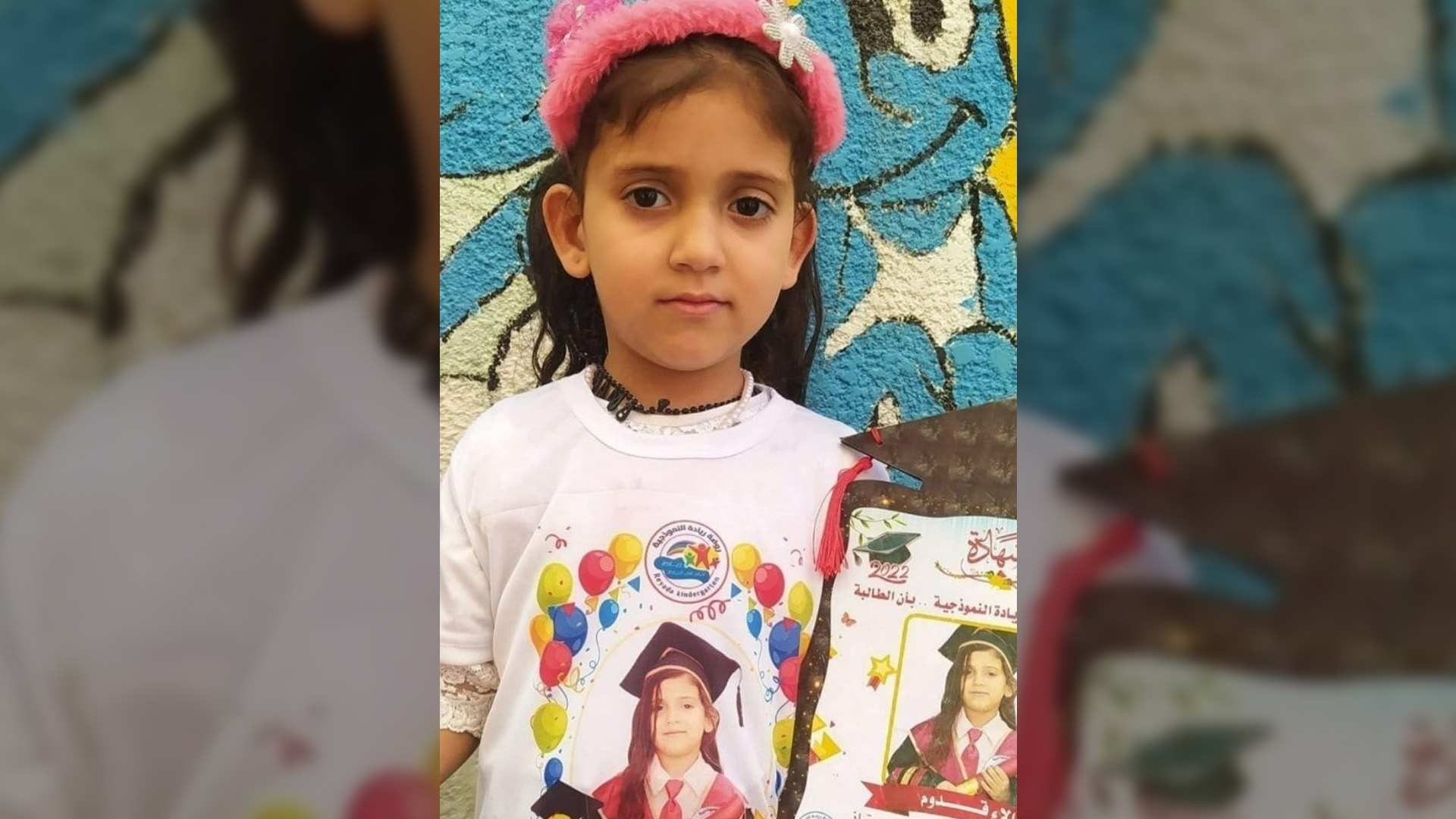
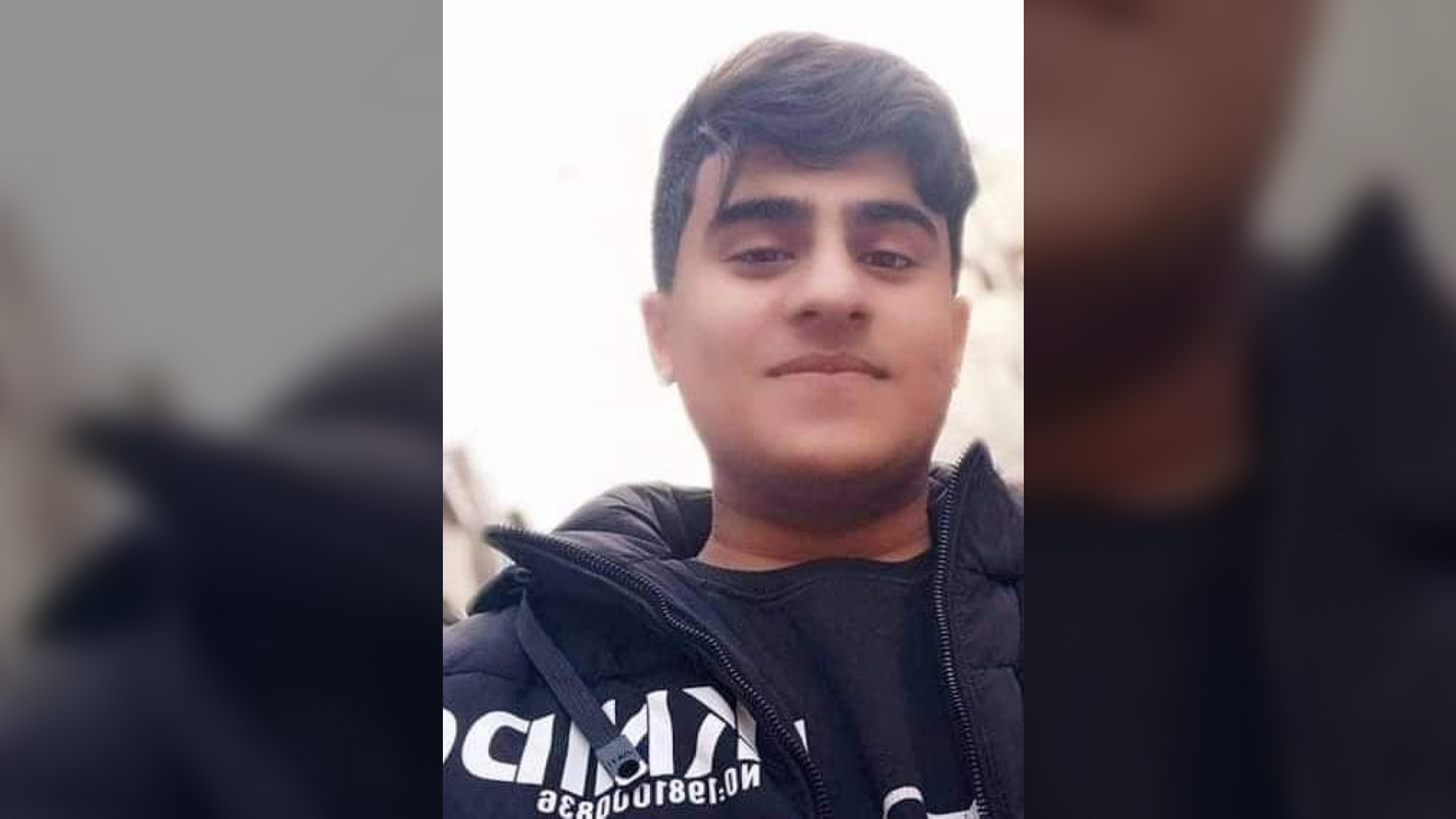
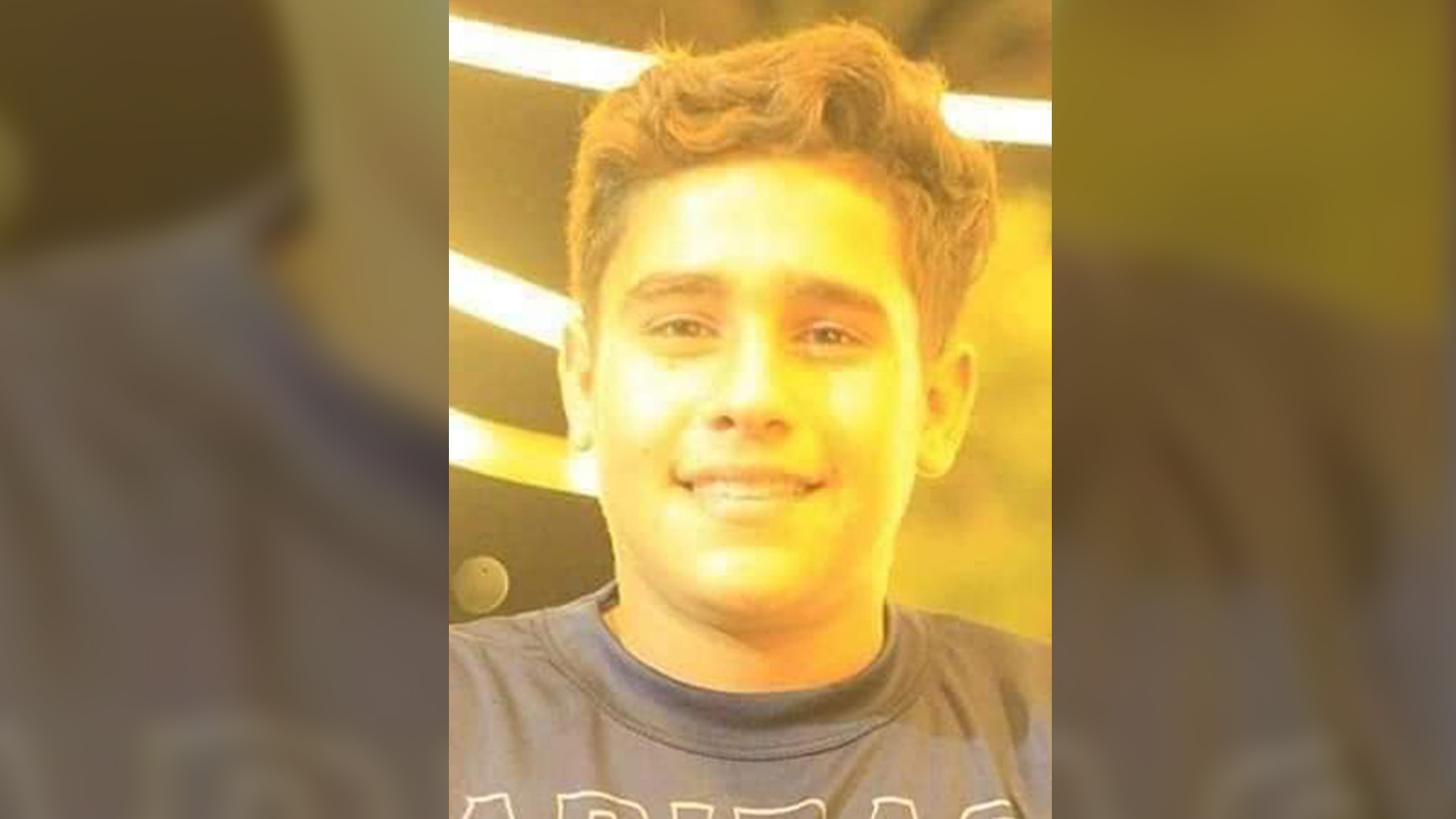
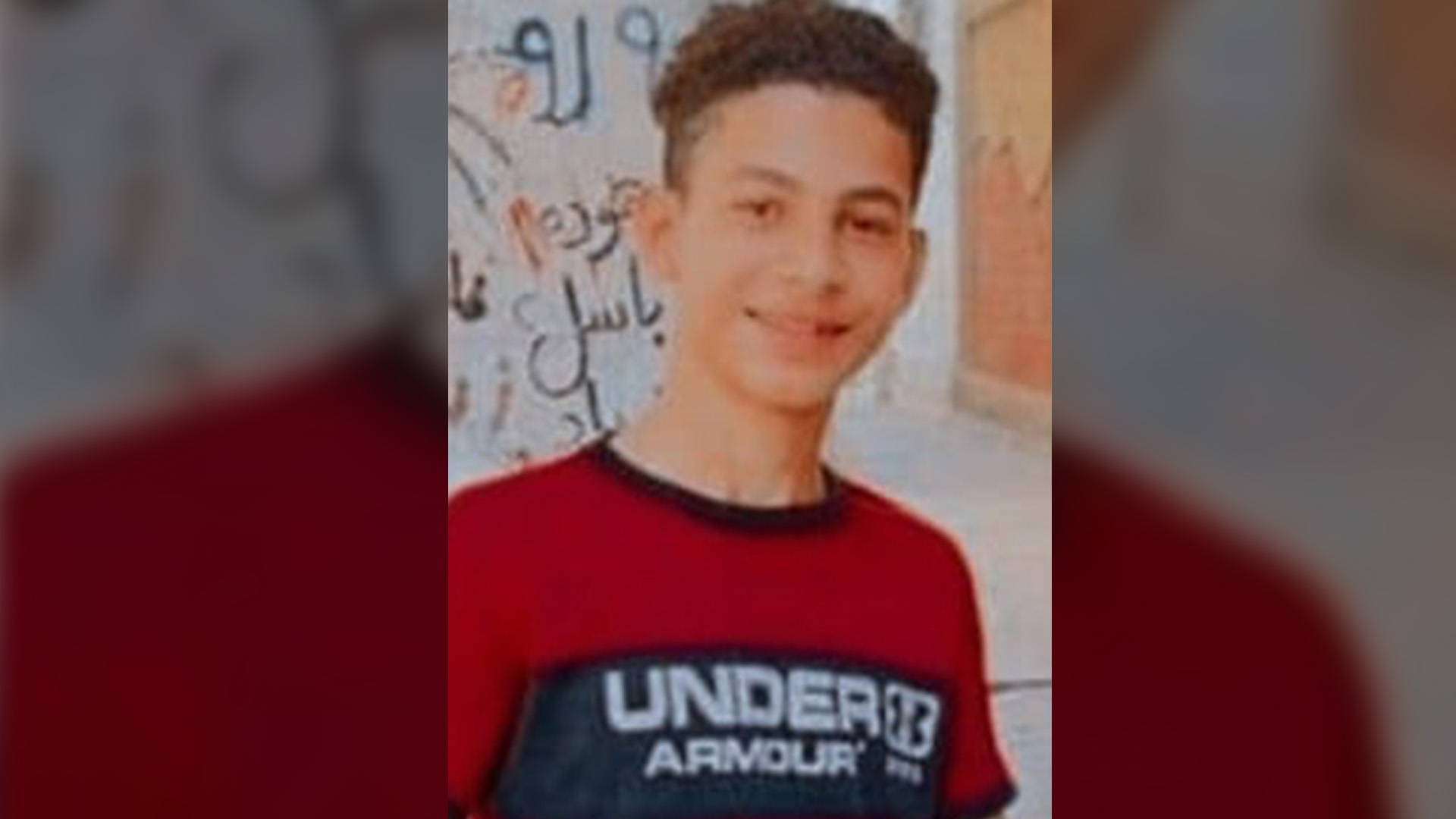
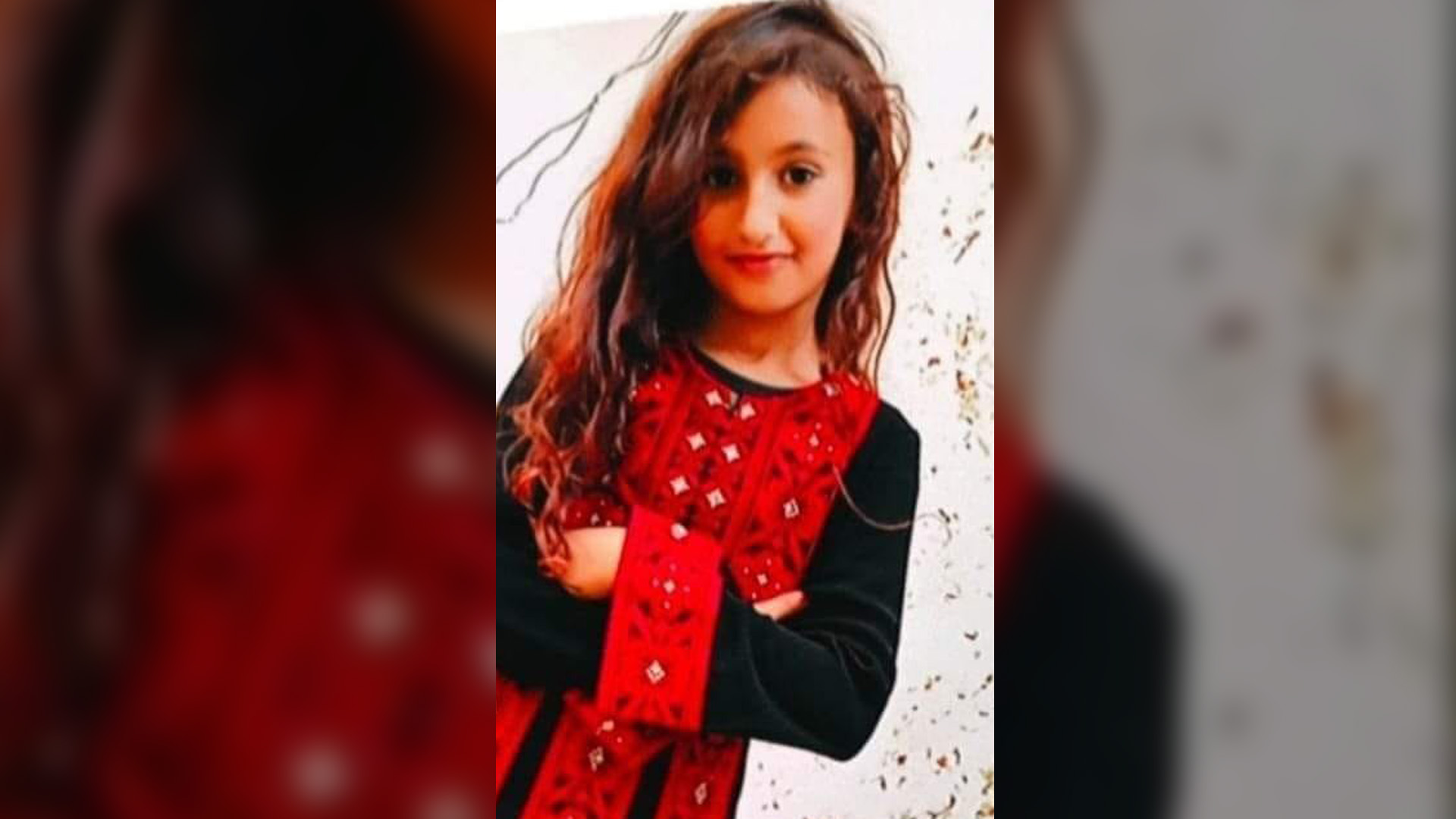
Alaa Abdullah Qaddoum, aged five

.
Alaa Abdullah Qaddoum, five, was killed on 5 August 2022 by an Israeli air strike in the Shujaiya neighbourhood in the northern Gaza Strip (Social media)

Alaa Abdullah Qaddoum was among the first casualties on Friday following Israel's decision to launch air strikes on the besieged Gaza Strip. 

She died on 5 August while she was playing with friends outside her home in the Shujaiya neighbourhood in the northern Gaza Strip.

Her seven-year-old brother and father were wounded in the strike.

"Alaa was an innocent five-year-old playing in the street with her brothers and cousins. What did she do to be killed?" her cousin, Abu Diab Qaddoum, told Middle East Eye.

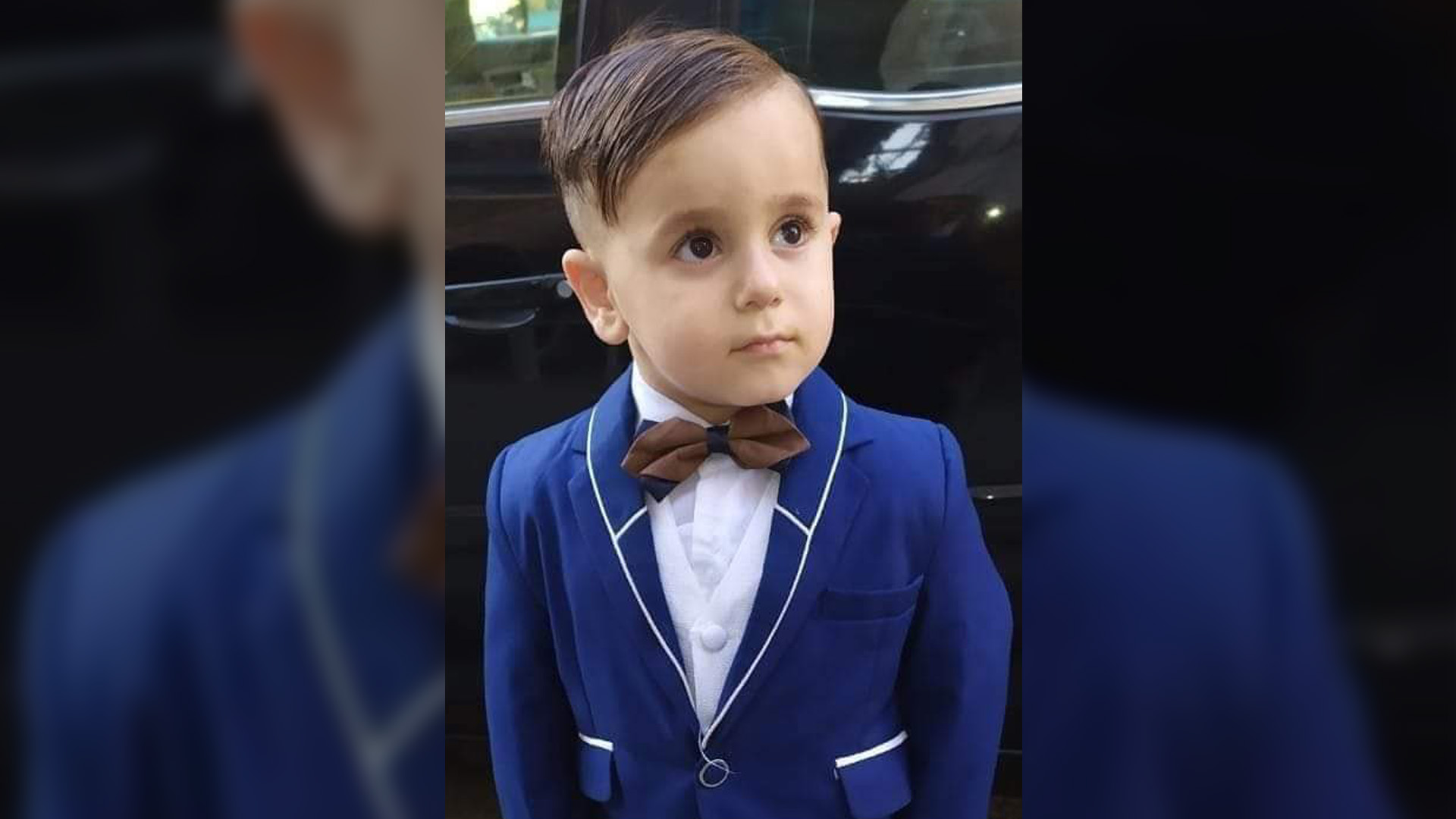
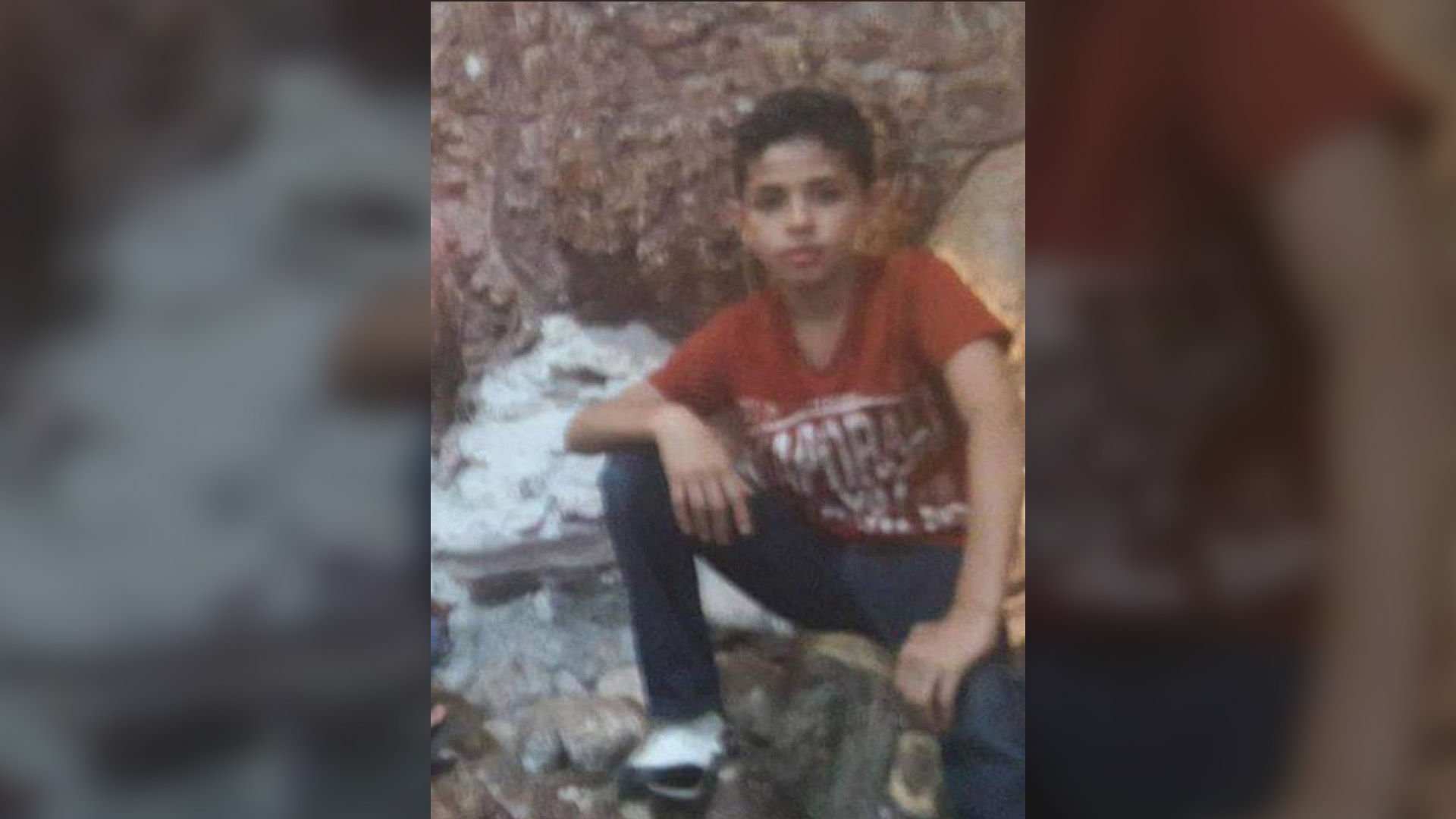
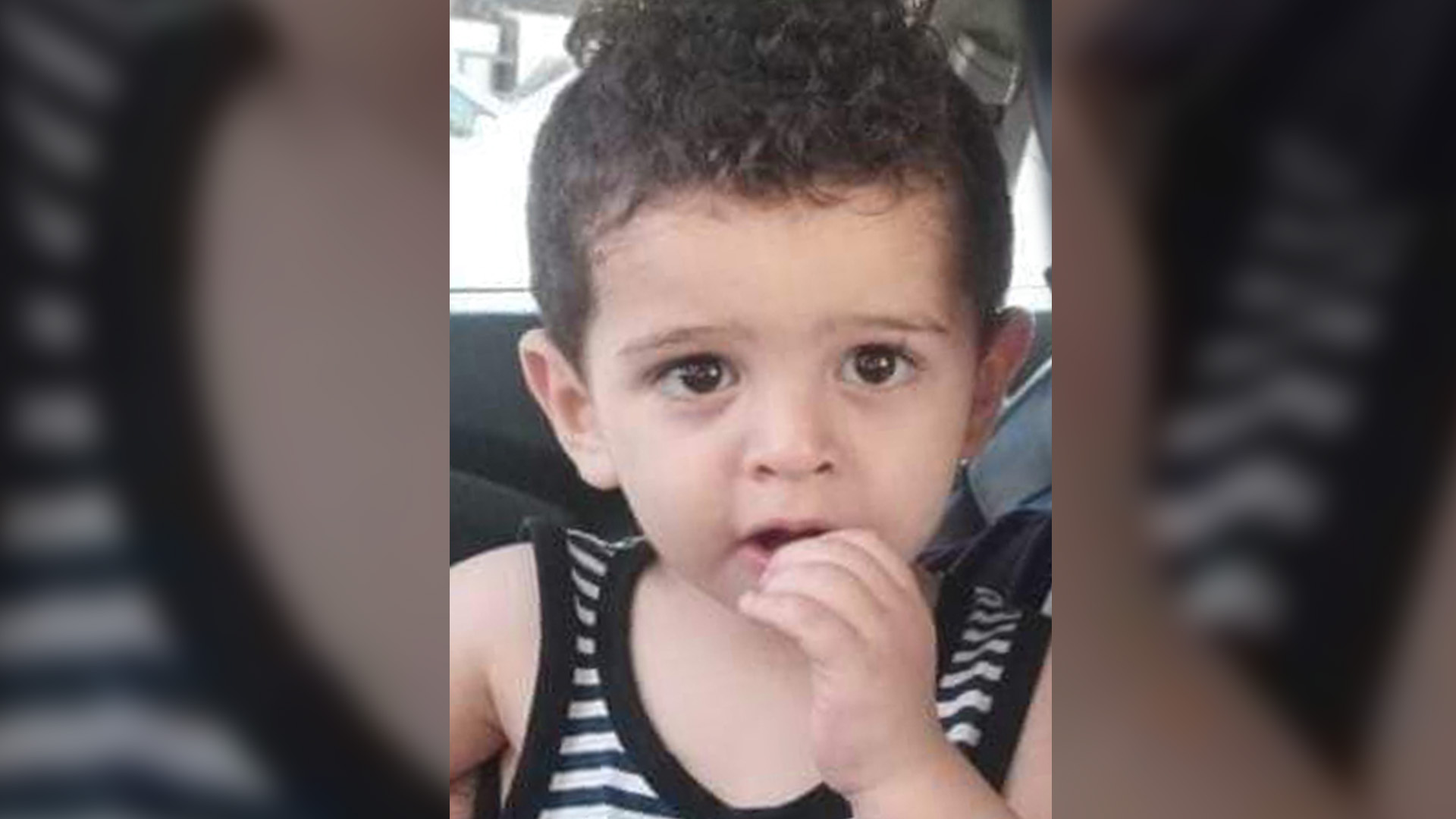
Momen Muhammed Ahmed al-Nairab, aged five

.
Momen Muhammed ِAhmed al-Nairab, five, was killed on 6 August 2022 by a suspected Israeli air strike on the Jabalia refugee camp in the northern Gaza Strip (Social media)

Momen Muhammed ِAhmed al-Nairab, five, was killed in a suspected Israeli air strike on Saturday on the Jabalia refugee camp in the northern Gaza Strip.

The camp is one of the most densely populated places on Earth and houses more than 114,000 people.

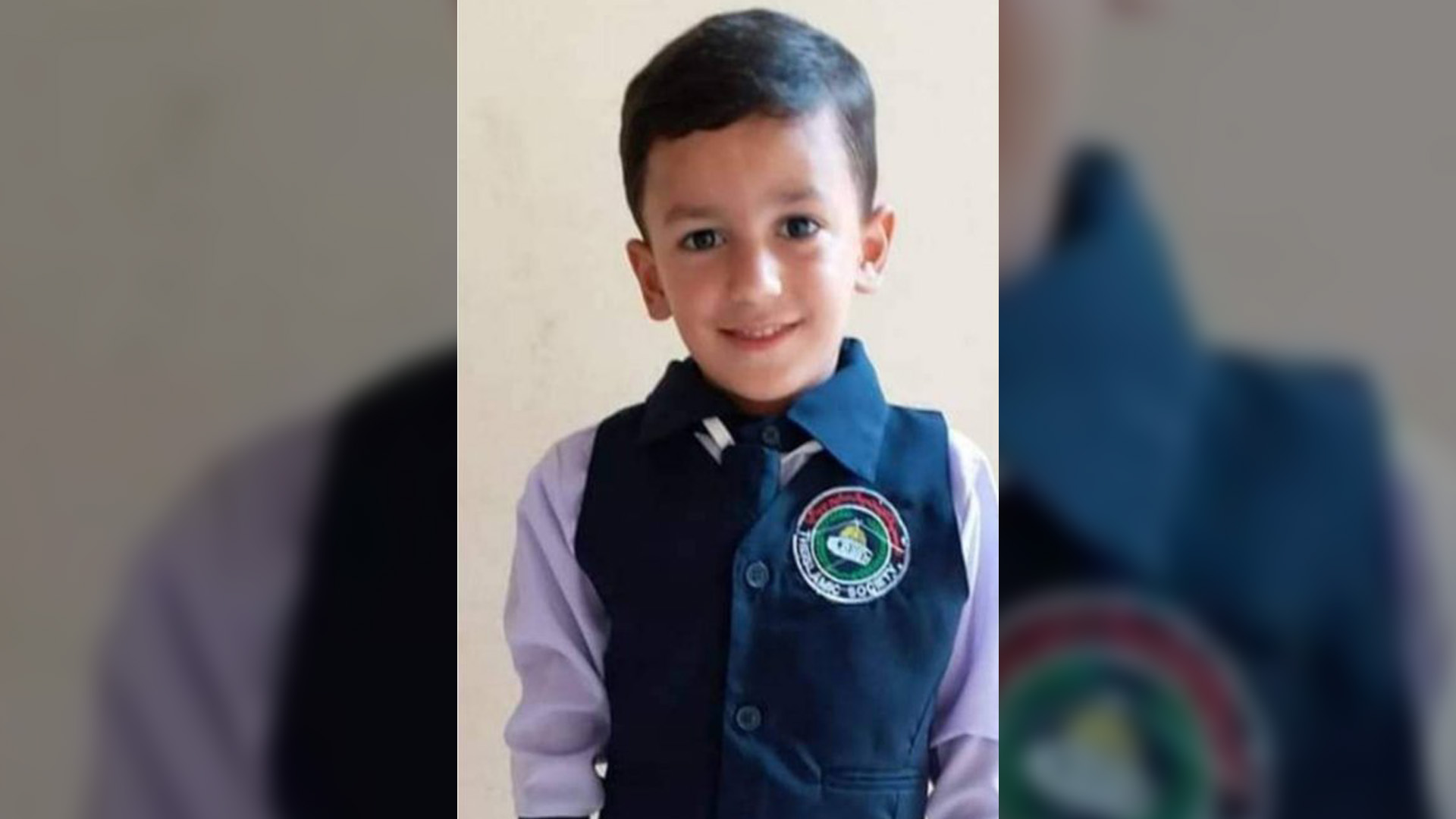
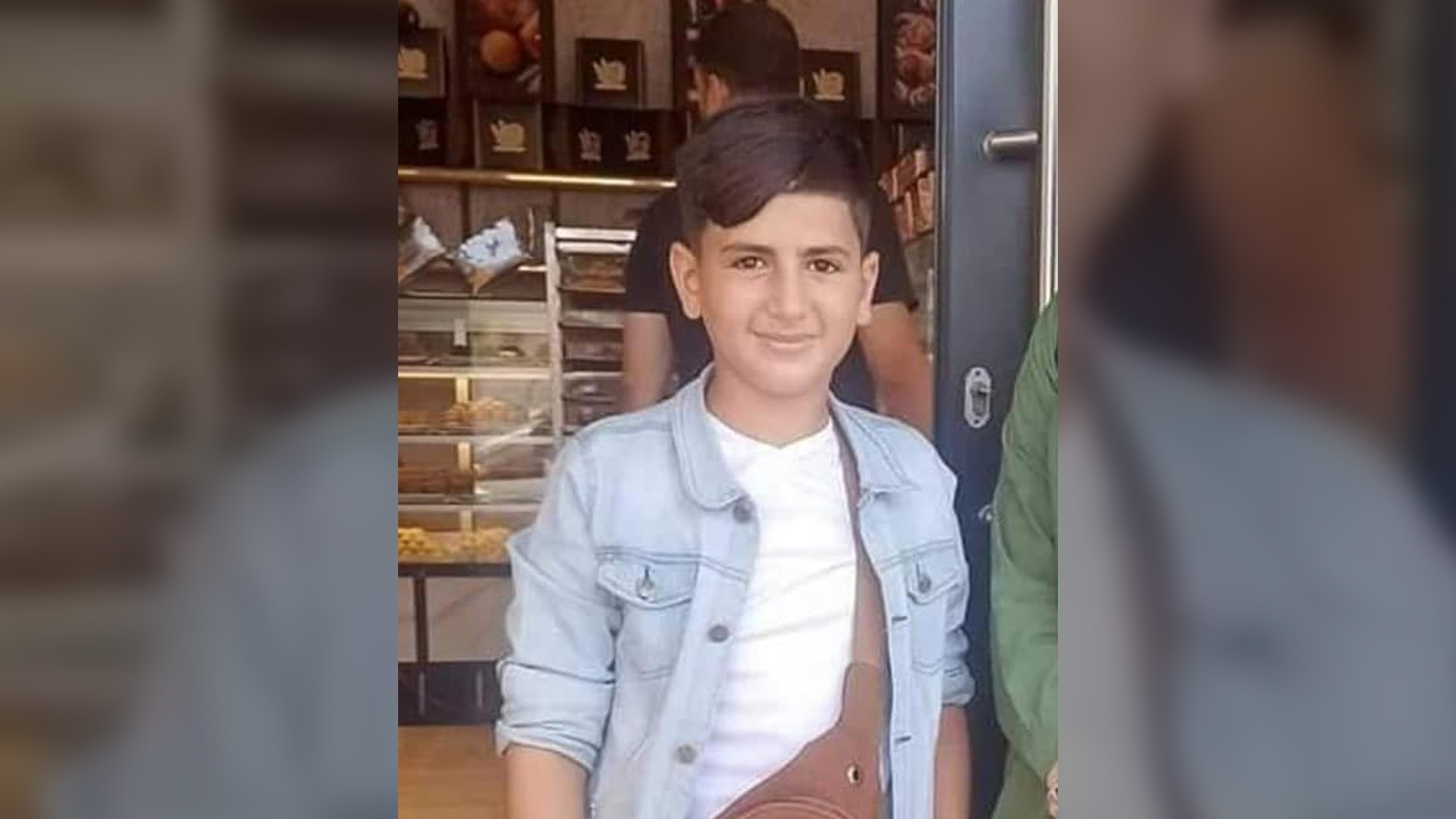
Hazem Muhammed Ali Salem, aged nine 

.
Hazem Muhammed Ali Salem, nine, was killed on 6 August 2022 by a suspected Israeli air strike on the Jabalia refugee camp in the northern Gaza Strip (Social media)

According to documentation collected by Defence for Children International, Hazem Muhammed Ali Salem, nine, was among the four children in the blast on the Jabalia refugee camp on Saturday.

Israel says it wasn't behind the raid, but Palestinian sources say it could not have come from anywhere else.

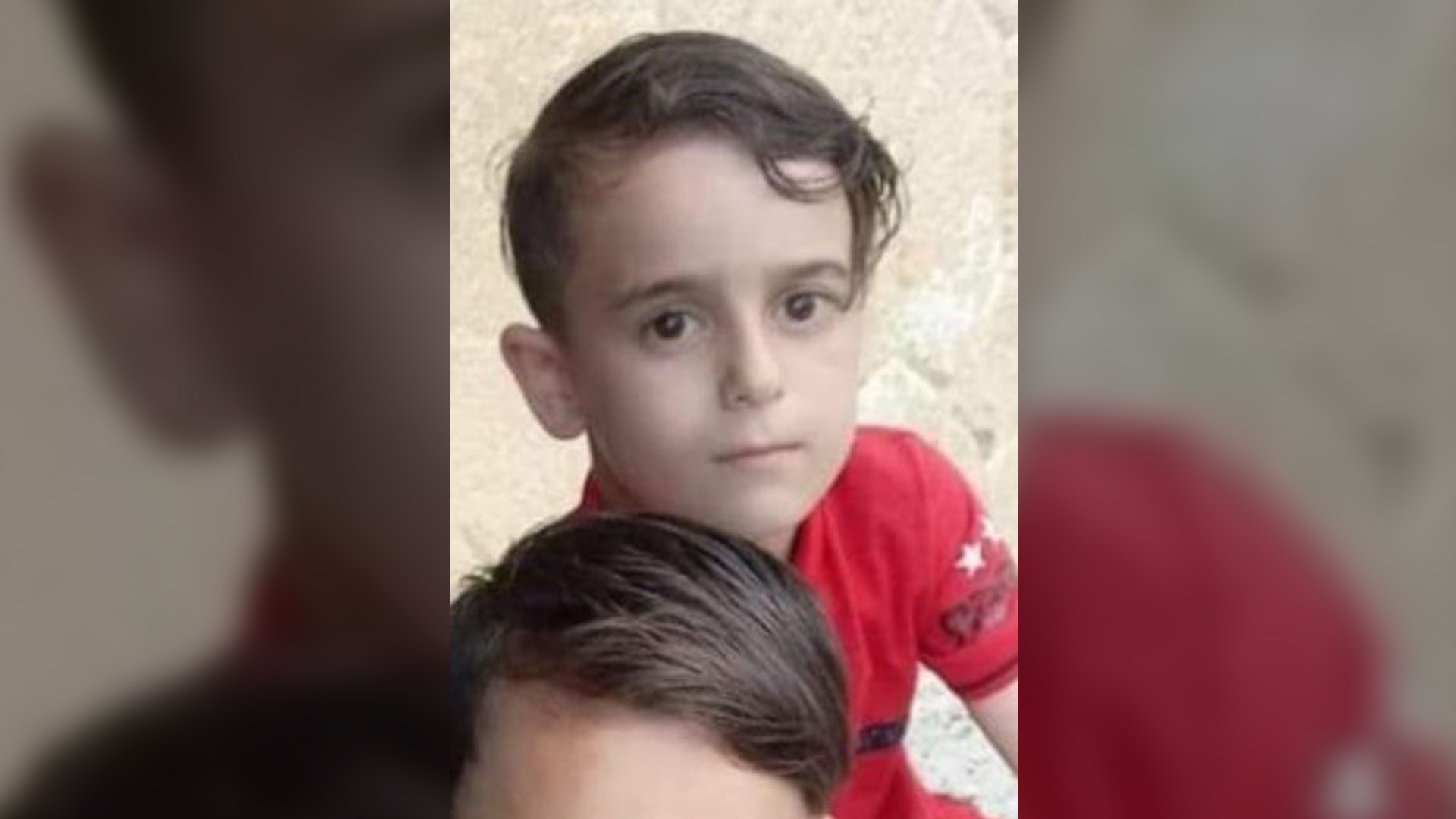
Ahmed Muhammed al-Nairab, aged 11 

.
Ahmed Muhammed al-Nairab, 11, was killed on 6 August 2022 by a suspected Israeli air strike on the Jabalia refugee camp in the northern Gaza Strip (Social media)

Ahmed Muhammed al-Nairab, 11, was among the four children killed on Saturday when suspected Israeli warplanes struck the Jabalia refugee camp.

Ahmed Walid Ahmed al-Farram, aged 16

.
Ahmed Walid Ahmed al-Farram, 16, was killed on 6 August 2022 by a suspected Israeli air strike on the Jabalia refugee camp in the northern Gaza Strip (Social media)

Ahmed Walid Ahmed al-Farram, 16, was also killed on Saturday when suspected Israeli warplanes struck the Jabalia refugee camp.

According to the UN agency for Palestinian refugees (Unrwa), the camp suffers from high unemployment, regular electricity cuts and a contaminated water supply.

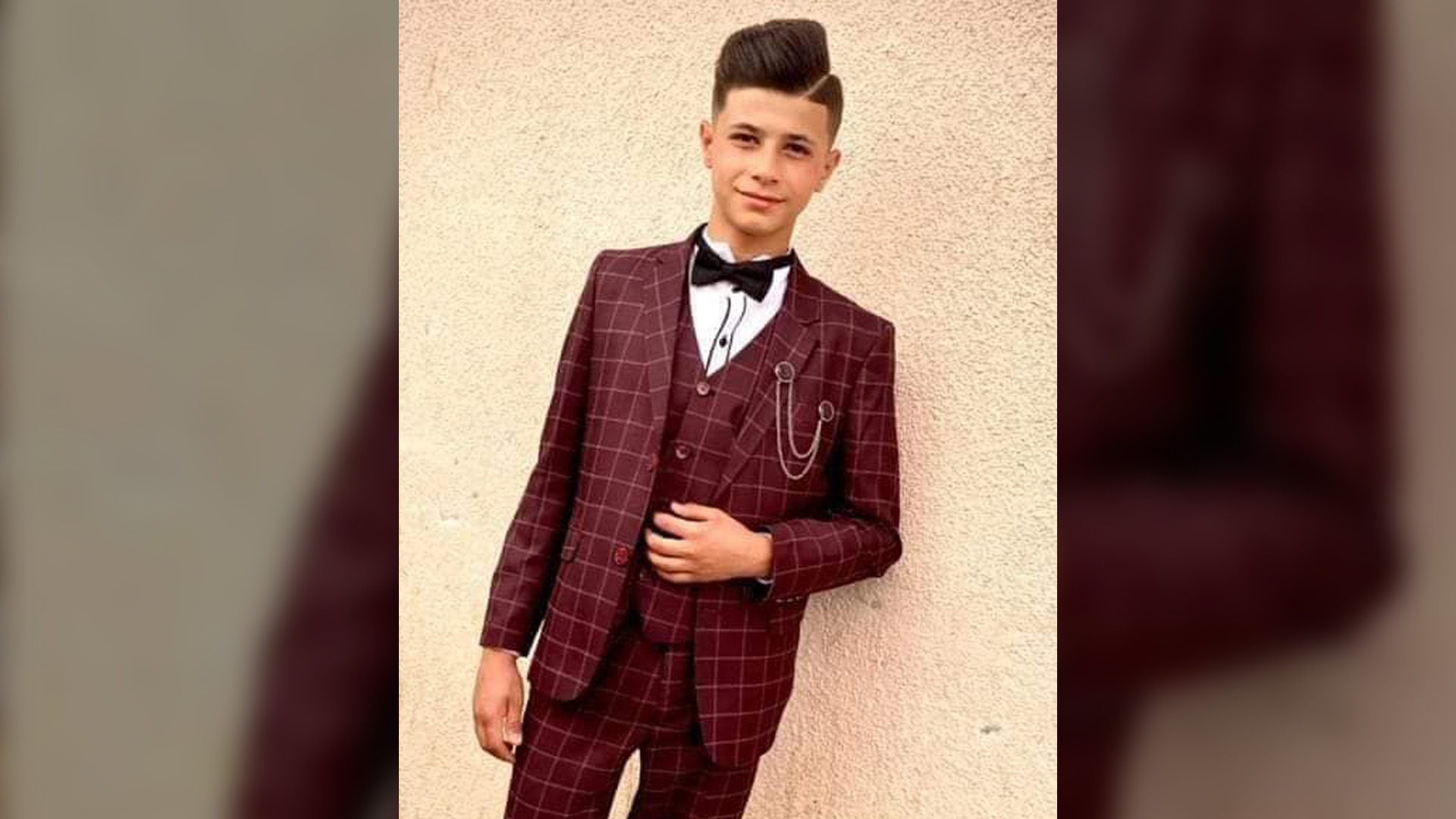
Muhammed Iyad Muhammed Hassouna, aged 14

.
Muhammed Iyad Muhammed Hassouna, 14, was killed on 6 August 2022 by an Israeli air strike in Rafah in the southern Gaza Strip (Social media)

Muhammed Iyad Muhammed Hassouna, 14, was killed when an Israeli air strike targeted his home in Rafah in the southern Gaza Strip.

Adeeb Ahmad, an eyewitness to the attack, told MEE that at least eight people were killed in the raid.

"The house was hit without any prior notice," Ahmad said. "Homes are overcrowded here, housing seven to eight people each, and they are so close to each other, so when one house is hit several houses around it are impacted."

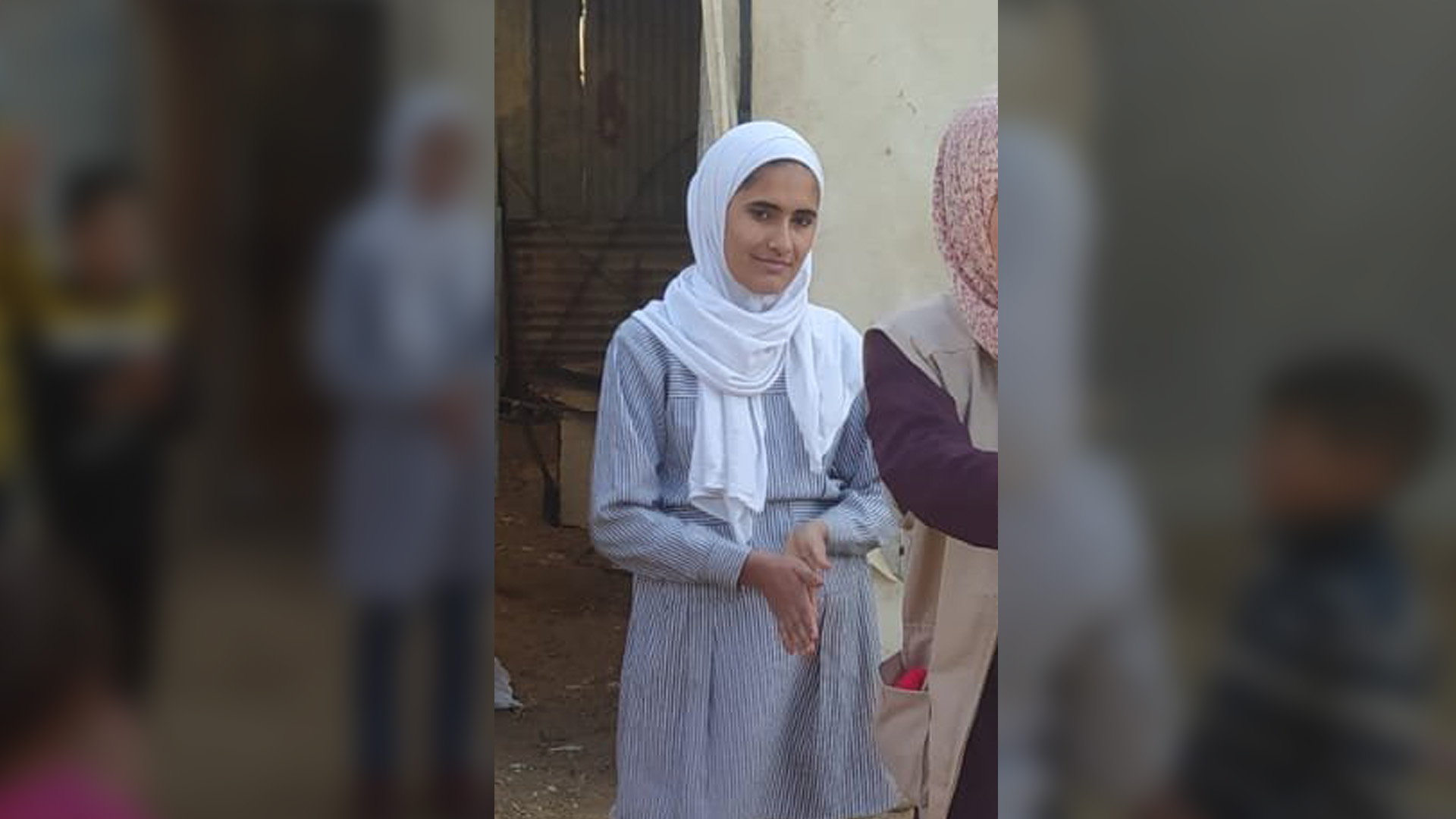
Fatma Aaed Abdulfattah Ubaid, aged 15

.
Fatma Aaed Abdulfattah Ubaid, 15, was killed on 7 August 2022 by an Israeli air strike in Beit Hanoun in the northern Gaza Strip (Social media)

Fatma Aaed Abdulfattah Ubaid, 15, was among nine children killed in the space of 30 minutes, shortly before the ceasefire was announced on Sunday. 

Ubaid was killed in Beit Hanoun on Sunday in the northern Gaza Strip.

Ahmed Yasser Nimr al-Nabahin, aged nine 

Muhammed Yasser Nimr al-Nabahin, aged 12

Dalia Yasser Nimr al-Nabahin, aged 13

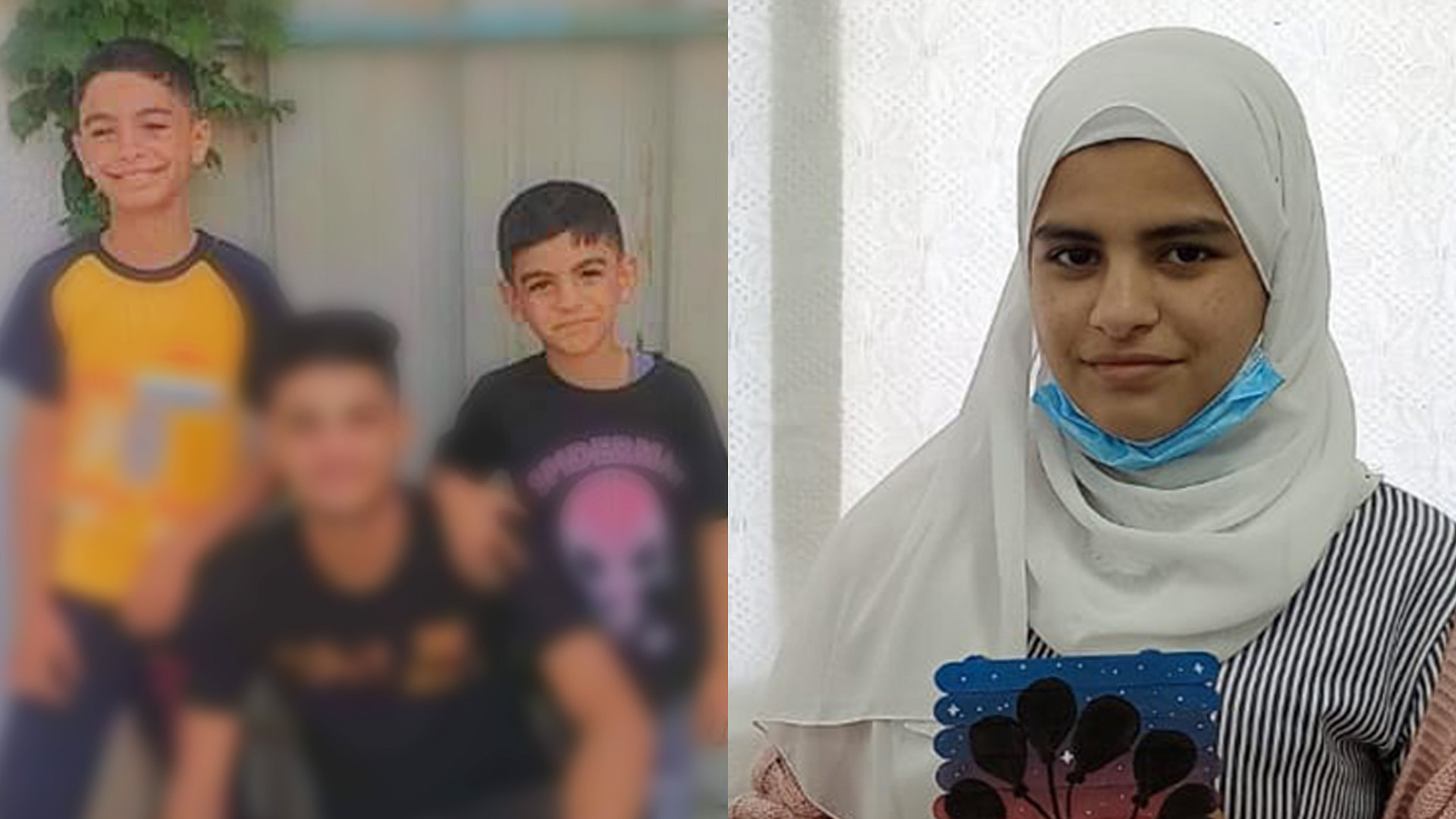
Ahmed Yasser Nimr al-Nabahin, aged nine  Dalia Yasser Nimr al-Nabahin, aged 13 Muhammed Yasser Nimr al-Nabahin, aged 12
Siblings Muhammed (L), Ahmed (C) and Dalia (R) were killed on 7 August 2022 by an Israeli air strike on the Bureij refugee camp in the Gaza Strip (Social media)

An Israeli air strike on the Bureij refugee camp on Sunday killed Yasser al-Nabahin and his three children, Muhammed Yasser Nimr al-Nabahin, 13 (left); Ahmed Yasser Nimr al-Nabahin, nine (centre); and their sister, Dalia Yasser Nimr al-Nabahin, 13 (right).

Muhammed Salah Nijm, aged 16 

.
Muhammed Salah Nijm, 16, was killed on 7 August 2022 by a suspected Israeli air strike on the Falluja cemetery in northern Gaza (Social media)

A suspected Israeli air strike on the Falluja cemetery in northern Gaza on Sunday killed five boys as they sat near a grave.

Muhammed Salah Nijm, 16, was among those killed.

Hamed Haidar Hamed Nijm, aged 16

.
Hamed Haidar Hamed Nijm, 16, was killed on 7 August 2022 by a suspected Israeli air strike on the Falluja cemetery in northern Gaza (Social media)

Hamed Haidar Hamed Nijm, 16, was among those killed in Sunday's raid on the graveyard. Eyewitness Mohammad Sami told MEE that four of the boys were cousins and the fifth was their friend.

"They come to sit here every day," Sami said. "This is a safe area."

Jamil Nijm Jamil Nijm, aged four

.
Jamil Nijm Jamil Nijm, four, was killed on 7 August 2022 by a suspected Israeli air strike on the Falluja cemetery in northern Gaza (Social media)

Jamil Nijm Jamil Nijm was the youngest child to be killed during Israel's offensive on the Gaza Strip. He was only four years old.

Jamil Ihab Nijm, aged 13

.
Jamil Ihab Nijm, 13, was killed on 7 August 2022 by a suspected Israeli air strike on the Falluja cemetery in northern Gaza (Social media)

Jamil Ihab Nijm, 13, was the fourth child from the Nijm family to be killed in Sunday's suspected air strike.

Nazmi Fayez Abdulhadi Abukarsh, aged 16 

.
Nazmi Fayez Abdulhadi Abukarsh, 16, was killed on 7 August 2022 by a suspected Israeli air strike on the Falluja cemetery in northern Gaza (Social media)

Nazmi Fayez AbdulhadiAbukarsh, 16, a friend of the Nijm boys, was killed in the suspected air strike on the graveyard.

Hanin Walid Muhammed Abuqaida, aged 10

.
Hanin Walid Muhammed Abuqaida, 10, succumbed to wounds on 8 August 2022 sustained from a suspected Israeli air strike on the Jabalia refugee camp in Gaza (Social media)

Hanin Walid Muhammed Abuqaida, 10, was injured in an air strike on the Jabalia refugee camp on Sunday but succumbed to her wounds on Monday.

She was 10 years old.

This article is available in French on Middle East Eye French edition.

Killing Children in ‘Self Defense’

by Craig Murray

Consortiumnews.com

Nobody can tell you how many children have been killed by drone strikes or “targeted” missiles and bombings in Afghanistan, Pakistan, Syria, Iraq, Lebanon, Somalia, Yemen or Libya, writes Craig Murray.

The lives of the latest 15 Palestinian children to be murdered by Israel in Gaza, lives ripped from their small, terrified bodies with devastating violence, do not seem of much concern to the powerful in the West, or indeed anywhere. 

The BBC repeated without question Israel’s claim that its latest launch of high explosive at the Gaza concentration camp was to prevent a terrorist attack on Israeli civilians ? of which prospective attack no evidence has been produced. No Western media has asked for any. Nor has it been explained why the attack would be stopped by Israel obliterating the alleged leader in Gaza of Islamic Jihad and many innocents who chanced to be in his vicinity. 

The scenarios in which the assassination of a leader prevent an attack which is in train are Hollywood. 

The brave Daniel Hale sits in solitary confinement (euphemistically called a “Communications Management Unit) for blowing the whistle on the U.S. drone assassination programme in Afghanistan.

Hale, a drone operative, revealed that 90 percent of people killed by the drone assassination programme in Afghanistan were not the designated target, but that by default everybody killed by a drone strike was labeled an enemy combatant unless positive proof to the contrary were provided (which of course no effort was made to collect).

The extra-judicial execution of “bad guys” with no legal process is not only carried out by Israel. The U.S. and U.K. do it all the time, across the conflicts created by their own neo-imperial adventures and lust for hydrocarbons. 

Nobody can tell you how many children have been killed by drone strikes or “targeted” missiles and bombings in Afghanistan, Pakistan, Syria, Iraq, Lebanon, Somalia, Yemen or Libya. 

The total across those countries is undoubtedly tens of thousands of dead children. We, however, are apparently the good guys. All those children have been killed in our “self-defence,” just as Israel killed those children in Gaza. I do hope that helps you sleep more soundly.

Craig Murray is an author, broadcaster and human rights activist. He was British ambassador to Uzbekistan from August 2002 to October 2004 and rector of the University of Dundee from 2007 to 2010. His coverage is entirely dependent on reader support. Subscriptions to keep this blog going are gratefully received.

This article is from CraigMurray.org.uk.

2021-01-14

Trump’s Latest Yemen Move Far Worse Than Capitol Riot

Caitlin Johnstone condemns the U.S. designation of the Houthis as a terrorist organization and the scarce media coverage of the Saudi-led conflict’s deadly toll.

By Caitlin Johnstone

CaitlinJohnstone.com

While the Capitol riot is being hysterically compared to Pearl Harbor and Kristallnacht by the political/media class, the Trump administration has done something far, far worse that is receiving far, far less attention.

The U.S. State Department has officially announced its intention to designate Yemen’s Houthis as a terrorist group, as many had previously warned. Humanitarian organizations have been condemning the move as it will make it more difficult to provide aid to a population that is already being brutalized by the worst mass atrocity in the entire world, a Saudi-led atrocity which could not occur without the help of the western power alliance.

We are already seeing some effects of this designation.

Antiwar‘s Dave DeCamp reports the following:

“The terror designation will hamper the efforts of international charities that deliver food to Houthi-controlled areas, where 70 percent of Yemen’s population lives and malnutrition is the most widespread.

Aid agencies fear their work in north Yemen will now be criminalized since the Houthis are the authority they have to deal with and make transactions with. US terror designations open up sanctions on any individuals or entities that do business with those Washington brands as terrorists.

Pompeo said exemptions would be made for humanitarian goods. But any additional roadblocks for aid agencies will cause more suffering in Yemen since the situation is so dire. “Even with exemptions, the operation will be compromised,” said Janti Soeripto, the president of Save the Children, according to AP News.”

The United Nations conservatively estimates that some 233,000 Yemenis have been killed in the war between the Houthis and the U.S.-backed Saudi-led coalition, mostly from what it calls “indirect causes.” Those indirect causes would be disease and starvation resulting from what UN Secretary-General Antonio Guterres calls “the worst famine the world has seen for decades.”

When people hear the word “famine” they usually think of mass hunger caused by droughts or other naturally occurring phenomena, but in reality the starvation deaths we are seeing in Yemen (a huge percentage of which are children under the age of 5) are caused by something that is no more natural than the starvation deaths you’d see in a medieval siege. They are the result of the Saudi coalition’s use of blockades and its deliberate targeting of farms, fishing boats, marketplaces, food storage sites, and cholera treatment centers with airstrikes aimed at making the Houthi-controlled parts of Yemen so weak and miserable that they break.

In other words, the U.S. and its allies have been helping Saudi Arabia deliberately kill children and other civilians on mass scale in order to achieve a political goal. Which would of course be a perfect example of any standard definition of terrorism. The unfathomably savage and bloodthirsty U.S. empire designating the Houthis as a terrorist organization is the least funny joke that has ever been told.

This move is quantifiably far, far worse than anything Trump could possibly have done to incite the Capitol riot, as it will kill far, far more people, yet the mass media fixate on one news story while virtually ignoring the other. This is because the Capitol riot story feeds into partisan narratives and manufactures consent for authoritarian domestic terrorism laws, while the Yemen story highlights the depravity of U.S. imperialism. The plutocrat-owned media does not exist to give you a truthful representation of the world, it exists to keep the wheels of the empire rolling along.

There’s a weird taboo against saying some things are worse than other things, especially when it involves things the mass media tell us are of cataclysmic significance. People shriek “Why are you minimizing the Capitol raid??” and “Why are you comparing them! It’s not a pissing contest!” This is stupid. All things are not equal to all other things, and figuring out the ways in which news coverage is disproportionate and not reflective of reality is a very important part of making sense of the world.

So now Americans are being fed a steady diet of narratives about the threat Trump’s radicalized base poses to people of color, while ignoring the fact that Trump is currently implementing policies which facilitate the butchery of people of color. Only difference is the latter is hidden behind geographical remoteness, and is far more egregious.

It matters that the mass media do not cover news stories with an accurate degree of proportion. It matters that they keep the public’s gaze diverted from the horrors of empire while radically distorting their sense of reality. This isn’t some idle “contrarian take.” This matters.

In the last couple of centuries, we’ve progressed all the way from expecting our leaders to murder brown-skinned people while saying racist things to expecting our leaders to murder brown-skinned people while condemning racism. The murder hasn’t changed, and the racism hasn’t really changed either. All that’s changed is the norms of how it is put into practice.

This matters.

Caitlin Johnstone is a rogue journalist, poet, and utopia prepper who publishes regularly at Medium.   Her work is entirely reader-supported, so if you enjoyed this piece please consider sharing it around, liking her on Facebook, following her antics on Twitter, checking out her podcast on either Youtube, soundcloud, Apple podcasts or Spotify, following her on Steemit, throwing some money into her tip jar on Patreon or Paypal, purchasing some of her sweet merchandise, buying her books Rogue Nation: Psychonautical Adventures With Caitlin Johnstone and Woke: A Field Guide for Utopia Preppers.

2018-07-31

The Homecoming

by Alice Speri
The Intercept

How Ahed Tamimi Became the Symbol of Palestinian Resistance to Israeli Oppression

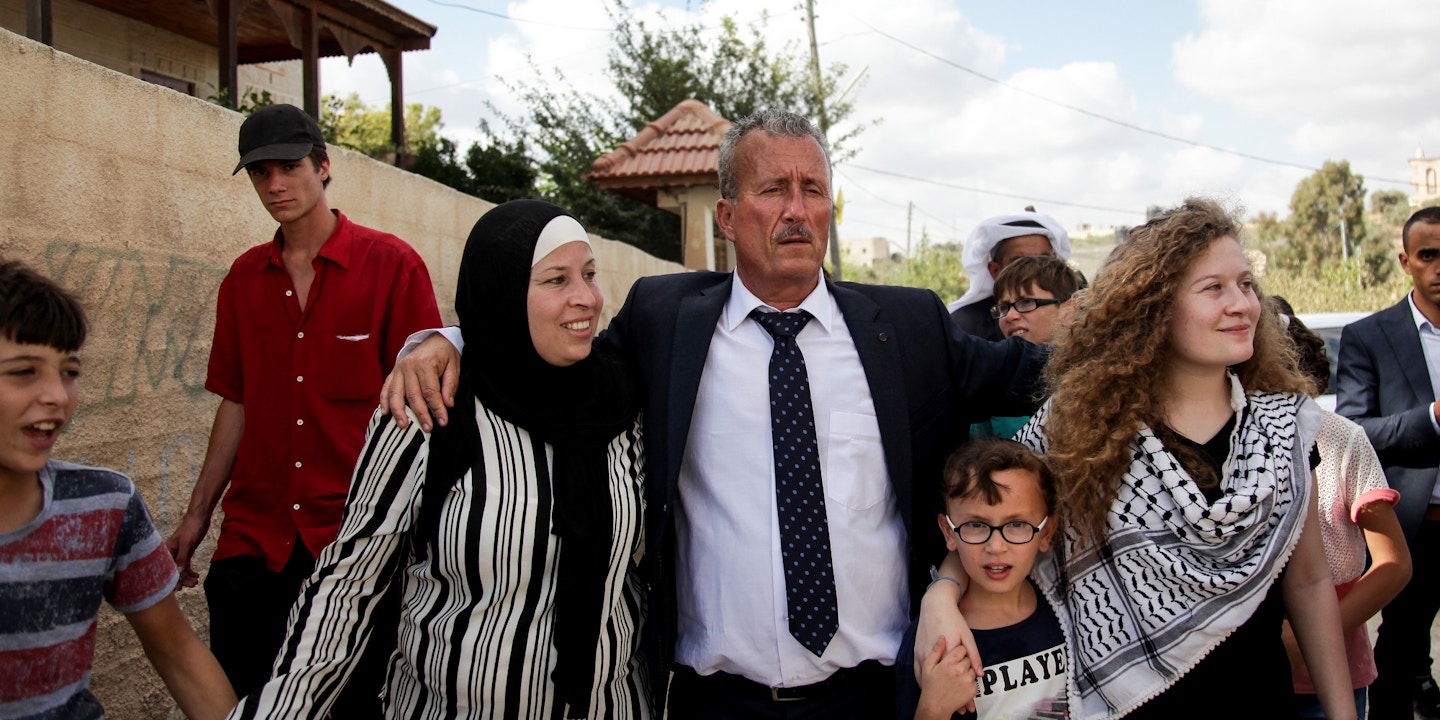
NABI SALEH, WEST BANK — As if anyone needed reminding, even on the day of her release from prison, Israeli authorities seemed to want to show Ahed Tamimi, her family, and her many supporters that they control Palestinian lives.

Ahed and her mother, Nariman, were supposed to be freed on Saturday after serving an eight-month sentence in an Israeli military prison, but because Saturday is not a work day in Israel, their release was postponed. On Sunday, their family was told that they would be freed at 7 a.m. at a military checkpoint in the northern West Bank, nearly an hour and a half drive from their village, Nabi Saleh. When relatives and friends arrived there, the military sent them, as well as dozens of members of the press, to a different checkpoint, nearly two hours in the opposite direction. When they reached there, Bassem Tamimi was told, again, that his daughter and wife would be released at the first checkpoint. As the convoy of cars turned around one more time, they received another call telling them to head back to the second checkpoint.

“They were playing cat and mouse; they were trying to break everyone,” Manal Tamimi, Ahed’s aunt, told The Intercept. “They don’t need to give any justification. They just do what they want.”

More...

2018-05-14

Killing Gaza

by Chris Hedges
Truthdig

WASHINGTON, D.C.--Israel’s blockade of Gaza--where trapped Palestinians for the past seven weeks have held nonviolent protests along the border fence with Israel, resulting in more than 50 killed and 700 wounded by Israeli troops--is one of the world’s worst humanitarian disasters. Yet the horror that is Gaza, where 2 million people live under an Israeli siege without adequate food, housing, work, water and electricity, where the Israeli military routinely uses indiscriminate and disproportionate violence to wound and murder, and where almost no one can escape, is rarely documented. Max Blumenthal and Dan Cohen’s powerful new film, “Killing Gaza,” offers an unflinching and moving portrait of a people largely abandoned by the outside world, struggling to endure.

“Killing Gaza” will be released Tuesday, to coincide with what Palestinians call Nakba Day--“nakba” means catastrophe in Arabic--commemorating the 70th anniversary of the forced removal of some 750,000 Palestinians in 1948 by the Haganah, Jewish paramilitary forces, from their homes in modern-day Israel. The release of the documentary also coincides with the Trump administration’s opening of the new U.S. Embassy in Jerusalem.

● Starting Tuesday, May 15, “Killing Gaza” can be seen at Vimeo On Demand.
Because of Nakba Day and the anger over the transfer of the embassy to Jerusalem, this week is expected to be one of the bloodiest of the seven-week-long protest that Palestinians call the “Great Return March.” “Killing Gaza” illustrates why Palestinians, with little left to lose, are rising up by the thousands and risking their lives to return to their ancestral homes--70 percent of those in Gaza are refugees or the descendants of refugees--and be treated like human beings.


Cohen and Blumenthal, who is the author of the book “Goliath: Life and Loathing in Greater Israel,” one of the best accounts of modern Israel, began filming the documentary Aug. 15, 2014. Palestinian militias, armed with little more than light weapons, had just faced Israeli tanks, artillery, fighter jets, infantry units and missiles in a 51-day Israeli assault that left 2,314 Palestinians dead and 17,125 injured. Some 500,000 Palestinians were displaced and about 100,000 homes were destroyed. The 2014 assault, perhaps better described as a massacre, was one of eight massacres that Israel has carried out since 2004 against the 2 million Palestinians in Gaza, over half of whom are children. Israel, which refers to these periodic military assaults as “mowing the lawn,” seeks to make existence in Gaza so difficult that mere survival consumes most of the average Palestinian’s time, resources and energy.

The film begins in the Shuja’iyya neighborhood, reduced to mounds of rubble by the Israelis. The wanton destruction of whole neighborhoods was, as documented by the film, accompanied by the shooting of unarmed civilians by Israeli snipers and other soldiers of that nation.

“Much of the destruction took place in the course of a few hours on July 23,” Blumenthal, who narrates the film, says as destroyed buildings appear on the screen, block after block. “The invading Israeli forces found themselves under ferocious fire from local resistance forces, enduring unexpectedly high casualties. As the Israeli infantry fled in full retreat, they called in an artillery and air assault, killing at least 120 Palestinian civilians and obliterated thousands of homes.”

The film includes a brief clip of young Israelis in Tel Aviv celebrating the assault on Gaza, a reminder that toxic racism and militarism infect Israeli society.

“Die! Die! Bye!” laughing teenage girls shout at the celebration in Tel Aviv. “Bye, Palestine!”

“Fucking Arabs! Fuck Muhammad!” a young man yells.

“Gaza is a graveyard! Gaza is a graveyard! Ole, ole, ole, ole,” the crowd in Tel Aviv sings as it dances in jubilation. “There is no school tomorrow! There are no children left in Gaza!”

Terrified Palestinian families huddled inside their homes during the relentless shelling. Those who tried to escape in the face of the advancing Israelis often were gunned down with their hands in the air, and the bodies were left to rot in the scorching heat for days.

“I was inside when they started bulldozing my house,” Nasser Shamaly, a Shuja’iyya resident, says in the film. “They took down the wall and started shooting into the house. So I put my hands on my head and surrendered myself to the officer. This wasn’t just any soldier. He was the officer of the group! He didn’t say a word. He just shot me. I fell down and started crawling to get away from them.”

Shamaly, who hid wounded in his house for four days, was fortunate. His 23-year-old cousin, Salem Shamaly, who led a group of volunteers from the International Solidarity Movement to dig bodies out of the ruins in Shuja’iyya, was not.

“On the offensive’s 14th day, July 20th, 2014, four other activists and I went to the Shuja’iyya neighborhood, which Israel had bombed for days, to accompany rescue teams in the rubble during the two-hour cease-fire,” Joe Catron, one of the members of the International Solidarity Movement rescue team, says in the film. “A young Palestinian, whose name we later learned was Salem Shamaly, asked us to go with him to his house, where he hoped to find his family. It sounds ridiculous now, but at the time we thought the cease-fire would make it safe.”

“As we crossed an alley with a clear line of sight to Israeli positions by the separation barrier, a gunshot from their direction struck the ground between us. We scattered into two groups, sheltered behind buildings on either side. After a pause, Salem stepped into the alley, hoping to lead his group to our side, but was struck by another bullet. He fell to the ground.”

The film shows Shamaly wounded on the ground, barely able to move and crying out in pain.

“As he lay on his back, two more rounds hit him,” Catron continued. “He stopped moving. The gunfire kept us from reaching him. The Israeli artillery began flying overhead and striking the buildings behind us. We were forced to retreat, leaving him. We only learned his name two days later, when his mother, father, sister and cousin recognized him in a video I had tweeted.”

“We couldn’t retrieve his body for seven days,” Um Salem, the mother, says in the film. “His body was in the sun for seven days.”

Waseem Shamaly, Salem’s brother, who appears to be about 8 years old, is shown with his eyes swollen from crying. “He would take care of us, like our father,” the boy says. “Even at night, he would get us whatever we wanted. He used to buy us everything. Whatever we wished for, he would buy it. There was nothing he wouldn’t buy for us. He used to take us to hang out. He’d take us out with him just to kill our boredom a little.”

Waseem wipes his eyes.

“Now he is gone,” he continues weakly. “There is nobody to take us out and buy us treats.”

“This boy hasn’t been able to handle losing his brother,” says the father, Khalil Shamaly. “He couldn’t handle the news, seeing the way his brother died. He is in shock. It gets to the point where he goes lifeless. He collapses. When I pick him up he tells me his dying wishes. His dying wishes! As if he is leaving us. He is so young. But he gives us his dying wishes. If it weren’t for God’s mercy, I would have lost him too.”

“Destroyed cities and shattered homes can be rebuilt if the resources are there,” Blumenthal says. “But what about the survivors? How can they heal the scars imposed on their psyches? The youth of Gaza has grown up through three wars, each more devastating than the last. At least 90 percent of adolescents in Gaza suffer from post-traumatic stress disorder. With mental health services pushed to the brink, these unseen scars may never heal.”

The film turns to the town of Khuza’a, a farming community with 20,000 people, which was systematically blown up by Israel after three Israeli soldiers were killed in fighting with the al-Qassam Brigades, the armed wing of the ruling Hamas government in Gaza. The film shows a video from inside an Israeli tank as soldiers wait for explosives to bring down buildings in the town, including the mosque. When the explosions occur, the Israeli soldiers cheer and shout, “Long live the state of Israel!”

“We were shocked to see so many bodies in the streets,” Ahmed Awwad, a volunteer with the Palestinian Red Crescent, says in the film about Khuza’a. “Many were decomposing. We wanted to deal with it, but we didn’t know how. Once, when the Israelis let us in with our ambulance, we found about 10 corpses from different areas, scattered. As you approached a body, of course there is the odor, and there are worms. Hold it like this, and flesh comes off. Lift an arm and it pulls right off. We didn’t know what to do. There was nothing we could do. We had to stop. It would have been easier just to bury them. But we figured families would want the bodies. Bulldozers eventually loaded the bodies in trucks. We couldn’t pick up these bodies on our own. Most were executions, like an old lady at her front door. There was a young man, another man, and a little kid. The scenes, to be honest, were very ugly.”

The Rjeila family, including 16-year-old Ghadeer, who was physically disabled, attempts to escape the shelling. As a brother frantically pushes Ghadeer in her wheelchair (the scene, like several others in the film, is reconstructed through animation), the Israelis open fire. The brother is wounded. Ghadeer is killed.

The camera pans slowly through demolished houses containing blackened human remains. Walls and floors are smeared with blood.

Ahmed Awwad, a Palestinian Red Crescent volunteer, describes what happened after he and other volunteers finally receive permission from Israeli forces to retrieve bodies from Khuza’a. They find a man tied to a tree and shot in both legs. One of the volunteers, Mohammed al-Abadla, gets out of a vehicle and approaches the tree. When he switches on his flashlight, which the Israelis had instructed him to do, he is shot in heart and killed.

“For 51 days, Israel bombarded Gaza with the full might of its artillery,” Blumenthal says. “According to the Israeli military’s estimates, 23,410 artillery shells and 2.9 million bullets were fired into Gaza during the war.”

That’s one and a half bullets for every man, woman and child in the Gaza Strip.

There is footage of Israeli soldiers in an artillery unit writing messages, including “Happy Birthday to Me,” on shells being lobbed into Gaza. The soldiers laugh and eat sushi as they pound Palestinian neighborhoods with explosives.

Rafah is a city in Gaza on the border of Egypt. The film makes it clear that Egypt, through its sealing of Gaza’s southern border, is complicit in the blockade. Rafah was one of the first cities targeted by the Israelis. When Israeli troops took over buildings, they also kidnapped Palestinians and used them as human shields there and elsewhere, forcing them to stand at windows as the soldiers fired from behind.

“They blindfolded and handcuffed me and took me inside,” Mahmoud Abu Said says in the film. “They told me to come with them and put a M16 to my back. There were maybe six of them. They dropped their equipment and began searching. They started hitting me against the wall. And then sicced their dogs on me while I was handcuffed.”

“They put me here,” he says, standing in front of a window, “and stood behind me. Israeli soldiers placed me here while they stood behind me shooting. They took me to that window and that window too. Then they hit me against the wall and pushed me down. They put a mattress here,” he says, showing holes punched through the wall at floor level, “and sat down to shoot through these holes.”

“You see that car?” asks Suleiman Zghreibv, referring to a hunk of twisted metal that lies next to the ruins of his house. “He drove it,” he says of his 22-year-old son, who was executed by the Israelis. “This is the car we used to make our living. It wasn’t for personal use. It was a taxi. I can’t describe the suffering. What can I say? Words can’t express the pain. We have suffered and resisted for so long. We’ve been suffering our whole lives. We’ve suffered for the past 60 years because of Israel. War after war after war. Bombing after bombing after bombing. You build a house. They destroy it. You raise a child. They kill him. Whatever they do--the United States, Israel, the whole world, we’ll keep resisting until the last one of us dies.”

Israel intentionally targeted power plants, schools, medical clinics, apartment complexes, whole villages. Robert Piper, the United Nations Coordinator for Humanitarian Aid and Development Activities, said in 2017 that Gaza had “a long time ago” passed the “unlivability threshold.” Youth unemployment is at 60 percent. Suicide is epidemic. Traditional social structures and mores are fracturing, with divorce rising from 2 percent to 40 percent and girls and women increasingly being prostituted, something once seen only rarely in Gaza. Seventy percent of the 2 million Gazans survive on humanitarian aid packages of sugar, rice, milk and cooking oil. The U.N. estimates that 97 percent of Gaza’s water is contaminated. Israel’s destruction of Gaza’s sewage treatment plant means raw sewage is pumped into the sea, contaminating the beach, one of the very few respites for a trapped population. The Israelis did not even spare Gaza’s little zoo, slaughtering some 45 animals in the 2014 assault.

“I liked the monkeys best,” says a forlorn Ali Qasem, who worked at the zoo. “We laughed with them the most. We would laugh and play with them. They would take food right from your hand. They’d respond the most. There is a heavy feeling of sorrow. I used to spend 18 hours a day here. I was here all the time. I’d go home for five or six hours, then come back. I worked here as a volunteer. A few volunteers built this place little by little. We were excited to finish and invite visitors for free. To me, it was like humans were killed. It’s not OK because they were animals. It’s as if they were human beings, people we know. We used to bring them food from our homes.”

The film shows Palestinians, who have received little reconstruction aid despite pledges by international donors, camping out amid the ruins of homes, gathered around small fires for heat and light. Moeen Abu Kheysi, 54, gives a tour of the smashed house he had spent his life constructing for his family. He stops when he comes upon his 3-month-old grandson, Wadie. His face lights up in delight.

“Months passed and the cold rains of winter gave way to baking heat of spring,” Blumenthal says. “In Shuja’iyya, the Abu Kheysi family was still living in remnants of their home, but without their newest member. Born during the war, little Wadie did not make it through the harsh winter.”

“He was born during the war and he died during the war, well after the war,” a female member of the family explains. “He lived in a room without a wall. We covered the wall with tin sheets. We moved, but then we got kicked out. We couldn’t make rent. [We] had to come back, cover the wall and live here. Then the baby froze to death. It was very cold.”

“One day it suddenly became very cold,” Wadie’s mother says. “Wadie woke up at 9 in the morning. I started playing with him, gave him a bottle. Suddenly, he was shivering from the cold. I tried to warm him up but it wasn’t working.”

She begins to weep.

“There wasn’t even time to get to the hospital,” she says. “He stopped breathing before they left the house. His heart stopped beating instantly. His father started running in the street with him. He fainted when they yelled, “The baby is dead!” The baby’s uncle took over and carried him. He looked everywhere for a taxi but couldn’t find one. We couldn’t give him first aid ourselves. They finally found a car. They did all they could at the hospital, but he never woke up. He was dead. What can I say? We remember him all the time. I can’t get him off my mind. It’s as if I lost a piece of my heart. His sisters want to sleep in his cradle and wear his clothes. This one always asks to wear her brother’s clothes. We can’t forget him.”

“Grandpa!” Wadie’s small sister cries out. “Mama is crying again.”