Showing posts with label asylum seekers. Show all posts

2018-03-21

Taking Flight

by Ryan Devereaux
The Intercept

An Iraqi Family Sought Asylum in the U.S., Thinking the Worst Was Over. Then Their American Nightmare Began.

NOTHING ABOUT THE Laredo Processing Center’s physical appearance immediately suggests it is run by a multimillion-dollar, for-profit prison corporation. Located just off the highway, about 5 miles from the Rio Grande, the drab one-story building, with its chain-link fencing and razor wire, is sandwiched between Ruben’s Paint and Body Shop and Martinez Wrecker Services.

If not for the sign outside, the immigrant detention center could easily be mistaken for a well-guarded junkyard. For the people locked inside, who sleep in open areas crammed with bodies -- if they are not being held in isolation -- days consist of head counts, the echoing voices of shouting guards, and a lot of waiting. If you’re lucky, you have the money to make short calls home and a loved one to pick up the phone.

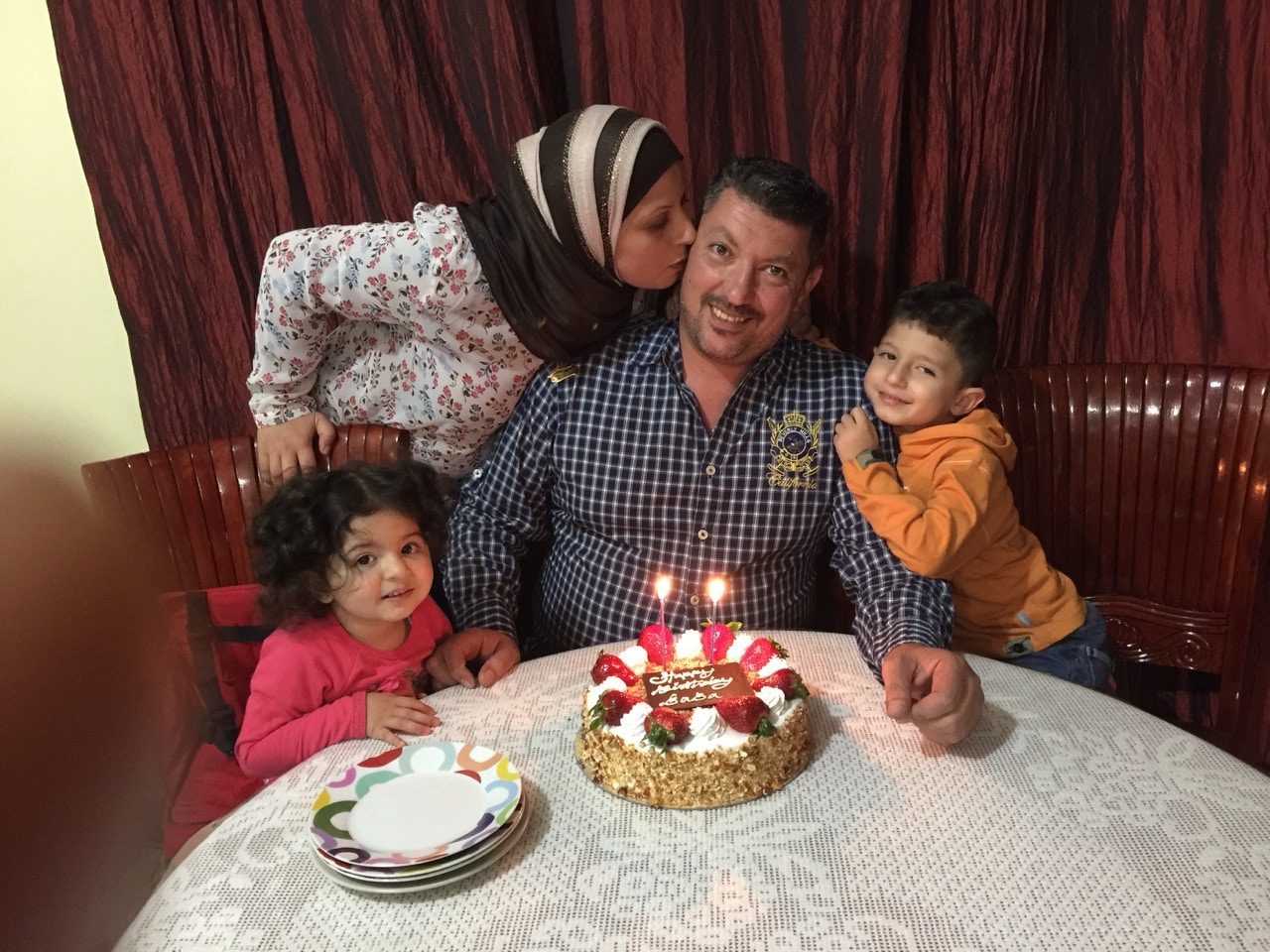
For Safaa Al Shakarchi, this was life for more than a year. Along with his wife, Zinah, and their two small children -- 2-year-old Sidrah and 6-year-old Yousif -- Safaa crossed the bridge linking Reynosa, Mexico, to McAllen, Texas, on January 14, 2017. Nearly six months had passed since the family was expelled from their adopted home in the United Arab Emirates. Zinah and Safaa had been building a life in the Gulf nation since 2009, when a militia commander in Baghdad shot Zinah and murdered her colleague, prompting her to flee Iraq.

In the months that followed the expulsion, the family’s unwelcome odyssey brought them to six countries, through multiple times zones, and across numerous borders. They endured detention at the hands of Mexican authorities, including officials who beat Safaa as his children watched, and navigated some of the most treacherous cartel-controlled territory in the Western Hemisphere.

It was not the life they had planned, but the family was at the mercy of forces beyond their control. Passports in hand, the Shakarchis presented themselves before U.S. immigration officials in Texas. Invoking a right enshrined in both U.S. and international law, they applied for asylum. While his wife and children were eventually permitted to enter the country to begin the asylum process, Safaa was not. After a long and difficult experience, he ultimately found himself locked up in Laredo, accused of no crime, with deportation orders but no country willing to accept him.

MORE...

2016-10-24

One Iraqi Family’s Struggle amid Chaos

Amid the mainstream U.S. media’s focus on Syria, the ongoing U.S.-provoked humanitarian crisis in Iraq get little attention as victims of the post-invasion chaos still suffer.

by Cathy Breen
Consortiumnews.com

I’ve written often about our Iraqi refugee friend and his oldest son from Baghdad. I will call them Mohammed and Ahmed. They made the torturous flight last year from Baghdad to Kurdistan and then across Turkey. They were on three Greek islands before permission was granted them to continue their trip. They passed through several countries at the time the borders were being closed. They arrived finally at their destination in late September 2015. Finland.

Having lived with this family in Baghdad, I have the faces of the wife and each of the children before me.

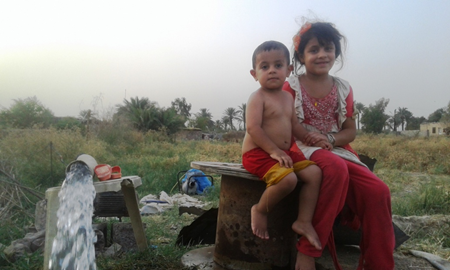
Iraqi children caught in the ongoing chaos of Iraq. (Photo credit: Cathy Breen)
Mohammed’s children, caught in the ongoing chaos of Iraq. (Photo credit: Cathy Breen)
Generally, I use Mohammed’s words, quoting him in a first person narrative. He told the story of their desperate life-threatening journey over a year ago. They went to Finland with the hope that fewer refugees would travel so far, that they would get asylum quicker and be reunited with their family, Mohammed’s wife and the other six children in Iraq.

Together with a small group of friends, Kathy Kelly and I were able to visit them in Finland in the deep winter cold this past January. We were able to bring them for a few days from the camp to Helsinki where they were warmly received by many Finnish people involved in the peace movement, journalists among them.

In late June Mohammed wrote us about the depression and frustration among refugees in their camp as many of them were getting rejected for asylum. He wrote that even Iraqi refugees from Fallujah, Ramadi and Mosul were getting rejections. “I don’t know what I will do if I get a bad answer. For the last three weeks only bad answers are coming.” Then in late July came the crushing news that his own case had been denied.

“Today I got the immigration decision that my case was rejected. Me and Ahmed are not welcomed to Finland. Thanks for everything you did.” The next day he wrote again. “Today is one of the heaviest days of my life. Everybody, my son, my cousin and myself….we just kept silent. We are shocked from the decision. Losing my brother, jailed for 2 years, kidnapped, tortured, losing my house, parents, father-in-law, death threat letter and assassination attempt. Over 50 relatives killed. What more must I give them for them to believe me? Only one thing I forgot, to submit my death certificate. I feel I am being slaughtered. I don’t know what to tell my wife and children [in Baghdad].”

We have since learned that Finland is granting residency to only 10 percent of asylum seekers. An appeal is in progress, and several people have written letters on Mohammed’s behalf. It is by no means clear however that his request will be accepted.

In the meantime, the situation in Iraq and in Baghdad continues to worsen in terms of daily explosions, suicide bombings, assassinations, kidnappings, ISIS, police, army and militia activity. His wife lives in a particularly open and vulnerable rural area. His brother, who used to live a stone’s throw away, had to flee with his family several months ago due to death threats. This left Mohammed’s wife and children without protection.

During Ramadan Mohammed wrote: “The situation is really terrible during these days. My wife was planning to take the kids to her mother’s village during EID but she cancelled this idea.”

The U.S. military's "shock and awe" bombing of Baghdad at the start of the Iraq War, as broadcast on CNN.
The U.S. military’s “shock and awe” bombing of Baghdad at the start of the Iraq War, as broadcast on CNN.
On another occasion he wrote, “My wife is very worried about our second oldest son, afraid he will be kidnapped. She is thinking of moving from the village. Today we argued very hard as she blames me, telling me that I said we would be reunited within 6 months.”

On two recent occasions armed uniformed men came to Mohammed’s house seeking information about Mohammed and Ahmed. Mohammed wrote: “Yesterday at 5 a.m. the house was raided by armed official military guys in uniforms. Maybe the police? Maybe the militia or ISIS?”

It is hard to imagine the fright of Mohammed’s defenseless wife and the children, the youngest of whom is only 3 years old. It is hard to imagine Mohammed and Ahmed’s fright being so far away. At times Mohammed’s wife has hidden the oldest boy in the reeds by their house, afraid he will be recruited by force by ISIS or the militia! She has also been afraid to send the children to school because the security situation is so dangerous. She is angry at Mohammed, scared and not understanding why they have not been reunited after a year’s time.

Recently Mohammed emailed: “Honestly, Cathy, every night I am thinking of returning home and ending these arguments. Living away from your beloved kids is really hard. If I get killed alongside of my family, then everyone will understand why we had to leave and the arguments will finish. Even the Finnish immigration will understand that what I told them was true. But the next morning I changed my mind and decided to await the court’s final decision.”

“Every night I am afraid from the next morning’s news from my family. My daughter asked me by phone last week ‘Dad, when can we live together again. I am now 14 years and you have been away so long.’ She broke my heart.”

Just a few days ago he wrote: “I’m so happy because the ice has melted between my wife and I.” His little boy, 6 years, and his youngest daughter 8 years went to school today. My wife is so brave…. She decided to pay for a school bus for all of the kids. She said ‘I believe in God and I am sending the children and taking the risk.'”

I often ask myself how Mohammed gets up in the morning. How are he and his wife able to face the day? Their courage, their faith and their resilience inspires me, challenges me and pushes me to get out of my own bed in the morning.

Cathy Breen (newsfromcathy@gmail.com), lives and works at Maryhouse Catholic Worker in New York City. She is also co-coordinates Voices for Creative Nonviolence.

2010-03-13

I stowed away in a ship from Sudan to come here. But it's like a prison

by Jonathan Brown

The Independent

It was a story that shocked the nation – a family of failed asylum-seekers jumping to their death. But what's life like for the residents of the bleak estate on the outskirts of Glasgow? Jonathan Brown visits the crumbling towers of Red Road to find out

From the flat Nour Osman Nour Bush occupies on the 29th floor of 10 Red Road, he has plenty of time to gaze on the sweeping panorama across the rooftops of Glasgow to the Trossachs beyond.

But he does not find the view inspiring; it merely underlines his sense of being trapped in an alien land that does not want him. "It is like being in prison," says the 32-year-old former accountancy student who stowed away in a sweltering container ship from his native Sudan after he claims he was beaten while in jail for dabbling in opposition politics.

As a member of the Zaghawa tribe, a marginalised African group that has been drawn into Darfur's genocidal conflict between black and Arab, he chose to put his trust in the people-smugglers. Funded by the proceeds from the sale of his mother's gold jewellery he sought refuge in Britain where he arrived hidden in the back of a lorry in 2007. But, like 70 per cent of those who seek permission to stay, his asylum application was turned down. Two months ago, his £35-a-week allowance was stopped and he has been told to leave the sparsely furnished flat he shares with a fellow Sudanese.

He is now waiting and wondering what will happen next. "I am getting older and older and my life will finish and nothing good will have happened. I have never had a job. I will never get married or have children. You see people all around you with these things and I have nothing."

It is a story typical of many whose long odyssey escaping the world's trouble spots has brought them to the grim housing estate off Petershill Drive on the outskirts of Glasgow. Here, last Sunday, Serguei Serykh, his wife, Tatiana, and their 19-year-old stepson Stepan, who had just been told they were not welcome to stay in the UK and ordered to leave their temporary accommodation within 21 days, smashed their way through the anti-suicide meshing of their balcony and leapt to their deaths on Red Road, 150ft below.

Official sources say the Serykhs' deaths are a result of the father's paranoid delusions, campaigners for the rights of asylum-seekers are demanding a full public inquiry. They say the tragedy highlights the deep sense of hopelessness of those caught in the system. Like many others last Sunday, Mr Bush heard the Serykhs' screams and rushed to look. The effect on the community here in the Sightburn area of Glasgow, where more than 60 languages are spoken by the inhabitants of this crumbling and soon-to-be demolished world, has been profound.

Feelings of self-harm appear prevalent among the young men in their 20s and 30s who are forbidden from working although some are skilled professionals. They may attend college and travel by bus but struggle to integrate beyond the confines of their nationality groups within the flats. It is an atmosphere in which fears can easily take over. As we sip tea in the bare surroundings, the beige woodchip walls unadorned by pictures or photos, the only decoration a plastic elephant on top of an old-fashioned television found dumped in the streets below, Mr Bush says he still bears the scars from where his feet were beaten while in jail and he was forced to stand for hours on hot stones in the boiling sun.

He cites the case of Adam Osman Mohammed, highlighted in The Independent last year, who returned to Darfur under a government repatriation scheme where he was shot dead in front of his wife and four-year-old son. "It makes me 100 per cent scared," he says. "I can't sleep at night because I do not feel that I am in a safe place. I feel like I am going to be sent back to Sudan and the government will arrest me at the airport and they will kill me. I wake up three times every night and have bad dreams in my head. I have thought about suicide many times."

The fear of return is compounded by the crushing boredom that envelopes the estate and the ever-swirling rumours that circulate by text and word of mouth among the listless young men. "I have nothing to do all day," says Mr Bush. "I am just sitting in the flat. I like to watch football and maybe read a newspaper. Sometimes I go out for a walk but I can't sit here 24 hours a day."

It can scarcely have been the outcome envisaged by the post-war Glasgow City councillors that their futuristic vision of modern living would one day become the sink estate for the world's dispossessed. Now earmarked for demolition, the eight high-rise blocks in their day were the biggest social housing complex in western Europe, the highest buildings in the city, much sought-after by people escaping the overcrowded slum tenements.

But decline was swift and, by the 1980s as the heroin epidemic took grip in Glasgow, no one wanted to live at Red Road. Today the tower blocks may be the subject of artworks and even a critically acclaimed film but their days are numbered and the first will be torn down in May.

Glasgow has taken in more than 2,000 asylum-seekers each year since 2000 under the Home Office policy designed to alleviate pressure on London and the South-east by diverting asylum seekers to different parts of the country.

There are said to be 5,000 asylum-seekers in Glasgow. But Robina Qureshi, executive director of the charity Positive Action in Housing, says the strategy has short-changed the weakest in society. "The government policy in the UK was to put them [asylum-seekers] in the places that no one else wanted under the assumption that no one would complain."

Many of those who arrive at the offices of the charity in the centre of Glasgow are seeking advice or a grant from an emergency relief fund that needs constant replenishing. The clients are not just poor, they are "beyond poor", she says. Cut off from all benefits yet inhabiting an "invisible" world where they are supposed to give up their long-term claim to asylum and simply return home, they have slipped off the radar.

A study by the London School of Economics last year suggested there may be as many as 500,000 failed asylum-seekers still living in the UK, thousands in Glasgow, though no one knows exactly how many.

The first wave of asylum-seekers to come to the city at the turn of the millennium immediately encountered tensions in the poor, white working-class communities where the were placed. In August 2001, 25-year-old Kurd, Firsat Dag, was stabbed to death in Sighthill, another dispossessed area next to Springburn and cut off from the rest of the city by the thundering urban motorway.

Aware that creating high concentrations of asylum-seekers made them vulnerable, today the population is dispersed in all areas of the city, although obvious pockets remain, as does the spectre of violence. Assad, like Firsat Dag is an Iraqi Kurd. He paid $10,000 to travel to Britain in a lorry from his home in Kirkuk three years ago. Like Mr Bush, he too has had his application for asylum turned down and has been ordered to leave his flat on the 28th floor of one of the Red Road blocks.

Assad is angry. "You come to my country and take oil," he says, his sunken eyes gleaming with rage. "Why do you tell me to go back to Iraq? I come here and you call me black-haired bastard," Lifting his shirt, the 26-year-old former mechanic shows off six livid puncture wounds and he has another in his head, the result, he says, of being attacked last January near the Red Road estate.

Assad does not know the identities or nationalities of his attackers but his lungs filled with blood and he required an emergency transfusion. "Ten more minutes and I would be dead," he says. "Now I am very sick and I have headaches all the time. I am not here for passport. I am here for myself, for my safety."

Back in Iraq, which he left in 2007, Assad says, his mother lost a leg in a car-bombing which killed 300 people in a crowded market place. Other family members died during Saddam Hussein's ethnic cleansing of the Kurdish region. His application to stay in Britain now rejected, he is thinking about going to Sweden. If that fails, he says, he does not know what to do. "I swear to God, sometimes I think I will kill myself," he adds.

Dr Rebecca Macfarlane, of the Westmuir Medical Centre in Parkhead, has been working with refugees in the city for 10 years. Many of her patients have been severely traumatised and show symptoms of anxiety and insomnia. "They may have nightmares and flashbacks to bad experiences," she says. "They may be extremely nervous and jump when someone knocks on the door. These are early signs of post traumatic stress disorder and some can be suicidal."

Confidential papers seen by The Independent this week charted the mental decline of Serguei Serykh. The "quiet and serious" Russian was granted protected-person status in Canada in 2000. But in 2007, after his full citizenship claim was rejected, he began to believe he was being hunted by Canadian intelligence who deployed "psychotronic weapons" against him.

In his application for British asylum, he claims to be a former senior officer of the main intelligence agency of the general staff of the Russian Armed Forces, although British security sources say they were unaware of any links he may have had. When he believed himself to come under attack, he said that, "flaming vibrations passed through my fingertips and into my arms, entering my heart. I felt as though my blood boiled, my heart rate was irregular and was about to stop; every bone in my body trembled in pain". The family travelled to many countries believing themselves to be followed, ultimately ending in a Red Road block.

Linda Fraser, project manager at the Red Road Family Centre, says: "The deaths have had a real impact on the community. They have felt quite traumatised by what happened. There is a real feeling of empathy for them and understanding of how desperate they must have been."

But she believes tensions between the indigenous and the asylum-seeking communities have improved. "After the initial suspicion, the local people have really welcomed them. By and large, they have overcome the myths. But people began to tell their personal stories and Glasgow realised they didn't just wake up one morning and think, 'I'm going to Britain'. They begin to understand why they are here and have empathy."

It is a rare message of hope. Yesterday, the plastic wrappers from the meagre floral tributes laid at the spot where the Serykhs fell were blowing in the wind. Residents are planning another demonstration demanding an official inquiry. Right now, all they can do is just sit and wait.

2009-11-16

Green Left Weekly fighting fund: Don’t let Rudd play the race card

by Peter Boyle

Green Left Weekly

In a recent reflection, veteran Cuban revolutionary leader Fidel Castro noted that 237 members of the US Congress — 44% — were millionaires, including President Barack Obama.

“This does not mean that every one of them is an incorrigible reactionary but it is extremely difficult [to imagine] that they feel like the many millions of Americans who do not have access to medical care, who are unemployed or who need to work very hard to earn their living.”

Let alone really comprehend how the much worse off global majority struggles to survive.

It is in the interest of this global elite to stop the ordinary people in the richest countries from feeling any empathy with the oppressed and exploited. To do this, they stoke the flames of racism, xenophobia, national chauvinism, climate change denialism and other irrational outlooks to block our instinct to show solidarity and responsibility. Divide and rule is the only way they can defend the indefensible.

In Australia, we are living through dangerous times. The race card is being played by the Labor government and the Liberal-National opposition. Climate denialists have been emboldened.

We need to thank those who have spoken out — people like John Pilger and the Indigenous, religious and trade union leaders who have expressed public solidarity with the asylum seekers who are being mercilessly vilified. Just tune in to a right-wing radio shock jock to see how nasty it is getting.

The Maritime Union of Australia and the Construction Forestry Mining Energy Union (CFMEU) are being flooded with hate mail because they donated $10,000 to the Tamil asylum seekers aboard the Oceanic Viking (see the article on page 11). Please send in a message of support to these unions for their principled actions.

Email the MUA at or phone (02) 9267 9134, and the CFMEU at or phone (02) 8524 5800.

“Thanks for speaking out”, is a compliment Green Left Weekly gets week after week in the streets. GLW is 100% committed to breaking the silence and speaking out for truth and justice. Our supporters help us do it.

So far this year, we’ve raised $206,960 for the fighting fund. We'd like to thank the Victorian CFMEU for its generous $1000 donation, and encourage other militant unions to follow its fine example.

We have to raise just $43,040 more to make our $250,000 target. Donate today online.

Or you can donate at: Greenleft, Commonwealth Bank, BSB 062-006, Account No. 00901992. Otherwise, you can send a cheque or money order to PO Box 515, Broadway NSW 2007 or phone in a donation on the toll-free line at 1800 634 206 (within Australia).