Showing posts with label Immigrants. Show all posts

2018-03-21

Taking Flight

by Ryan Devereaux
The Intercept

An Iraqi Family Sought Asylum in the U.S., Thinking the Worst Was Over. Then Their American Nightmare Began.

NOTHING ABOUT THE Laredo Processing Center’s physical appearance immediately suggests it is run by a multimillion-dollar, for-profit prison corporation. Located just off the highway, about 5 miles from the Rio Grande, the drab one-story building, with its chain-link fencing and razor wire, is sandwiched between Ruben’s Paint and Body Shop and Martinez Wrecker Services.

If not for the sign outside, the immigrant detention center could easily be mistaken for a well-guarded junkyard. For the people locked inside, who sleep in open areas crammed with bodies -- if they are not being held in isolation -- days consist of head counts, the echoing voices of shouting guards, and a lot of waiting. If you’re lucky, you have the money to make short calls home and a loved one to pick up the phone.

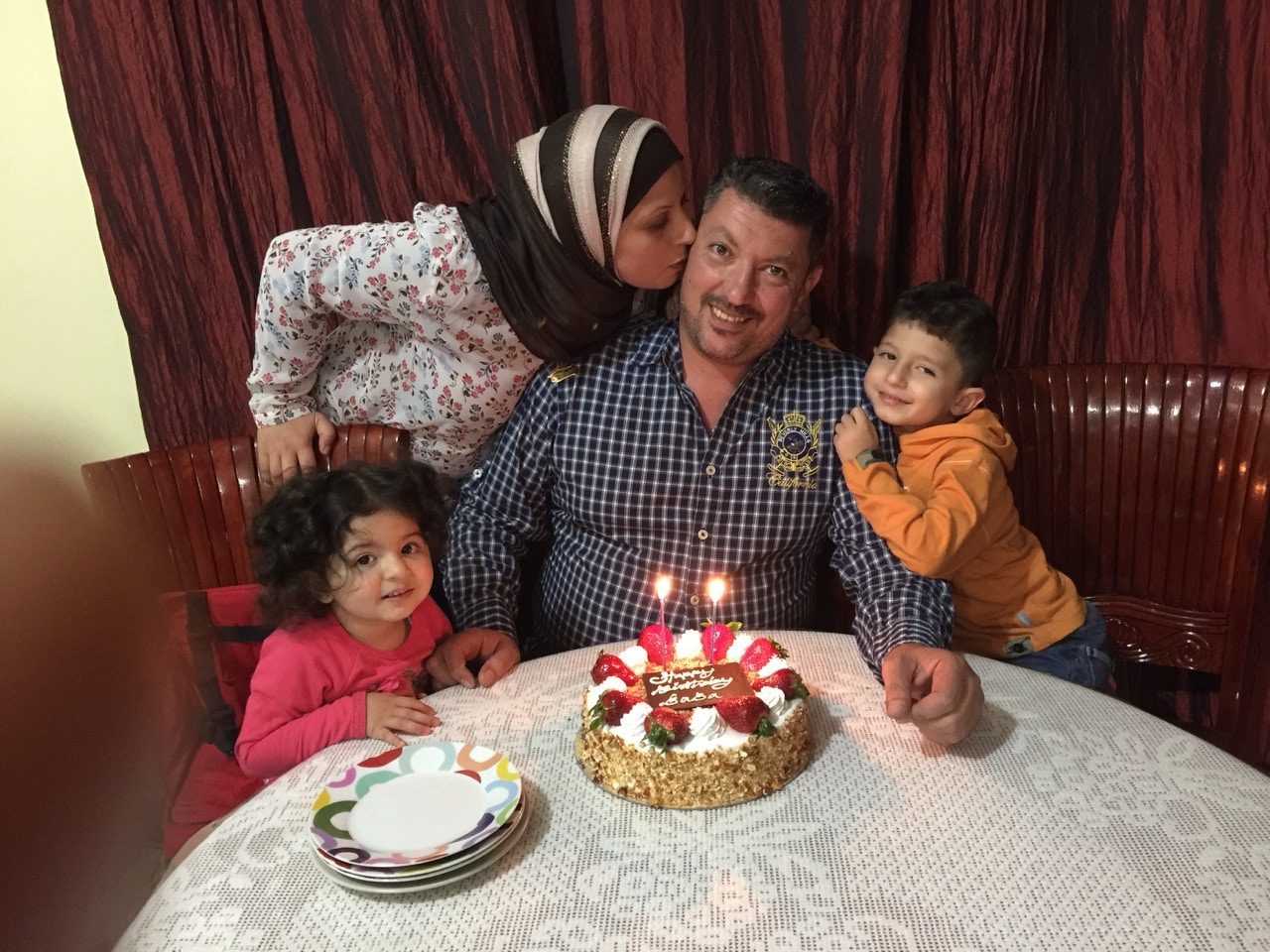
For Safaa Al Shakarchi, this was life for more than a year. Along with his wife, Zinah, and their two small children -- 2-year-old Sidrah and 6-year-old Yousif -- Safaa crossed the bridge linking Reynosa, Mexico, to McAllen, Texas, on January 14, 2017. Nearly six months had passed since the family was expelled from their adopted home in the United Arab Emirates. Zinah and Safaa had been building a life in the Gulf nation since 2009, when a militia commander in Baghdad shot Zinah and murdered her colleague, prompting her to flee Iraq.

In the months that followed the expulsion, the family’s unwelcome odyssey brought them to six countries, through multiple times zones, and across numerous borders. They endured detention at the hands of Mexican authorities, including officials who beat Safaa as his children watched, and navigated some of the most treacherous cartel-controlled territory in the Western Hemisphere.

It was not the life they had planned, but the family was at the mercy of forces beyond their control. Passports in hand, the Shakarchis presented themselves before U.S. immigration officials in Texas. Invoking a right enshrined in both U.S. and international law, they applied for asylum. While his wife and children were eventually permitted to enter the country to begin the asylum process, Safaa was not. After a long and difficult experience, he ultimately found himself locked up in Laredo, accused of no crime, with deportation orders but no country willing to accept him.

MORE...

2017-01-29

Trump’s Muslim Ban Is Culmination of War on Terror Mentality but Still Uniquely Shameful

Glenn Greenwald - The Intercept

IT IS NOT difficult for any decent human being to immediately apprehend why and how Donald Trump’s ban on immigrants from seven Muslim countries is inhumane, bigoted, and shameful. During the campaign, the evil of the policy was recognized even by Mike Pence (“offensive and unconstitutional”) and Paul Ryan (violative of America’s “fundamental values”), who are far too craven and cowardly to object now.
Trump’s own defense secretary, Gen. James Mattis, said when Trump first advocated his Muslim ban back in August that “we have lost faith in reason,” adding: “This kind of thing is causing us great damage right now, and it’s sending shock waves through this international system.”
The sole ostensible rationale for this ban — it is necessary to keep out Muslim extremists — collapses upon the most minimal scrutiny. The countries that have produced and supported the greatest number of anti-U.S. terrorists — Saudi Arabia, Egypt, Qatar, UAE — are excluded from the ban list because the tyrannical regimes that run those countries are close U.S. allies. Conversely, the countries that are included — Syria, Iraq, Libya, Somalia, Iran, Sudan, and Yemen — have produced virtually no such terrorists; as the Cato Institute documented on Friday night: “Foreigners from those seven nations have killed zero Americans in terrorist attacks on U.S. soil between 1975 and the end of 2015.” Indeed, as of a 2015 study by the New America research center, deaths caused by terrorism from right-wing nationalists since 9/11 have significantly exceeded those from Muslim extremists.
Trump’s pledge last night to a Christian broadcasting network to prioritize Christian refugees over all others is just profane: The very idea of determining who merits refuge on the basis of religious belief is bigotry in its purest sense. Beyond the morality, it is almost also certainly unconstitutional in a country predicated on the “free exercise of religion.” In the New York Times this morning, Cato analyst David Bier also convincingly argues that the policy is illegal on statutory grounds as well.
Making this worse still is the central role the U.S. government played in the horrors from which many of these now-banned people are fleeing. The suggestion that Trump protected the countries with which he does business is preposterous. The reality is that his highly selective list reflects longstanding U.S. policy: Indeed, Obama restricted visa rights for these same seven countries, and the regimes in Riyadh and Cairo have received special U.S. protection for decades, long before Trump.
Beyond U.S. support for the world’s worst regimes, what primarily shapes Trump’s list is U.S. aggression: Five of the seven predominantly Muslim countries on Trump’s list were ones bombed by Obama, while the other two (Iran and Sudan) were punished with heavy sanctions. Thus, Trump is banning immigrants from the very countries that the U.S. government — under both Republicans and Democrats — has played a key role in destabilizing and destroying, as Democratic Sen. Chris Murphy, with surprising candor, noted this week:
It is critical to recognize and fight against the unique elements of Trump’s extremism, but also to acknowledge that a substantial portion of it has roots in political and cultural developments that long precede him. Immigration horror stories — including families being torn apart — are nothing new. As ABC News noted last August, “The Obama administration has deported more people than any other president’s administration in history. In fact, they have deported more than the sum of all the presidents of the 20th century.”
And the reason Trump is able so easily to tap into a groundswell of anti-Muslim fears and bigotry is because they have been cultivated for 16 years as the central fuel driving the war on terror. There are factions on both the center-left and right that are primarily devoted to demonizing Muslims and Islam. A government can get away with bombing, invading, and droning the same group of people for more than 15 years only by constantly demonizing and dehumanizing that group and maintaining high fear levels, which is exactly what the U.S. has done under two successive administrations. Both the Bush and Obama administrations ushered in all-new and quite extreme civil liberties erosions aimed primarily if not exclusively at Muslims.
Trump did not appear out of nowhere. He is the logical and most grotesque expression of a variety of trends we have allowed to fester: endless war, a virtually omnipotent presidency, unlimited war powers from spying to due process-free imprisonment to torture to assassinations, repeated civil liberties erosions in the name of illusory guarantees of security, and the sustained demonization of Muslims as scary, primitive, uniquely violent Others.
A country that engages in endless war against multiple countries not only kills a lot of people but degrades its own citizenry. Trump is the rotted fruit that inevitably sprouts from such fetid roots.
Trump is not a Russian phenomenon, nor an Italian one, nor Latin American: He is distinctly and consummately American, merely the most extreme face yet from America’s endless war on terror and its post-2008 lurch toward oligarchy. Pretending that Trump is some grand aberration, some radical departure from U.S. history and values, is simply a deceitful way of whitewashing what we have collectively endorsed and allowed.
Thus did we witness the spectacle last week of many acting as though Trump’s plans for CIA black sites, torture, and rendition were shocking Trumpian aberrations even though many of those denouncing the plans were the ones who advocated or implemented those policies in the first place or protected those who did from criminal prosecution. Denouncing and opposing Trump should not serve to obscure sins of the recent past or whitewash the seeds planted before him that have allowed him to sprout. Opposing Trump’s assault on basic liberties requires a clear understanding of the framework that gave rise to it.

BUT THIS MUSLIM ban — and that, in effect and by design, is what it is — is nonetheless different in significant degree if not in kind. Despite what came before it, there is no denying that Trump is now taking the U.S. to dark and foreboding places that are a step beyond what even recent presidents, in the name of protection against Muslims, have ushered in. A formal and absolute codification of this anti-Muslim premise is inherently dangerous, as it is likely to further indoctrinate millions of Americans to regard Muslims as uniquely menacing and threatening.
Beyond that, the humanitarian horrors instantly produced by Trump’s immigration ban are impossible to overstate. That countless war refugees fleeing the ravages the U.S. helped create are now banned from refuge, many consigned to their deaths, is self-evident. The parallels with how Jewish refugees fleeing Nazi persecution were treated in the 1930s and 1940s are obvious. This new Twitter account has been describing individual Jews whose ship was refused entry by the Roosevelt administration in 1939 as they were fleeing Nazis, only to end up dying in Auschwitz and other camps.
As my colleague Lee Fang documented in 2015, the prevailing rhetoric about Muslim refugees is identical to that used to demonize Jews during the World War II era. Indeed, the right-wing rag Daily Mail’s 2015 cartoon showing Muslim refugees as rats (top cartoon, below) perfectly tracked a 1939 cartoon in a Viennese newspaper depicting Jews the same way (bottom, below):
The Daily Mail, 2015.
Das Kleine Blatt, 1939.
But as I’ve noted before, it is often the more pedestrian, less dramatic injustices that resonate when it comes to civil liberties abuses. This McClatchy article from yesterday, for instance, tells the story of Murtadha Al-Tameemi, a 24-year-old Iraqi-born software developer at Facebook who had to urgently leave Canada, where he was visiting his family this week, in order to rush back into the U.S. before Trump’s ban took effect, and he is now barred from visiting them due to (rational) fear that he will not be able to return. In that article, Al-Tameemi describes the hideous abuses and indignities he has long faced as a Muslim immigrant in the U.S., but he now faces a full and absolute ban from entering.
Meanwhile, the New York Daily News reports this morning that many Muslims and Arabs who have long carried visas to the U.S. are being stranded in airports and barred from entry to their planes. Even more significant, albeit harder to quantify, is the extreme fear that Muslim Americans and immigrants quite rationally harbor about what this will all spawn, both in terms of cultural norms and additional policies. Just as attitudes toward LGBT Americans changed as their personal stories became more known, these kinds of stories of how ordinary Muslims are having their basic rights trampled on with no justification are critical for highlighting how abusive these policies are.

ONE OF THE greatest dangers of these trends is the ongoing ability of groups devoted to protecting Muslim Americans’ civil rights to function freely and effectively. The largest such group, the Council on American-Islamic Relations (CAIR), has long been the target of the U.S. government. The Bush administration branded the group an un-indicted “co-conspirator” in a terrorism case, ensuring it would be smeared but remain without the ability to defend itself in a court. As we reported in 2014, the group’s executive director was targeted with invasive, highly personalized electronic surveillance by the NSA.
CAIR now plays a critical role in defending American Muslims and immigrants from these civil liberties assaults. The group already announced that it would file suit challenging the constitutionality and legality of Trump’s ban. Muslims who have nowhere else to turn are often defended by CAIR as their basic rights are assaulted, and that will be even truer now.
But the group has long been in the cross-hairs of the worst anti-Muslim extremists, such as Peter King, along with even worse radicals who now exert significant influence in the Trump administration. Breitbart, whose former chief Steve Bannon is now one of the most powerful individuals in the White House, has long had an intense fixation with the group.
There is a serious risk that CAIR will be targeted, as it has been in the past by less extreme officials. The group is a critical bulwark protecting Muslim Americans and Muslim immigrants from serious civil liberties abuses, and needs and deserves support from anyone able to provide it, which one can do here (as disclosure: I have spoken several times at CAIR events and to various affiliates and intend, in solidarity, to do so even more this year).
It is often the case that extremists on both sides of a protracted conflict end up mirroring one another’s attributes, mentality, and tactics. That is precisely what we are now witnessing as anti-Muslim crusaders in the U.S. adopt the same premises as ISIS and its allies: that the West and Muslims are inherently and irreconcilably adverse. As my colleague Murtaza Hussain described in 2015, the ultimate strategic and propaganda goal of ISIS is to eliminate the “gray zone” for Western Muslims, “generating hostility between domestic Muslim populations and the broader societies that they live in” so as to convince both sides that they should be at war rather than striving for harmony and assimilation.
It is difficult to envision anything that helps ISIS’s overarching objective, its central narrative, more than Trump’s immigration ban aimed at Muslims while privileging Christian refugees. But it’s not impossible to imagine policies that could be worse in this regard. The danger now is that this immigration ban is merely the first step on this heinous path, not the last. That’s why it’s urgent that everything be done to denounce it, battle it, and defeat it now.

2016-10-24

One Iraqi Family’s Struggle amid Chaos

Amid the mainstream U.S. media’s focus on Syria, the ongoing U.S.-provoked humanitarian crisis in Iraq get little attention as victims of the post-invasion chaos still suffer.

by Cathy Breen
Consortiumnews.com

I’ve written often about our Iraqi refugee friend and his oldest son from Baghdad. I will call them Mohammed and Ahmed. They made the torturous flight last year from Baghdad to Kurdistan and then across Turkey. They were on three Greek islands before permission was granted them to continue their trip. They passed through several countries at the time the borders were being closed. They arrived finally at their destination in late September 2015. Finland.

Having lived with this family in Baghdad, I have the faces of the wife and each of the children before me.

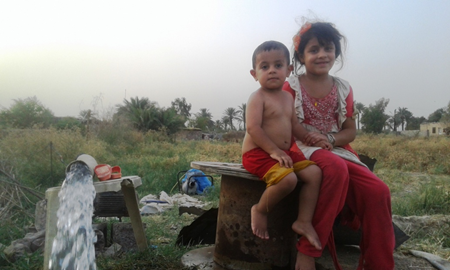
Iraqi children caught in the ongoing chaos of Iraq. (Photo credit: Cathy Breen)
Mohammed’s children, caught in the ongoing chaos of Iraq. (Photo credit: Cathy Breen)
Generally, I use Mohammed’s words, quoting him in a first person narrative. He told the story of their desperate life-threatening journey over a year ago. They went to Finland with the hope that fewer refugees would travel so far, that they would get asylum quicker and be reunited with their family, Mohammed’s wife and the other six children in Iraq.

Together with a small group of friends, Kathy Kelly and I were able to visit them in Finland in the deep winter cold this past January. We were able to bring them for a few days from the camp to Helsinki where they were warmly received by many Finnish people involved in the peace movement, journalists among them.

In late June Mohammed wrote us about the depression and frustration among refugees in their camp as many of them were getting rejected for asylum. He wrote that even Iraqi refugees from Fallujah, Ramadi and Mosul were getting rejections. “I don’t know what I will do if I get a bad answer. For the last three weeks only bad answers are coming.” Then in late July came the crushing news that his own case had been denied.

“Today I got the immigration decision that my case was rejected. Me and Ahmed are not welcomed to Finland. Thanks for everything you did.” The next day he wrote again. “Today is one of the heaviest days of my life. Everybody, my son, my cousin and myself….we just kept silent. We are shocked from the decision. Losing my brother, jailed for 2 years, kidnapped, tortured, losing my house, parents, father-in-law, death threat letter and assassination attempt. Over 50 relatives killed. What more must I give them for them to believe me? Only one thing I forgot, to submit my death certificate. I feel I am being slaughtered. I don’t know what to tell my wife and children [in Baghdad].”

We have since learned that Finland is granting residency to only 10 percent of asylum seekers. An appeal is in progress, and several people have written letters on Mohammed’s behalf. It is by no means clear however that his request will be accepted.

In the meantime, the situation in Iraq and in Baghdad continues to worsen in terms of daily explosions, suicide bombings, assassinations, kidnappings, ISIS, police, army and militia activity. His wife lives in a particularly open and vulnerable rural area. His brother, who used to live a stone’s throw away, had to flee with his family several months ago due to death threats. This left Mohammed’s wife and children without protection.

During Ramadan Mohammed wrote: “The situation is really terrible during these days. My wife was planning to take the kids to her mother’s village during EID but she cancelled this idea.”

The U.S. military's "shock and awe" bombing of Baghdad at the start of the Iraq War, as broadcast on CNN.
The U.S. military’s “shock and awe” bombing of Baghdad at the start of the Iraq War, as broadcast on CNN.
On another occasion he wrote, “My wife is very worried about our second oldest son, afraid he will be kidnapped. She is thinking of moving from the village. Today we argued very hard as she blames me, telling me that I said we would be reunited within 6 months.”

On two recent occasions armed uniformed men came to Mohammed’s house seeking information about Mohammed and Ahmed. Mohammed wrote: “Yesterday at 5 a.m. the house was raided by armed official military guys in uniforms. Maybe the police? Maybe the militia or ISIS?”

It is hard to imagine the fright of Mohammed’s defenseless wife and the children, the youngest of whom is only 3 years old. It is hard to imagine Mohammed and Ahmed’s fright being so far away. At times Mohammed’s wife has hidden the oldest boy in the reeds by their house, afraid he will be recruited by force by ISIS or the militia! She has also been afraid to send the children to school because the security situation is so dangerous. She is angry at Mohammed, scared and not understanding why they have not been reunited after a year’s time.

Recently Mohammed emailed: “Honestly, Cathy, every night I am thinking of returning home and ending these arguments. Living away from your beloved kids is really hard. If I get killed alongside of my family, then everyone will understand why we had to leave and the arguments will finish. Even the Finnish immigration will understand that what I told them was true. But the next morning I changed my mind and decided to await the court’s final decision.”

“Every night I am afraid from the next morning’s news from my family. My daughter asked me by phone last week ‘Dad, when can we live together again. I am now 14 years and you have been away so long.’ She broke my heart.”

Just a few days ago he wrote: “I’m so happy because the ice has melted between my wife and I.” His little boy, 6 years, and his youngest daughter 8 years went to school today. My wife is so brave…. She decided to pay for a school bus for all of the kids. She said ‘I believe in God and I am sending the children and taking the risk.'”

I often ask myself how Mohammed gets up in the morning. How are he and his wife able to face the day? Their courage, their faith and their resilience inspires me, challenges me and pushes me to get out of my own bed in the morning.

Cathy Breen (newsfromcathy@gmail.com), lives and works at Maryhouse Catholic Worker in New York City. She is also co-coordinates Voices for Creative Nonviolence.

2015-05-15

Migration Is an Act of Desperation, Not a Crime

By Sonali Kolhatkar
Truthdig

A father from Ivory Coast wanted to reunite his son with the rest of his family living in Spain. But the Spanish government denied him a family reunification visa. Desperate, he paid a Moroccan woman to smuggle his 8-year-old onto Spanish soil. On May 7, 2015, she attempted to do so by placing the boy, tightly folded into a fetal position, inside a carry-on suitcase and traveling to Spain. When airport authorities noticed she was nervous, they X-rayed her bag and were shocked to find the child.

Imagine the boy’s ordeal.

Imagine the father’s desperation.

It is situations like these, multiplied by the millions, that are playing out all over the world, in Syria, Libya, Iraq, Afghanistan, Eritrea, Myanmar, Bangladesh, Mexico, Honduras, El Salvador and elsewhere. Driven by war and poverty, millions of people are on the move, risking their lives to escape desperate circumstances. Unfortunately, the response from elites is to trap them, by putting them in jail or criminalizing traffickers and militarizing sea routes.

The Norwegian Refugee Council and Internal Displacement Monitoring Centre released a report in early May revealing that there were 38 million internally displaced people last year alone, nearly 5 million more than the year before. The record-breaking number includes 11 million refugees who were newly displaced and clustered in the Middle East and Africa, including Syria, South Sudan, Nigeria and the Democratic Republic of Congo. Council Secretary-General Jan Egeland said, “These are the worst figures for forced displacement in a generation, signaling our complete failure to protect innocent civilians.”

The number of people living outside their home countries is even higher. In 2013, the latest year for which statistics are available, the United Nations found that 232 million people are migrants or refugees, or, in effect, “externally displaced” people.

In the case of the boy smuggled into Spain in a suitcase, authorities simply arrested the father and placed the boy in protective custody, dashing any hopes for reunifying their family. This is a typical response. Instead of exploring what drives the desperation of migrants, authorities lock them up or threaten them with force.

Each week there is news of migrants stranded at sea, dying in large numbers, or locked up in prisons. In recent days, about 2,000 migrants were found off the shores of Indonesia and Malaysia, hailing from Bangladesh and the Rohingya community in Myanmar. They were rescued from several boats. The Rohingya are a community of Muslims from the northern region of Myanmar called Rakhine. They have been persecuted to such an extent that many consider them the victims of attempted genocide. The migrants had apparently been stranded by traffickers and told to swim ashore. In interviews, they said they had been at sea for two months and were extremely hungry and weak. They were headed to Malaysia and Thailand to find work. Thailand has been rocked by the recent discovery of mass graves of migrants, and in fact has been cracking down on immigration over the past several years.

According to the United Nations High Commissioner for Refugees, about 25,000 Bangladeshis and Rohingya from Myanmar attempted to migrate by sea during the first three months of 2015, twice the number from last year. Very little coverage of the persecution of Rohingya people in particular makes it into the U.S. media. President Obama lauded Myanmar as a “success story” during his visit there last year, effectively dismissing concerns over Rohingya persecution.

Not far from Indonesia, Australia offers a particularly macabre example of how migrants are locked up for trying to find a better life. Earlier this year, imprisoned asylum seekers took drastic steps, sewing their lips shut to draw attention to the physical and sexual abuse they face. According to one news report, the Australian government houses migrants in locked facilities on islands like Papua New Guinea, Nauru and Manus “to remove the financial incentive for people smugglers, in the process saving hundreds of lives that might otherwise have been lost at sea in rickety boats.” Prime Minister Tony Abbott’s idea of saving people is apparently to lock them up in abusive conditions. The United Nations Special Rapporteur on Torture, Juan Mendez, singled out Australia for its torture and abuse of children asylum seekers in particular, to which Abbott responded that he was “sick of being lectured to.”

Binoy Kampmark, a senior lecturer at the School of Global, Urban and Social Studies at Australia’s Royal Melbourne Institute of Technology, said in an interview on “Uprising” that many of the refugees tend to come “from war zones that also had Australian involvement, namely Afghanistan and Iraq.” The response of the government, said Kampmark, “has been very hard-line” in imprisoning refugees in what he calls a “crude gulag archipelago.”

The situation in the U.S. is only marginally better. Even though there are now fewer deaths on the U.S.-Mexico border than before, the Obama administration has revived the cruel Bush-era practice of locking women and babies up as a “deterrent” to immigration, as I detailed in a previous column. With millions of undocumented immigrants living in the shadows, hundreds of thousands deported each year, and no prospect of a viable congressional solution to the crisis, people’s lives remain in limbo. A right-wing narrative that exhorts undocumented immigrants to simply “go to the back of the line” to legally immigrate ignores the reality that there is no line at all.

Except if you’re extremely wealthy. Foreign investors who pour half a million dollars into a business in the U.S. that they claim creates at least 10 jobs can simply buy their way into the immigration system through a special visa called the EB-5.

Nowhere has the refugee and migration crisis been as dramatic in recent months as in Europe. Since the start of the year, thousands of migrants have died attempting to cross the Mediterranean Sea into European nations like Italy. Migrants from Mali, Eritrea, Syria and Libya are packed onto flimsy boats, risking their lives to escape the brutal war in Syria and the violence and chaos of a post-U.S.-NATO invasion in Libya.

Italy, which is often the first place migrants arrive, ended its yearlong, highly successful search and rescue operation in 2014, after most European governments refused to provide funding. The Mare Nostrum program saved 130,000 lives before being replaced by a program with a third of the funding. But as Behzad Yaghmaian, a professor of political economy at Ramapo College of New Jersey, told me, the European view is that “rescue and save programs are actually a pull factor. They encourage more migration and more death.” The flip side is that allowing migrants to die at sea is what Europe considers an effective deterrent, rather like Australia’s imprisonment of asylum seekers.

In recent weeks, internationally shamed by the humanitarian catastrophe, representatives of dozens of European Union nations met to discuss alternatives to mass death as deterrent. Unbelievably, instead of creating orderly and safe pathways for immigration and naturalization, Europe’s bright idea is to militarily target areas in Libya where boatloads of migrants launch. By criminalizing traffickers and militarizing sea routes, leaders are adopting the false narrative that the tens of thousands of Libyans, Syrians and other migrants are forced onto boats at gunpoint and dumped onto European seas and soil against their will. They are, in effect, trapping desperate people. It seems as though if the deaths are out of European sight, they are wiped clean from European consciences.

Imagine if, upon discovering the routes of the Underground Railroad during the era of U.S. slavery, people of conscience militarily attacked the escape routes instead of creating a safe haven for escaped slaves.

I have been an immigrant all my life. My parents left behind lives of grinding poverty in India before I was born and migrated to the Persian Gulf region like millions of South Asians have done, looking for a better life. As a teenager, I left the United Arab Emirates, heading to the United States for higher education, searching for an escape from the confines of a totalitarian and consumerist state.

Poverty, war, violence and repression are all too common for millions of people the world over, thanks in large part to the neoliberal economic wars and neocolonial military wars of the U.S. and Europe. Even though my family and I were among the lucky migrants who managed to survive displacement, I can relate to the desperate circumstances that drive the migration of those who have few options left to live a decent life. If our response to the human yearning for escape is to add to repression and violence, then we are very much part of the problem.

2015-04-25

America is Jailing Immigrant Mothers and Babies

by Sonali Kolhatkar
Truthdig

Hundreds of undocumented families who have fled from poverty, violence and organized crime in Central American countries including Honduras, Guatemala and El Salvador are locked up in “residential centers” in Karnes County and Dilley, Texas; Berks County, Pa.; and, until recently, Artesia, N.M. The families are imprisoned while awaiting their immigration hearings.

The fact that we have “family detention” centers in the U.S. to imprison whole families, including newborns, ought to frighten the hell out of us. How we treat the most vulnerable among us is a measure of our humanity. By the yardstick that these centers offer us, we are downright barbaric.

When President Obama took office in 2009, he rightly ended the practice of family detention, which began under President George W. Bush. Hundreds of families were being held at the notorious T. Don Hutto Residential Center, a former state prison in Taylor, Texas. Inside the center, which was privately run by the Corrections Corporation of America (CCA), conditions were appalling?particularly for children, who made up half the population. The New York Times described the policy change to end family detention as “the Obama administration’s clearest departure from its predecessor’s immigration enforcement policies.”

Families apprehended at the border were once more allowed to stay with relatives in the U.S. while awaiting their court hearings for asylum and other immigration-related requests. Then, five years later, President Obama abruptly decided to resume family detention, a decision made public in an ill-timed announcement by the Department of Homeland Security (DHS)?on World Refugee Day in 2014. The change in policy was likely a response to the influx of unaccompanied Central American minors arriving in the U.S. last summer, which caused great controversy in Congress. Now, reported The Times, “Since June of last year, the Obama administration has upended that tradition [of allowing asylum applicants to live with family and friends]. Rather than release the families on bond to await a hearing, officials place virtually all women with children into the new detention facilities.” That includes a baby as young as 14 days old.

Like much of what the Democrats do in comparison to Republicans, brutality has a veneer of humanity. Originally called the Karnes County Civil Detention Center, the Texas prison where hundreds of women and children are locked up was recently euphemistically renamed Karnes County Residential Center. The center is run by the GEO Group, the second-largest private company after CCA operating prisons in the United States. It received a makeover to transform it from a prison into nothing more than a nicer-looking prison. Furniture is colorful and kid-friendly. A large, painted sign reading “Bienvenidos Welcome” greets people at the door. But the soft facade obscures the fact that it incarcerates mothers and babies.

Sameera Hafiz, a legislative and policy consultant with the group “We Belong Together,” has been working closely with the immigrants detained at Karnes. She explained in an interview on “Uprising” that most of the women involved in a hunger strike at Karnes in early April had “passed their credible fear interviews, so they had made an initial showing that they are eligible for asylum because they faced persecution if they are returned to their home countries.” These mothers were attempting to go through the legal process of applying for immigration status. It was only after they remained imprisoned for months under unbearable conditions that they began fasting to draw public attention.

Jonathan Ryan, executive director of the Refugee and Immigrant Center for Education and Legal Services (RAICES) in Texas, told me that the hunger strikers faced retaliation so severe that they were placed in solitary confinement along with their children. “Several women were rounded up as the supposed ringleaders of the fast,” Ryan said, “and they were brought into isolation rooms which were dark, in which they were kept with their children.”

Rather than serving as some sort of humane alternative to separating families by imprisoning just the adults, family detention is a traumatic experience?especially for children. It can result in serious psychological scars for life. Delmi Cruz and her 11-year-old son, Alexis, have been held at Karnes for seven months and continue to remain locked up despite being eligible for parole. After participating in the hunger strike, they were among those placed in solitary confinement. Alexis is reportedly suffering from deep depression. Ryan related that those who have visited the mother and son recently found that:

"… Alexis’ entire demeanor and mental health deteriorated rapidly during that time and that he really has not recovered. He is in a constant state of crying and depression, and is failing to make eye contact. It has been a really brutal, brutal experience, not just for the mothers but of course for these children."

Another mother, Kenia Galeano, who also participated in the hunger strike, was allowed to post bond and was finally released a week later. As a second hunger strike began in mid-April, Galeano gave interviews to the press about her friends inside Karnes who remain imprisoned and the conditions she and others faced. Guards reportedly threatened to separate her from her 2-year-old child if she continued her hunger strike. Like Cruz, she, too, was placed in a dark isolation room with her baby.

But why was Galeano released whereas Cruz and others remain locked up? The answer is shocking. Galeano’s $7,500 bond was paid by a staffer at RAICES, which also has acampaign to free Delmi Cruz. The reason both women were locked up in the first place was, as Hafiz revealed, because the Obama administration “has been using family detention as a deterrent against immigration.”

In February, U.S. District Judge James Boasberg ordered a preliminary injunctionhalting the practice of family detention as a deterrent. Boasberg wrote, “Such detention ... is particularly harmful to minor children.” DHS seems to have responded, not by freeing families, but by simply increasing the bonds so much ($7,500 to $10,000) that most of the mothers, like Cruz and Galeano, who are poor to begin with cannot afford them on their own.

Officials have made no secret of using detention as a deterrent. At an opening ceremony of the nation’s largest family detention center in Dilley, Homeland Security Secretary Jeh Johnson declared, “l believe this is an effective deterrent. … Frankly, we want to send a message that our border is not open to illegal migration, and if you come here, you should not expect to simply be released.” Unless you can muster the thousands of dollars to post bond, he should have added.

Despite Boasberg’s injunction, Congress passed a spending bill a month later that included hundreds of millions in taxpayer dollars to continue and even expand the use of family detention centers.

As a nation, we are locking up babies and their mothers in order to discourage other babies and mothers from crossing the border as they flee violence and poverty looking for a better life. Setting aside the cruelty of such a policy, studies such as this one have shown that detention has no deterrent effect on would-be immigrants. Moreover, the issue itself is being wrongly framed. Ryan clarified that “This is not about the enforcement of our immigration laws. This is about refugee resettlement and how our country treats bona fide refugees who seek protection.”

So then why are we continuing these horrific policies that are scarring children?the most innocent and vulnerable among us? One possible reason is simply that there is a great hunger for our tax dollars from private corporations like GEO and CCA that have crafted a business model based on incarceration. Ryan revealed that “today if a woman and child arrive at the border and there is no room at the for-profit, private detention center, then that woman and child is apparently not a threat to our nation’s security and they are released.” This means that those families unlucky enough to arrive at the border when beds are available will be locked up. Ryan added that the “government’s quota ... was established to keep those companies profitable by maintaining 34,000 people in detention every night.” Every mother and child incarcerated at facilities like Karnes are simply a conduit for funneling $350 a day into corporate coffers.

Detainees at Karnes earn a paltry $3 a day to clean the premises. Incidentally, a single bottle of water costs $2.50 at the commissary, and many mothers work all day to purchase water for their children, worried about the strong-smelling tap water available at the detention center. Karnes County is, according to RT, “in the middle of one of the most active fracking and drilling areas in the nation, with nearly 9,000 sunken wells and another 5,500 approved since 2008.” Fracking operations are notorious forcontaminating drinking water. Ryan also recounted that mothers who might try to smuggle a box of milk or an orange from the cafeteria to give their children later in the day have had the food confiscated as “contraband” and been told to purchase the same items from the commissary of the for-profit prison. Children, who are not used to the food being served, have lost weight, and mothers are literally watching their babies waste away in front of their eyes.

It is under these circumstances that the mothers at Karnes have launched the second hunger strike to call attention to their plight and that of their children. Hafiz said “it is inhumane and un-American to hold children and mothers in jail facilities.”

She is right. Family detention is antithetical to the ideals of freedom, family values and human rights often touted by leaders. The mothers of Karnes County Residential Center are fighting to be heard. Will we listen?

2010-04-13

The story of Christmas – and how it was ruined by Australia

by Kathy Marks

The Independent

Christmas Island was once called the Galapagos of the Indian Ocean. But a detention centre for asylum-seekers is threatening its rare crabs – and enraging the locals.

Until September 2001 Christmas Island, an Australian external territory in the Indian Ocean, was known only for its annual migration of native red crabs. Then John Howard's right-wing government deployed the SAS to prevent the Tampa, a Norwegian tanker, from docking with its cargo of shipwrecked asylum-seekers, and the island became a symbol of Australia's refugee crackdown.

Eight-and-a-half years on, a Labor government is in charge, but Christmas Island – the rugged tip of an extinct volcano, 1,600 miles north-west of Perth – is in the spotlight again. An immigration detention centre built there after the Tampa scandal is overflowing following a flurry of boat arrivals, and with an election due later this year, the former British colony finds itself once more a political football.

Last week the Immigration Minister, Chris Evans, closed the door to Sri Lankans and Afghans, announcing that no new refugee claims would be processed for three to six months. He cited improved security in the two countries; however, cynics noted the timing of the move, which followed the interception this year of 38 boats in Australian waters, and revelations that Christmas Island is full.

The isolated tropical island, an Australian possession since 1958, was once known as the Galapagos of the Indian Ocean because of its profusion of endemic species. Now it has a darker reputation, to the dismay of its 1,200 residents. Some locals – outnumbered nearly three to one by asylum-seekers and Immigration Department staff – can no longer afford rents. The price of food has skyrocketed.

At Flying Fish Cove, the main bay, children bodyboard in the shallow, crystal clear waters as giant frigate birds wheel overhead, waiting to swoop down on a fishermen's catch. It's an idyllic scene – apart from the Australian Navy ship just offshore and the blue-shirted security staff waiting on the jetty for the latest batch of gaunt-looking men, women and children plucked from crowded boats.

Residents – mostly descendants of indentured workers brought over from China and South-east Asia in the late-19th century to work in the island's phosphate mines – have grown accustomed to the almost daily ritual enacted at the cove.

The unscheduled visitors are transported to shore by barge, then transferred to school buses on the jetty and whisked to one of two detention centres. The main facility – situated on a bleak plateau, surrounded by jungle, at the island's north-west extremity – is for single men. Women and children are held in a separate, unfenced camp.

The island, a 45-minute flight from Jakarta, is the centrepiece of an immigration policy described by Australia's Prime Minister Kevin Rudd as "tough but humane". Soon after coming to power, he jettisoned Mr Howard's more extreme measures, including dispatching asylum-seekers to the Pacific nations of Nauru and Papua New Guinea for processing, and granting refugees five-year rather than permanent visas.

However, as a sop to public opinion, and to dispel the impression of being "soft" on border protection, the government has continued to keep boat people off the mainland. Everyone picked up in Australian waters is taken to Christmas Island. It's an expensive sop: the main detention centre, North West Point, cost A$400m (£242m) to build, and, according to Oxfam, it costs A$1,830 a day to keep a detainee there, compared with A$238 in Sydney.

Locals have come to accept the prison camps, but many remain unhappy. "This is an incarnation of Christmas Island I don't approve of," says Simon Prince, who runs a dive operation. "But we don't get a say. My opinion is that these are people needing our help. I've been involved in rescues [at sea] in the past, and generally they've got a tragic story to tell."

North West Point, a 20-minute drive from residential areas, was supposed to accommodate at most 800 people; currently more than 2,000 are held on the island, with the overflow in prefabricated huts and air-conditioned tents. The facility is surrounded – for reasons that are unclear, in such a remote spot – by a tall metal fence. Islanders call it "that place" or "the dark side".

"Look," says Gordon Haye, Christmas's one taxi driver, swerving to avoid a red crab, "here's the A$50m recreation centre they built as a bribe to put that monstrosity [North West Point] up there." His figures might be inflated – the centre actually cost about A$8m – but there is no mistaking his bitterness towards the Australian government.

Mr Haye says the price of everything has shot up, thanks to the presence of 800 immigration officials, security guards, interpreters and medical staff. "My brother and his son are living in a little shed because they can't afford a house," he says. "I know of a family with two kids living in a laundry at the back of someone's house." Staff at the small hospital are struggling to cope, and waste and sewage services are overloaded.

Sighted on Christmas Day 1643 by a British naval captain, William Mynors, the island was not settled until 1888, when the British realised it contained rich phosphate deposits. Today its three principal residential precincts – Poon Saan (mainly Chinese), Kampong (mainly Malay), and Settlement (mainly European) – reflect its mixed ethnic heritage, as do the Buddhist and Taoist temples, the bright green mosque and the signs in three languages.

Phosphate is still the biggest employer, but mining has been on the wane for years, and an application for new leases – which would involve the destruction of pristine rainforest – is expected to be rejected.

The search is on for something to fill the gap, but Christmas has a history of grand projects that, for a while, seemed to offer economic salvation. A casino popular with Indonesian high-rollers, including cronies of Tommy Suharto, the dictator's son, closed in 1998 after just five years. Plans for a satellite launch pad never got off the ground, and the site has since been swallowed by jungle. Some believe eco-tourism represents the future of the island, which has one roundabout, one set of traffic lights and, instead of a newspaper, a blackboard on which public notices are scrawled – until a tropical downpour washes them away.

For now, though, the industry is tiny, and Linda Cash, marketing manager of the tourism association, sighs when asked about the challenges of promoting the place. "Most people in Australia have got a very skewed view of Christmas Island," she says.

So, for the moment, the refugee business is keeping Christmas afloat. "We have a detention economy on the island," says Gordon Thomson, president of the shire council. "It employs more than 100 people here, so it's our second largest employer."

The staff from outside, flown in at considerable expense to Australian taxpayers, are disliked locally not only for driving up prices, but also for killing native crabs. As well as the red crabs which carpet roads and beaches during their migration from the rainforest to the ocean, Christmas is home to 20 other species, including the robber or coconut crab – the world's largest land invertebrate.

Eaten to extinction, or close to, in many places, the outlandishly sized robber crabs – some as big as small dogs – are protected on Christmas. However, 190 of them have been killed by cars this year, and residents blame outsiders speeding up and down the road to North West Point.

The Tampa crisis is credited with helping Mr Howard to win the 2001 election. Mr Rudd is widely expected to be re-elected, with or without a crackdown. But his new hardline stance will doubtless help – although the numbers of people seeking asylum in Australia are minuscule compared with those in Europe, and 90 per cent arrive by air, not boat.

On Christmas, some yearn for more innocent times. "Everyone thinks of detention now when they think of Christmas Island," says Mr Prince, the dive operator. "I would like the place to be known for what it's best for: as a pristine wilderness, both above and below the water, and as one of the last frontiers of nature."

The island by numbers

2,800 Immigration officials, guards and asylum-seekers on the island

1,200 Estimated permanent population

190 Rare robber crabs to be hit by cars on the island's roads this year, a toll local people blame on outsiders

£242m Estimated cost of construction for the main detention centre

£1,100 Daily cost of holding a detainee on Christmas Island, according to Oxfam

£143 Daily cost of holding a detainee in Sydney

1,600 Distance in miles from the island to Perth, the closest Australian city

13,507 Visas granted by the Australian government to refugees in 2008-09. Of those, 11,010 were granted to those held offshore

2010-04-07

Japan, U.N. share blind spot on 'migrants'

by Debito Arudou

The Japan Times

On March 23, I gave a speech to Jorge Bustamante, United Nations Special Rapporteur on the Human Rights of Migrants, for NGO FRANCA regarding racial discrimination in Japan. Text follows:

I wish to speak about the treatment of those of "foreign" origin and appearance in Japan, such as white and non-Asian people. Simply put, we are not officially registered — or even counted sometimes — as genuine residents. We are not treated as taxpayers, not protected as consumers, not seen as ethnicities even in the national census. According to government polls and surveys, we do not even deserve the same human rights as Japanese. The view of "foreigner" as "only temporary in Japan" is a blind spot even the United Nations seems to share, but I will get to that later.

First, an overview: The number of non-Japanese (NJ) on visas of three months or longer has increased since 1990 from about 1 million to over two. Permanent residents (PR) number over 1 million, meaning about half of all registered NJ can stay here forever. Given how hard PR is to get — about five years if married to a Japanese, 10 years if not — a million NJ permanent residents are clearly not a temporary part of Japanese society.

Moreover, this does not count the estimated half-million or so naturalized Japanese citizens (I am one of them). Nor does this count children of international marriages, about 40,000 annually. Mathematically, if each couple has two children, eventually that will mean 80,000 more ethnically diverse Japanese children; over a decade, 800,000 — almost a million again. Not all of these children of diverse backgrounds will "look Japanese."

What's more, we don't know Japan's true diversity because the Census Bureau only surveys for nationality. This means when I fill out the census, I write down "Japanese" for my nationality, but I cannot indicate my ethnicity as a "white Japanese," or a "Japanese of American extraction" (amerikakei nihonjin). I believe this is by design — because the politics of identity in Japan are all about "monoculturality and monoethnicity." Given modern Japan's emerging immigration and assimilation, this is a fiction. The official conflation of Japanese nationality and ethnicity is incorrect, yet our government refuses to collect data that would correct that.

The point is we cannot tell who is "Japanese" just by looking at them. This means that whenever distinctions are made between "foreigner" and "Japanese," be it police racial profiling or "Japanese only" signs, some Japanese citizens will also be affected. Thus we need a law against racial discrimination in Japan — not only because it will help noncitizens assimilate into Japan, but also because it will protect Japanese against xenophobia, bigotry and exclusionism, against the discrimination that is "deep and profound" and "practiced undisturbed in Japan," according to U.N. Rapporteur Doudou Diene in 2005 and 2006.

There are some differences in viewpoint between my esteemed colleagues here today and the people I am trying to speak for. Japan's minorities as definable under the U.N. Convention on the Elimination of Racial Discrimination (CERD), including Ainu, Ryukyuans, zainichi special-permanent- resident ethnic Koreans and Chinese, and burakumin, will speak to you as people who have been here for a long time — much longer than people like me, of course. Their claims are based upon time-honored and genuine grievances that have never been properly redressed. For ease of understanding, I will call them the "oldcomers."

I will try to speak on behalf of the "newcomers," i.e., people who came here relatively recently to make a life in Japan. Of course both oldcomers and newcomers contribute to Japanese society, in terms of taxes, service and culture, for example. But it is we newcomers who really need a Japanese law against racial discrimination, because we, the people who are seen because of our skin color as "foreigners," are often singled out for our own variant of discriminatory treatment. Examples in brief:

1. Housing, accommodation

One barrier many newcomers face is finding an apartment. According to the Mainichi Shimbun (Jan. 8), on average in Tokyo it takes 15 visits to realtors for an NJ to find an apartment. Common experience — this is all we have because there is no government study of the problem — dictates that agents generally phrase the issue to landlords as, "The renter is a foreigner, is that OK?" This overt discrimination happens with impunity in Japan. One Osaka realtor even advertises apartments as "gaijin allowed," a sales point at odds with the status quo. People who face discriminatory landlords can only take them to court. This means years, money for lawyers and court fees, and an uncertain outcome — when all you need is a place to live, now.

Another barrier is hotels. Lodgings are expressly forbidden by Hotel Management Law Article 5 to refuse customers unless rooms are full, there is a clear threat of contagious disease, or an issue of "public morals." However, government surveys indicate that 27 percent of all Japanese hotels do not want foreign guests, period. Not to be outdone, Fukushima Prefecture Tourist Information advertised the fact that 318 of their member hotels refuse NJ. Thus even when a law technically forbids exclusionism, the government will not enforce it. On the contrary, official bodies will even promote excluders.

2. Racial profiling by police

Another rude awakening happens when NJ walk down the street. All NJ (but not citizens) must carry ID cards at all times or face possible criminal charges and incarceration. So Japanese police will target and stop people who "look foreign" in public, sometimes forcefully and rudely, and demand personal identification. This very alienating process of "carding" can happen when walking while white, cycling while foreign-looking, using public transportation while multiethnic, or waiting for arrivals at airports while colored. One person has apparently been "carded," sometimes through physical force, more than 50 times in one year, and 125 times over 10 years.

Police justify this as a hunt for foreign criminals and visa over-stayers, or cite special security measures or campaigns. However, these "campaigns" are products of government policies depicting NJ as "terrorists, criminals and carriers of infectious diseases." None of these things, of course, is contingent upon nationality. Moreover, since 2007, all noncitizens are fingerprinted every time they re-enter Japan. This includes newcomer PRs, going further than the US-VISIT program, which does not refingerprint Green Card holders. However, the worst example of bad social science is the National Research Institute of Police Science, which spends taxpayer money on researching "foreign DNA" for racial profiling at crime scenes.

In sum, Japan's police see NJ as "foreign agents" in both senses of the word. They are systematically taking measures to deal with NJ as a social problem, not as fellow residents or immigrants.

3. Exclusion as 'residents'

Japan's registration system, meaning the current koseki family registry and juminhyo residency certificate systems, refuse to list NJ as "spouse" or "family member" because they are not citizens. Officially, NJ residing here are not registered as "residents" (jumin), even though they pay residency taxes (juminzei) like anyone else. Worse, some local governments (such as Tokyo's Nerima Ward) do not even count NJ in their population tallies. This is the ultimate in invisibility, and it is government-sanctioned.

4. 'Japanese only' exclusion

With no law against racial discrimination, "No foreigners allowed" signs have appeared nationwide, at places such as stores, restaurants, hotels, public bathhouses, bars, discos, an eyeglass outlet, a ballet school, an Internet cafe, a billiards hall, a women's boutique — even in publicity for a newspaper subscription service. Regardless, the government has said repeatedly to the U.N. that Japan does not need a racial discrimination law because of our effective judicial system. That is untrue.

For example, in the Otaru onsen case (1999-2005), where two NJ and one naturalized Japanese (myself) were excluded from a public bathhouse, judges refused to rule these exclusions were illegal due to racial discrimination. They called it "unrational discrimination." Moreover, the judiciary refused to enforce relevant international treaty as law, or punish the negligent Otaru City government for ineffective measures against racial discrimination. The Supreme Court refused to hear the case.

Furthermore, in 2006, an openly racist shopkeeper refused an African-American customer entry, yet the Osaka District Court ruled in favor of the owner! Japan needs a criminal law, with enforceable punishments, because the present judicial system will not fix this.

5. Unfettered hate speech

There is also the matter of the cyberbullying of minorities and prejudiced statements made by our politicians over the years. Other NGOs will talk more about the anti-Korean and anti-Chinese hate speech during the current debate about granting local suffrage rights to permanent residents.

I would instead like to briefly mention some media, such as the magazine "Underground Files of Crimes by Gaijin" (Gaijin Hanzai Ura Fairu (2007)) and "PR Suffrage will make Japan Disappear" (Gaikokujin Sanseiken de Nihon ga Nakunaru Hi (2010)). Both these books stretch their case to talk about an innate criminality or deviousness in the foreign element, and "Underground Files" even cites things that are not crimes, such as dating Japanese women. It also includes epithets like "nigger," racist caricatures and ponderings on whether Korean pudenda smell like kimchi. This is hate speech. And it is not illegal in Japan. You could even find it on sale in convenience stores.
Conclusion

In light of all the above, the Japanese government's stance towards the U.N. Convention on the Elimination of Racial Discrimination is easily summarized: The Ainu, Ryukyuans and burakumin are citizens, therefore they don't fall under the CERD because they are protected by the Japanese Constitution. However, the zainichis and newcomers are not citizens, therefore they don't get protection from the CERD either. Thus, our government effectively argues, the CERD does not cover anyone in Japan.

Well, what about me? Or our children? Are there really no ethnic minorities with Japanese citizenship in Japan?

In conclusion, I would like to thank the U.N. for investigating our cases. On March 16, the CERD Committee issued some very welcome recommendations in its review. However, may I point out that the U.N. still made a glaring oversight.

During the committee's questioning of Japan last Feb. 24 and 25, very little mention was made of the CERD's "unenforcement" in Japan's judiciary and criminal code. Furthermore, almost no mention was made of "Japanese only" signs, the most indefensible violations of the CERD.

Both Japan and the U.N. have a blind spot in how they perceive Japan's minorities. Newcomers are never couched as residents of or immigrants to Japan, but rather as "foreign migrants." The unconscious assumption seems to be that 1) foreign migrants have a temporary status in Japan, and 2) Japan has few ethnically diverse Japanese citizens.

Time for an update. Look at me. I am a Japanese. The government put me through a very rigorous and arbitrary test for naturalization, and I passed it. People like me are part of Japan's future. When the U.N. makes their recommendations, please have them reflect how Japan must face up to its multicultural society. Please recognize us newcomers as a permanent part of the debate.

The Japanese government will not. It says little positive about us, and allows very nasty things to be said by our politicians, policymakers and police. It's about time we all recognized the good that newcomers are doing for our home, Japan. Please help us.

Debito Arudou coauthored the "Handbook for Newcomers, Migrants and Immigrants." Twitter arudoudebito. More on this meeting and photos at www.debito.org/?p=6256. Just Be Cause appears on the first Community Page of the month.

2010-04-06

Australia: Look Different And Risk Being Assaulted

by Ghali Hassan

Countercurrents.org

The ongoing, racially-motivated attacks on international students and people from non-Anglo-Saxon backgrounds, and concerted efforts by the Australian Government and the media to downplay racism, prove that Australians are unable and unwilling to live as a civilised society without racism. In white Anglo-Saxon Australia, it remains as deeply-entrenched as ever.

On February 6, 2010, at an international students' safety forum organised by the Victorian Immigrant and Refugee Women's Coalition in Melbourne, the Victoria Police Chief Commissioner Mr Simon Overland said: ”Don't display your iPods, don't display your valuable watch, and don’t display your valuable jewellery. Try to look as poor as you can or risk being assaulted.” (The Age, February 7, 2010). Mr Overland was referring to a spate of racially-motivated attacks against Indians in Melbourne. In reality, Mr Overland was saying: ‘If you look different (i.e., not white Anglo-Saxon), you risk being assaulted and it is your fault.’ Mr Overland was denying the existence of deeply-entrenched racism in Australia and blaming the victims of racially-motivated crimes.

The Australian government and media are refusing to acknowledge racially-motivated violence and continue to play down its horrendous effects on people from non-Anglo-Saxon backgrounds. The Government is concerned that racially-motivated violence on international students will damage Australia’s manufactured image and undermine Australia’s multimillion-dollar “education industry”, which is destroying Australia’s education system (For more, see my: “Australia’s Predatory Education”).

To be clear about Australia’s chronic racism, Indian students are not the only victims of racially-motivated violence in Australia. Violence against Indian students is reflected in racially-motivated crimes against anyone who looks different, whether Indigenous Australians, Muslim Australians, or people from ethnic minorities, including refugees. However, the majority of racially-motivated crimes are covered-up and excluded because they are considered politically unpalatable. Racially-motivated crimes against Indian students took centre stage, because of wide coverage by the vocal Indian media and the Indian community in Australia.

The primary victims of racially-motivated violence and discrimination in Australia are Australians of non-English speaking backgrounds, Muslims Australians, Indigenous Australians and refugees, including Africans.

On September 26, 2007, Liep Gony, a 19-year old Sudanese-Australian was murdered in Melbourne in an unprovoked and cowardly attack by two white Australians who were motivated by hatred of “blacks”. Kevin Andrews, the bigoted former Immigration minister in the Howard’s government, linked the murder of a young man who spent half of his life in Australia, to lack of “integration” on the part of the Sudanese refugees in Australia who continue to suffer discrimination.

In February 2010, an Australian student from non-English speaking background at a regional university in Southern Queensland was seriously assaulted by a white Anglo-Australian landlord. After the police arrived on the scene, the police immediately took sides to protect the white landlord. The student was removed from the property which he was renting and made homeless by the police despite the fact that the landlord was holding the student’s bond and rent money. The student was taken to the hospital and spent the night there. The landlord remains free and continues his illegal business preying on unprotected people.

When the student called the Residential Tenancy Authority, he was informed that the police acted unlawfully and that he should insist on laying charges against the landlord and demand compensation for damage. “Queensland is like the rest of Australia, extremely racist and extremely violent state”, wrote the student in an email. There is no doubt, if the crime had been committed by a non-Anglo Australian, the offender would have been arrested and charged.

The perception that the police were doing everything they could to stop assaults on non-Anglo-Saxon Australians and foreign students doesn’t stand up to scrutiny. Police inaction and Policing are part of the problem of racism in Australia.

On February 14, 2007, Ahmed Dini, an 18-year old youth of Somali origin was assaulted by a police officer at Flemington police station in Melbourne. The assault was so violent, the young man required dental surgery. Recently, an out-of-court settlement awarded the Somali man more than $70,000 in compensation for his ordeal. In another civil case, eight police officers based at Moonee Ponds police station are facing assault and false imprisonment charges after it was alleged that a 19-year-old African youth was assaulted by police and lost part of his sight in one eye. (The Age, March 17, 2010).

A new report by the Springvale Monash Legal Service (SMLS) revealed that police in Melbourne were assaulting and racially abusing young Africans, particularly [1]. Although the report covered only three regions in Melbourne (Braybrook, Flemington and Greater Dandenong), it is a good representative sample of Australia as a whole. In addition, the Australian Broadcasting Corp (ABC) revealed recently that a large number of Victoria Police, including senior officers, are involved in serious racial discrimination after a racist email was circulated state widely on the police email system. While not all police are racist and there are many honest and professional police, the vast majority of police in Australia are white Anglo-Saxon and like the rest of Anglo-Saxon Australia, racism is deeply entrenched in the police force.

A study by the Institute for Community, Ethnicity and Policy Alternatives (ICEPA) of Victoria University in Melbourne found that; “More than half (57%) of international students (not just Indian students) surveyed said they found Australia less safe than they have expected.” A majority (more than three-quarters) of international students reported “threats to their safety”, ranging from verbal abuse to violence that they believed was motivated by “a racial, religious or cultural element”, and even felt that “police at time displayed ethnic and racial bias” towards them, according to the ICEPA study.

Despite the disproportionately low rate of “ethnic” crimes, police across Australia are known to target certain groups. Australians from non-Anglo-Saxon background were more than three times likely to experience discrimination in policing than those white Australians born in Australia.

According to data gathered by the Human Rights and Equal Opportunity Commission – a government funded department – Indigenous Australians are 15 times more likely to be imprisoned and 26 times more likely to be held in police custody than Anglo-Saxon Australians. Indigenous children are 18.6 times more likely to be held in detention.

In Western Australia – the nation’s redneck state – the rate is 32.4 times higher than for Indigenous children. In Queensland – the nation’s most corrupt state – more than half (55.7%) of young Australians in detention were Indigenous. In 2007, 432 of Australia's 742 juvenile prisoners were Indigenous.

Twenty years after the Royal Commission in Aboriginal Death in Custody, Indigenous Australians continue disproportionately to risk arrest, detention, assault and death in custody. In Queensland alone, there have been four deaths in custody in just over a month this year, one on February 20 and three in March 2010.

Discrimination against Muslims Australians (1.8 of Australia’s population) is on the rise. Muslim women have been an obvious target of racially-motivated attacks by racist Anglo Australians because their traditional dress makes them visible. On November 5, 2005, “[a Muslim woman] was punched, kicked, spat on and abused, told to ‘go home to her own country and left with an injury to her right eye’. Her sister, she said, had a knife thrust towards’ her face.” The family was picnicking at a Williamstown’s park near Melbourne. (The Age, November 13, 2005). ”I think families are staying home and avoiding going out, particularly women who wear the hijab, because we have seen that they are particularly targeted”, said Australian Arabic Council deputy chairman, Mr Taimor Hazou.

In February 2009, a Muslim student at the University of Western Sydney – the cesspool of Australian universities – was racially abused and assaulted by one of the University’s unskilled general staff. Despite overwhelming evidence of racially-motivated attack and the fact that the staff has admitted using racist language and violence, the University concocted and used baseless allegations to justify the student’s exclusion from the University just a few months before he was scheduled to complete his graduate study. The student was accused of calling another staff a “racist”, a form of bullying employed by Anglo-Australians not only to intimidate their victims of racism, but also to legitimise and normalise racism. While the student was denied the right to view the “evidence” against him, the accused staff continues to enjoy the University’s protection and support. Anglo Australians do not like to be called racist, but they love to preach “tolerance” with bigotry. When the student made a complaint to the NSW Ombudsman against the unfair and racist conduct of the University, the Ombudsman declined to investigate the case, because it would be against the Ombudsman’s role to act in public interest. The case highlights a policy that forms part of Australia’s systemic racism in higher education and employment.

For a decade, John Howard’s right-wing Liberal (Party) government reinvented and nurtured widespread racism and bigotry against Muslims. The September 11 events in America – which had nothing to do with Muslim nations – were a convenient tool used by the Howard’s government to enact anti-Muslim repressive and draconian “Anti-Terrorism” laws.

The current right-wing Labor Government of Prime Minister Kevin Rudd has adopted the same laws and discriminatory policy of its predecessor. On February 23, 2010, the Rudd Government unveiled its “Counter-Terrorism White Paper”, specifically targeted Muslims in Australia and people from a list of Muslim nations. Mr Rudd alleges that Australia is “under permanent terror threat” and “faces an increased terrorist threat from people born or raised in Australia”. Mr Rudd also announced tougher visa checks of people from ten nations. The Rudd government is refusing to name these nations, and no one knows if Israel, the world’s leading terrorist sate, is on the list.

To date, not a single Australian has been killed by “terrorists” in Australia. It is the Australian army that is participating (as a mercenary force to enforce U.S.-Zionist ideology) in the slaughter of innocent Muslims in Afghanistan and Iraq. In poor Afghanistan, the massacres of school children and women have become a daily ritual. In Iraq, an estimated 1.5 million innocent Iraqis (mostly women and children) have been slaughtered since 2003 – the third phase of a long holocaust that began in 1991 – in one of the most premeditated mass murders of civilians in modern history with the full support of the Australian government. Furthermore, during the Israeli attacks on the population of Gaza (under Israeli military siege since 2006) in December 2008-January 2009, when more than 1,420 defenceless Palestinians (mostly women and children) were massacred in cold blood, Australia was one of a handful of Western governments that supported Israel’s terror and war crimes, and continues to do so unconditionally.

Australia’s “Anti-Terrorism” laws are aimed at manipulating the public, fomenting fear and stoking up resentment against Muslims. Indeed, Muslim men in Australia were rounded-up, imprisoned, put on show trials and convicted of “terrorism”. Recently, some Muslim men were found guilty on preposterous charges – with no victims and no known targets. The aim is to intimidate and bully the entire Muslims community, and to send a message that Muslims are dangerous and that Muslim Australians do “not belong” to this country.

To make the situation worse for Muslims, the Australian media – a collection of anti-Muslim Zionist and proto-fascist outlets competing with each other to promote Israel-U.S. ideology – play an important role in the construction of racialised communities as “ethnic” and in inciting hatred and promoting Islamophobia among Anglo-Saxon Australians. Muslim Australians are demonised and presented as a ‘threat to the Australian values’. Adolf Hitler and his Nazi propagandists would have been pleased to have such racist propaganda organs on their side, inflaming xenophobia and promoting fascist ideology.

On the surface, Australia is a friendly and “multicultural” (best defined as anti-cultural) country until you scratch the surface. Most, if not all, Anglo-Saxon Australians see themselves as being uniquely pure and superior to all ‘other’ people by virtue of their Anglo-Saxon origin. It is a very backward thinking. Racially-motivated violence and discrimination formed the foundation of Anglo-Australia and were forged into the Australian national character, and remain so today alive and thriving throughout Australian culture.

Australia’s manufactured image of a “fair-go for all” is an illusion designed to project Australia as an equal society and cover-up deeply-entrenched racism. Just take a look at who is doing what. Privileged employments are reserved for the white Anglo-Saxon majority, with few places for those exotic faces that are chosen to tick the so-called “equal opportunity” box. White Anglo-Saxon middle-class and rich males “shape legislation, administration and judicial texts in their own image and to their own advantage”, wrote Margaret Thornton, a legal scholar and professor of law at the Australian National University (ANU). One of the many places to watch white Anglo-Saxon Australians indulging in keeping their privilege and defending their white ideology is the exclusively white clubs of the Australian federal and state parliaments, they are white only territories.

A survey on racial and ethnic discrimination in Australia by the Research School of Economics at the Australian National University released in June 2009 found clear evidence of racism in employment. The study revealed that Australians with “foreign” sounding names had greater difficulty of finding employment than those Australians with Anglo-Saxon names. According to the study, people with a Middle Eastern background (i.e., Muslims) had to send 127 per cent more applications for a waiter’s position than their Anglo-Saxon contenders [2]. As a result, unemployment among Australians from non-Anglo-Saxon background is significantly high. As a nation, Australia has no ‘Bill of Rights’, but it has ‘anti-discrimination’ legislation to legitimise racial discrimination.

A civilised Australia rests on the pillars of non-discriminatory equality and justice for all of its citizens, regardless of skin colour, race, religion, wealth and political affiliation. The best solution is for Australia to adopt non-discriminatory policies and makes people’s safety and wellbeing its top priority.
Ghali Hassan is an independent writer living in Australia. Notes: [1] Smith B. & Reside, S. (2010, March). ‘Boys, You Wanna Give Me Some Action?’ Intervention into Policing of Racialised Communities in Melbourne. Melbourne: Legal Services Board of Victoria. (PDF).

[2] Booth, A., Leigh, A., & Varganova, E. (2009, June). Does Racial and Ethnic Discrimination Vary Across Minority Groups? Evidence from a Field Experiment, (Working paper). Canberra: Australian National University, Research School of Economics. (PDF).