2015-08-24

Chris Hedges: Eulogy for a Friend

by Chris Hedges
Truthdig

On Wednesday, Chris Hedges delivered this eulogy at the funeral of his friend and former divinity school classmate the Rev. Terry Burke, who spent 31 years as the pastor of the First Church Jamaica Plain, a Unitarian Universalist church in a working-class neighborhood of Boston. The service was held at the church.

The night Terry died it was raining. Lightning streaks rent the sky. I walked after I left the hospital in the downpour to Harvard Divinity School on Francis Avenue. I did not go there because of nostalgia for the divinity school. Terry and I had more than enough of Harvard’s elitism?which he had already got a good taste of as a Harvard undergraduate?and the university’s propensity to turn the poor and the oppressed into airy abstractions. Most divinity students and nearly all divinity school professors stayed clear from the inner city of Roxbury [a poor, primarily African-American neighborhood in Boston], where Terry and I lived and worked. Being an intellectual, Harvard showed us, is morally neutral.

But I wanted to look at the darkened Gothic stone face of Andover Hall because it was where Terry and I were young. It is where we studied to be pastors. It was where we built a lifelong friendship. It was where we tried to fathom what it meant to live a life of faith. It was where we understood that if truth was to be heard, as Theodor Adorno wrote, suffering must be allowed to speak. It was where our ministry began.

It does not seem that long ago. I can still see him making his massive pot of red beans that we kept in the refrigerator in Roxbury and ate night after night, sometimes cold, because we had no money and because it was the only thing he or I knew how to cook. We were readers. Money, when we had it, was spent on books. We traded books back and forth, Will Campbell’s “Brother to a Dragonfly,” Daniel Berrigan’s “No Bars to Manhood,” Paul Tillich, Reinhold Niebuhr, the work of our great mentor at Harvard James Luther Adams, James Cone’s “Black Theology & Black Power,” Cornel West’s “Prophesy Deliverance!,” Flannery O’Connor, Fyodor Dostoyevsky, Samuel Beckett, James Joyce, William Stringfellow, and poems by Emily Dickinson, William Butler Yeats, W.H. Auden, T.S. Eliot, Langston Hughes, and the works of William Shakespeare. As Terry was nearing death he told [his wife] Ellen: “I am shuffling off this mortal coil.”

Ellen’s arrival into Terry’s life?I heard a lot about her before I met her?made him giddy with joy. He talked about her incessantly, her red hair, her warmth, her love of music. He told me that when they were walking in Central Park in New York City a man shouted to him that he should marry that “big, beautiful woman.” Which Terry, being Terry, probably decided was a commandment from God. And perhaps it was. As his health declined, he folded, physically and spiritually, into Ellen’s embrace. She was his angel. And he knew this. Never, he told me, did he love Ellen so much as when he knew he was facing death.

Ellen, miraculously, knew how to cook things other than large vats of red beans. And not only that, she was willing to teach this culinary knowledge to Terry, including how to bake bread. Yes, he may not have graduated much beyond pasta and overly steamed carrots, but this was still a great leap forward. I had the habit of arriving, usually unannounced, at dinnertime to visit Terry and Ellen at their basement apartment in Cambridge. There was always another plate on the table. I still feel a little guilty about this, Ellen.

Terry and Ellen?she played the organ and handled the music?have given 31 years of their lives to this church. They have been here on Sundays. They have presided over weddings, baptisms, funerals, church suppers, retreats, Sunday school, Christmas pageants and the blessing of the animals, including the stuffed animals. They made this church a real church, where all?trans and straight, men and women, from those who were healthy to those struggling with HIV, from black to brown to Asian to white, from the disabled to the abled, from the young to the old, the well-off to the destitute, the sober and those trying to become sober?found respect, reassurance and community. The remarkable intertwining of the lives of Ellen and Terry to create a thing of beauty, a thing we cannot see or touch but can only feel and sense, is what ministry is about. If there is a more meaningful way to spend a life I do not know it.

Terry had a fondness for puns, which I do not share, and he looked somewhat askance at my nocturnal carousing and membership on the Greater Boston YMCA boxing team. He loathed disharmony and violence. He had the seriousness of a scholar, and while I admired him for it, I was too easily distracted by the passions of the world.

Terry knew early on, as Montaigne wrote in “To Philosophize Is to Learn How to Die,” that we must constantly examine and slay the old self to create a better self. This is the act ritualized in the Eucharist. A constant death. A constant rebirth. And it is why the Eucharist meant so much to him. The ancient church rituals, icons and saints, the liturgical music, the formality of high Mass buttressed this death and rebirth. These props, symbols and rituals offer guidance and support that many Protestant denominations, stripped down to a dangerous intellectualism and rationalism, often fail to provide.

In the Dark or Middle Ages Terry would have been an abbot, singing Gregorian chants in a long black robe before sunrise, leading high Mass with rows of candles and incense no doubt wafting upwards from a swinging thurible. He would, much as he did in this church, have provided refuge to pilgrims, nurtured the sick, fed the poor, educated the children, comforted the bereaved, denounced the oppressor and copied out Aristotle, Cicero, Virgil and Catullus so it would not be lost to human civilization. ...

I loved Terry for his brilliance, his deep intellectual curiosity, his humility and his incredible compassion and gentleness. He hated emails. He sent handwritten notes, often on cards he had taken the time to pick out, to say thank you or express condolences or tell you he was thinking of you. I expect that nearly everyone in this church today received such notes, along with books he thought you should read or small gifts he wanted you to have. There was something very human about this practice in an age of instant electronic communication. I will miss his handwritten messages. I will miss the books he sent. One of his last gifts to me were the three volumes of “The Gulag Archipelago.” And when I came to Boston this past year to visit, we would talk about Solzhenitsyn’s insight into human nature, oppression, resistance and faith.

Solzhenitsyn writes of a Serb, a teacher in forced exile in the Soviet Union named Georgi Stepanovich Mitrovich. He had been recently freed from the camps. Mitrovich would not give up his dogged battle with local authorities for justice for his students. The description of Mitrovich is a description of Terry.

“His battle was utterly hopeless, and he knew it,” Solzhenitsyn wrote. “No one could unravel that tangled skein. And if he had won hands down, it would have done nothing to improve the social order, the system. It would have been no more than a brief, vague gleam of hope in one narrow little spot, quickly swallowed by the clouds. Nothing that victory might bring could balance the risk of rearrest?which was the price he might pay (only the Khrushchev era saved Mitrovich). Yes, his battle was hopeless, but it was human to be outraged by injustice, even to the point of courting destruction! His struggle could only end in defeat?but no one could possibly call it useless. If we had not all been so sensible, not all been forever whining to each other: ‘It won’t help! It can’t do any good!” our land would have been quite different. Mitrovich was not even a citizen?he was only an exile?but the district authorities feared the flash of his spectacles.”

Terry, who came from a working-class family in Flint, Mich., and whose fierce loyalty to workingmen and -women and the destitute never waivered, chose sides. He stood with the oppressed. Life was about making the world a more humane place. It was about treating everyone with dignity.

He knew the dark side of human nature and the tragedy of human history. He knew the propensity of human beings to do what we should not do. He wanted to save souls, which meant saving people from squandering their lives chasing wealth, power or fame. And this was only possible, he knew, if we placed the sacred at the center of existence, if we realized that in the end it is not about us but about our neighbor, about the stranger, about the outcast and about this precious planet that we must protect.

If you stand with the oppressed you get treated like the oppressed. You have enemies. You evoke hatred. You can be killed. Terry, when he visited with me in El Salvador during the war, was profoundly moved by the mortal danger church workers, who documented and denounced the savagery of the death squads, faced daily. Many paid for this witness with their lives. This is what it means to lift up the cross. It is the fundamental call of the Christian gospel. It was why Christ accepted suffering, why Christ was abandoned, beaten and left to die alone on a cross. There is no justice without self-sacrifice. Loving deeply hurts. And Terry bore this hurt.

Confronting evil has a price. And we must be willing to pay this price. And this is why Terry was willing to go to jail in acts of civil disobedience for workers who had lost their jobs and to defy fossil fuel corporations that are destroying the Earth.

Flannery O’Connor, in a passage Terry loved, recognized that a life of faith entailed a life of confrontation. “St. Cyril of Jerusalem, in instructing catechumens, wrote: ‘The dragon sits by the side of the road, watching those who pass. Beware lest he devour you. We go to the Father of Souls, but it is necessary to pass by the dragon.’ No matter what form the dragon may take, it is of this mysterious passage past him, or into his jaws, that stories of any depth will always be concerned to tell, and this being the case, it requires considerable courage at any time, in any country, not to turn away from the storyteller.”

For Terry, simple human kindness, divorced from creeds or freed from ideology or religious doctrine, kindness that does not ask if the recipient deserves this kindness, is, as Vasily Grossman wrote, “what is most truly human in a human being.” And this kindness, as Grossman wrote, “is powerful only while it is powerless. If Man [or woman] tries to give it power, it dims, fades away, loses itself, vanishes.” The highest morality is the morality of kindness. It is higher than a morality based on principles, doctrines or creeds. It is one person reaching out because another is alone, in despair or in distress. Nothing is nobler than a life dedicated to caring for others. And kindness, as Rousseau wrote, is the single quality that makes possible all other “social virtues.” Terry lived by this. And because of that, his life was magnificent.

Willow, Amelia and Lucy [Terry’s children] were raised, as I was raised, in the embrace of a church community whose beating heart was their mother and father. And, years from now, you will run into someone who will tell you how your mother or your father helped them to endure tremendous suffering or showed them kindness when no one else would. These are the invisible acts that go into a ministry. They are tiny miracles. And there are many, many people in this church whose lives, if not made whole, were made endurable because your parents cared. And this is what we are called to do.

We face today the mystery of life, death and love. In the great, inconceivable span of time that is the universe, all of us are ephemerons, creatures whose lights momentarily sparkle and then vanish. How to use this brief gift of light. This is what Terry showed us. When you use your light to sustain and nurture others, that light is eternal. It passes from soul to soul. It is with you. It is with me. It is with everyone in this congregation. It is Terry.

I want to speak especially to you, his beloved children, Willow, Amelia and Lucy, who were the alpha and omega of his existence, of whom he was so proud and whom he loved so deeply, to tell you this: The awful, gut-wrenching pain you feel will transform into something beautiful. Your father, for the rest of your life, will be your inner witness. His life will illuminate and guide your own. When you stand up for the wretched of the earth, Palestinians in Gaza, single mothers and their children in homeless shelters, those discriminated against because of their race or their sexual orientation, the impoverished and the neglected, those gunned down in the streets by police because they are poor people of color, when you carry out simple acts of kindness, when empathy makes you demand justice, you will feel your father’s spirit. He will be with you. I know this for a fact. I carry my own father’s presence within me. He was a pastor who, too, was good and kind. Every word I utter, every act I make, is done in fealty to my father. It is my voice you hear, but these are his words. And so it will be with you. And one day there will be solace in this.

The light of goodness and justice that Terry passed to you, to all of us, will be lit again and again through acts of kindness, especially to those deemed unworthy of kindness. It will continue to multiply and ripple across the landscape. This light has a name. It is love. It never dies. The capacity to love this deeply, the capacity to know that love calls us to take upon the suffering of others, is what made your father a great, great man. It is why I believe in God. It is why I believe in the resurrection. It is why I will always carry your father within me.

2015-08-08

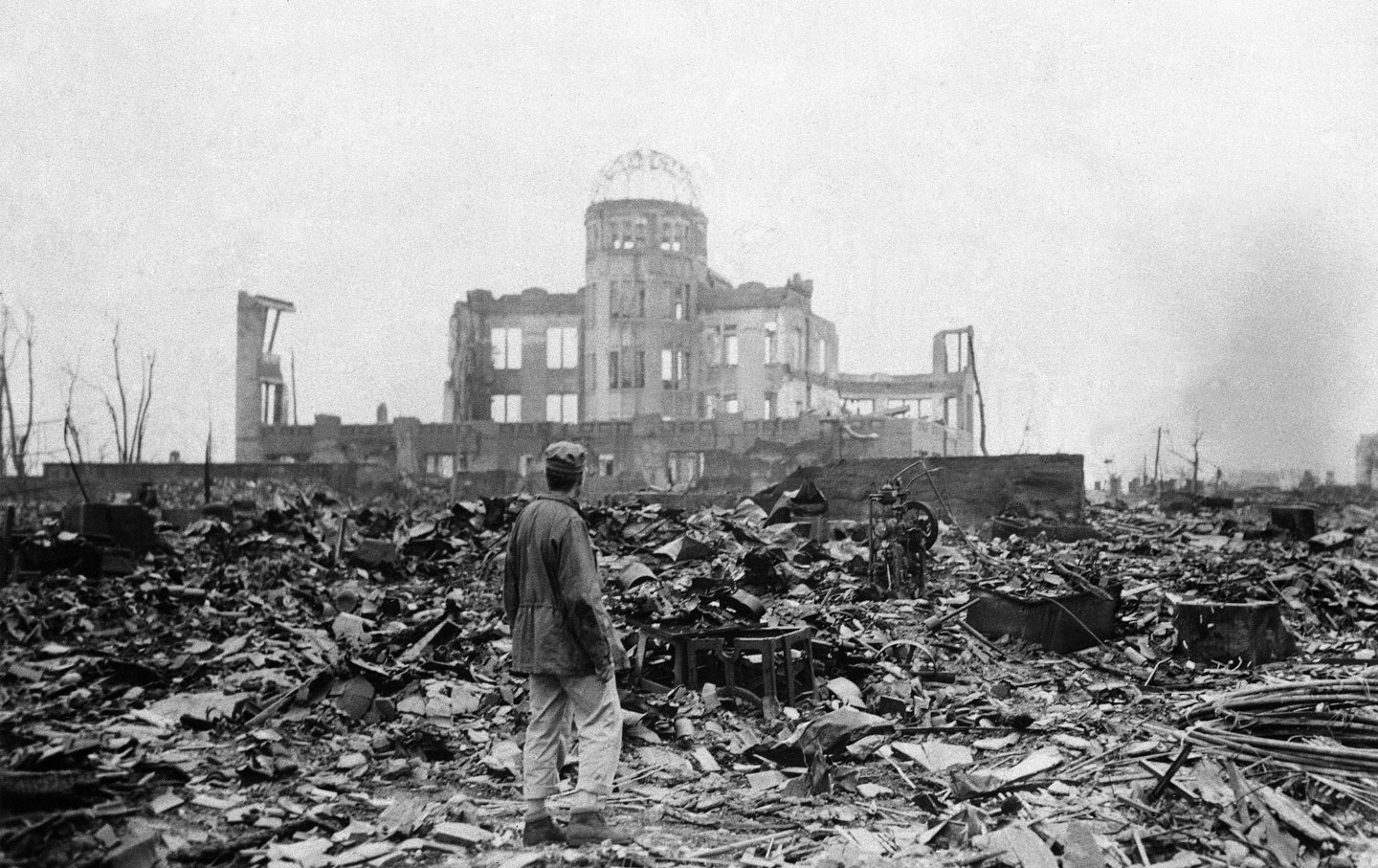
America's Greatest War Crimes (from Among So, So Many): Hiroshima and Nagasaki

"[The U.S.] never would have dropped the bomb if the Japanese had had white skin. It was a monstrous, racist act." - Lawrence Ferlinghetti

2015-08-06

70 Years Later, America Still Hasn’t Apologized for Murdering Hundreds of Thousands of Innocent Japanese Citizens in an Instant

by Christian Appy
TomDispatch.com

“Never, never waste a minute on regret. It’s a waste of time.”

- President Harry Truman


Here we are, 70 years after the nuclear obliteration of Hiroshima and Nagasaki, and I’m wondering if we’ve come even one step closer to a moral reckoning with our status as the world’s only country to use atomic weapons to slaughter human beings. Will an American president ever offer a formal apology? Will our country ever regret the dropping of “Little Boy” and “Fat Man,” those two bombs that burned hotter than the sun? Will it absorb the way they instantly vaporized thousands of victims, incinerated tens of thousands more, and created unimaginably powerful shockwaves and firestorms that ravaged everything for miles beyond ground zero? Will it finally come to grips with the “black rain” that spread radiation and killed even more people - slowly and painfully - leading in the end to a death toll for the two cities conservatively estimated at more than 250,000?

Given the last seven decades of perpetual militarization and nuclear “modernization” in this country, the answer may seem like an obvious no. Still, as a historian, I’ve been trying to dig a little deeper into our lack of national contrition. As I have, an odd fragment of Americana kept coming to mind, a line from the popular 1970 tearjerker Love Story: “Love,” says the female lead when her boyfriend begins to apologize, “means never having to say you’re sorry.” It has to be one of the dumbest definitions ever to lodge in American memory, since real love often requires the strength to apologize and make amends.

It does, however, apply remarkably well to the way many Americans think about that broader form of love we call patriotism. With rare exceptions, like the 1988 congressional act that apologized to and compensated the Japanese-American victims of World War II internment, when it comes to the brute exercise of power, true patriotism has above all meant never having to say you’re sorry. The very politicians who criticize other countries for not owning up to their wrong-doing regularly insist that we should never apologize for anything. In 1988, for example, after the US Navy shot down an Iranian civilian airliner over the Persian Gulf killing all 290 passengers (including 66 children), Vice President George H.W. Bush, then running for president, proclaimed, “I will never apologize for the United States. Ever. I don’t care what the facts are.”

It turns out, however, that Bush’s version of American remorselessness isn’t quite enough. After all, Americans prefer to view their country as peace-loving, despite having been at war constantly since 1941. This means they need more than denials and non-apologies. They need persuasive stories and explanations (however full of distortions and omissions). The tale developed to justify the bombings that led to a world in which the threat of human extinction has been a daily reality may be the most successful legitimizing narrative in our history. Seventy years later, it’s still deeply embedded in public memory and school textbooks, despite an ever-growing pile of evidence that contradicts it. Perhaps it’s time, so many decades into the age of apocalyptic peril, to review the American apologia for nuclear weapons - the argument in their defense - that ensured we would never have to say we’re sorry.

THE HIROSHIMA APOLOGIA
On August 9, 1945, President Harry Truman delivered a radio address from the White House. “The world will note,” he said, “that the first atomic bomb was dropped on Hiroshima, a military base. That was because we wished in this first attack to avoid, insofar as possible, the killing of civilians.” He did not mention that a second atomic bomb had already been dropped on Nagasaki.

Truman understood, of course, that if Hiroshima was a “military base,” then so was Seattle; that the vast majority of its residents were civilians; and that perhaps 100,000 of them had already been killed. Indeed, he knew that Hiroshima was chosen not for its military significance but because it was one of only a handful of Japanese cities that had not already been firebombed and largely obliterated by American air power. US officials, in fact, were intent on using the first atomic bombs to create maximum terror and destruction. They also wanted to measure their new weapon’s power and so selected the “virgin targets” of Hiroshima and Nagasaki. In July 1945, Secretary of War Henry Stimson informed Truman of his fear that, given all the firebombing of Japanese cities, there might not be a target left on which the atomic bomb could “show its strength” to the fullest. According to Stimson’s diary, Truman “laughed and said he understood.”

The president soon dropped the “military base” justification. After all, despite Washington’s effort to censor the most graphic images of atomic annihilation coming out of Hiroshima, the world quickly grasped that the US had destroyed an entire city in a single blow with massive loss of life. So the president focused instead on an apologia that would work for at least the next seven decades. Its core arguments appeared in that same August 9th speech. “We have used [the atomic bomb] against those who attacked us without warning at Pearl Harbor,” he said, “against those who have starved and beaten and executed American prisoners of war, against those who have abandoned all pretense of obeying international laws of warfare. We have used it in order to shorten the agony of war, in order to save the lives of thousands and thousands of young Americans.”

By 1945, most Americans didn’t care that the civilians of Hiroshima and Nagasaki had not committed Japan’s war crimes. American wartime culture had for years drawn on a long history of “yellow peril” racism to paint the Japanese not just as inhuman, but as subhuman. As Truman put it in his diary, it was a country full of “savages” - “ruthless, merciless, and fanatic” people so loyal to the emperor that every man, woman, and child would fight to the bitter end. In these years, magazines routinely depicted the Japanese as monkeys, apes, insects, and vermin. Given such a foe, so went the prevailing view, there were no true “civilians” and nothing short of near extermination, or at least a powerful demonstration of America’s willingness to proceed down that path, could ever force their surrender. As Admiral William “Bull” Halsey said in a 1944 press conference, “The only good Jap is a Jap who’s been dead six months.”

In the years after World War II, the most virulent expressions of race hatred diminished, but not the widespread idea that the atomic bombs had been required to end the war, eliminating the need to invade the Japanese home islands where, it was confidently claimed, tooth-and-nail combat would cause enormous losses on both sides. The deadliest weapon in history, the one that opened the path to future Armageddon, had therefore saved lives. That was the stripped down mantra that provided the broadest and most enduring support for the introduction of nuclear warfare. By the time Truman, in retirement, published his memoir in 1955, he was ready to claim with some specificity that an invasion of Japan would have killed half-a-million Americans and at least as many Japanese.

Over the years, the ever-increasing number of lives those two A-bombs “saved” became a kind of sacred numerology. By 1991, for instance, President George HW Bush, praising Truman for his “tough, calculating decision,” claimed that those bombs had “spared millions of American lives.” By then, an atomic massacre had long been transformed into a mercy killing that prevented far greater suffering and slaughter.

Truman went to his grave insisting that he never had a single regret or a moment’s doubt about his decision. Certainly, in the key weeks leading up to August 6, 1945, the record offers no evidence that he gave serious consideration to any alternative.

“REVISIONISTS” WERE PRESENT AT THE CREATION
Twenty years ago, the Smithsonian’s National Air and Space Museum planned an ambitious exhibit to mark the 50th anniversary of the end of World War II. At its center was to be an extraordinary artifact - the fuselage of the Enola Gay, the B-29 Superfortress used to drop the atomic bomb on Hiroshima. But the curators and historical consultants wanted something more than yet another triumphal celebration of American military science and technology. Instead, they sought to assemble a thought-provoking portrayal of the bomb’s development, the debates about its use, and its long-term consequences. The museum sought to include some evidence challenging the persistent claim that it was dropped simply to end the war and “save lives.”

For starters, visitors would have learned that some of America’s best-known World War II military commanders opposed using atomic weaponry. In fact, six of the seven five-star generals and admirals of that time believed that there was no reason to use them, that the Japanese were already defeated, knew it, and were likely to surrender before any American invasion could be launched. Several, like Admiral William Leahy and General Dwight Eisenhower, also had moral objections to the weapon. Leahy considered the atomic bombing of Japan “barbarous” and a violation of “every Christian ethic I have ever heard of and all of the known laws of war.”

Truman did not seriously consult with military commanders who had objections to using the bomb.  He did, however, ask a panel of military experts to offer an estimate of how many Americans might be killed if the United States launched the two major invasions of the Japanese home islands scheduled for November 1, 1945 and March 1, 1946. Their figure: 40,000 - far below the half-million he would cite after the war. Even this estimate was based on the dubious assumption that Japan could continue to feed, fuel, and arm its troops with the US in almost complete control of the seas and skies.

The Smithsonian also planned to inform its visitors that some key presidential advisers had urged Truman to drop his demand for “unconditional surrender” and allow Japan to keep the emperor on his throne, an alteration in peace terms that might have led to an almost immediate surrender. Truman rejected that advice, only to grant the same concession after the nuclear attacks.

Keep in mind, however, that part of Truman’s motivation for dropping those bombs involved not the defeated Japanese, but the ascending Soviet Union. With the USSR pledged to enter the war against Japan on August 8, 1945 (which it did), Truman worried that even briefly prolonging hostilities might allow the Soviets to claim a greater stake in East Asia. He and Secretary of State James Byrnes believed that a graphic demonstration of the power of the new bomb, then only in the possession of the United States, might also make that Communist power more “manageable” in Europe. The Smithsonian exhibit would have suggested that Cold War planning and posturing began in the concluding moments of World War II and that one legacy of Hiroshima would be the massive nuclear arms race of the decades to come.

In addition to displaying American artifacts like the Enola Gay, Smithsonian curators wanted to show some heartrending objects from the nuclear destruction of Hiroshima, including a schoolgirl’s burnt lunchbox, a watch dial frozen at the instant of the bomb’s explosion, a fused rosary, and photographs of the dead and dying. It would have been hard to look at these items beside that plane’s giant fuselage without feeling some sympathy for the victims of the blast.

None of this happened. The exhibit was canceled after a storm of protest. When the Air Force Association leaked a copy of the initial script to the media, critics denounced the Smithsonian for its “politically correct” and “anti-American” “revision” of history. The exhibit, they claimed, would be an insult to American veterans and fundamentally unpatriotic. Though conservatives led the charge, the Senate unanimously passed a resolution condemning the Smithsonian for being “revisionist and offensive” that included a tidy rehearsal of the official apologia: “The role of the Enola Gay… was momentous in helping to bring World War II to a merciful end, which resulted in saving the lives of Americans and Japanese.”

Merciful? Consider just this: the number of civilians killed at Hiroshima and Nagasaki alone was more than twice the number of American troops killed during the entire Pacific war.

In the end, the Smithsonian displayed little but the Enola Gay itself, a gleaming relic of American victory in the “Good War.”

OUR UNBROKEN FAITH IN THE GREATEST GENERATION
In the two decades since, we haven’t come closer to a genuine public examination of history’s only nuclear attack or to finding any major fault with how we waged what Studs Terkel famously dubbed “the Good War.” He used that term as the title for his classic 1984 oral history of World War II and included those quotation marks quite purposely to highlight the irony of such thinking about a war in which an estimated 60 million people died. In the years since, the term has become an American cliche, but the quotation marks have disappeared along with any hint of skepticism about our motives and conduct in those years.

Admittedly, when it comes to the launching of nuclear war (if not the firebombings that destroyed 67 Japanese cities and continued for five days after “Fat Man” was dropped on Nagasaki), there is some evidence of a more critical cast of mind in this country. Recent polls, for instance, show that “only” 56% of Americans now think we were right to use nuclear weapons against Japan, down a few points since the 1990s, while support among Americans under the age of 30 has finally fallen below 50%. You might also note that just after World War II, 85% of Americans supported the bombings.

Of course, such pro-bomb attitudes were hardly surprising in 1945, especially given the relief and joy at the war’s victorious ending and the anti-Japanese sentiment of that moment. Far more surprising: by 1946, millions of Americans were immersed in John Hersey’s best-selling book Hiroshima, a moving report from ground zero that explored the atomic bomb’s impact through the experiences of six Japanese survivors. It began with these gripping lines:

“At exactly fifteen minutes past eight in the morning, on August 6, 1945, Japanese time, at the moment when the atomic bomb flashed above Hiroshima, Miss Toshiko Sasaki, a clerk in the personnel department of the East Asia Tin Works, had just sat down at her place in the plant office and was turning her head to speak to the girl at the next desk.”

Hiroshima remains a remarkable document for its unflinching depictions of the bomb’s destructiveness and for treating America’s former enemy with such dignity and humanity. “The crux of the matter,” Hersey concluded, “is whether total war in its present form is justifiable, even when it serves a just purpose. Does it not have material and spiritual evil as its consequences which far exceed whatever good might result?”

The ABC Radio Network thought Hersey’s book so important that it hired four actors to read it in full on the air, reaching an even wider audience. Can you imagine a large American media company today devoting any significant air time to a work that engendered empathy for the victims of our twenty-first century wars? Or can you think of a recent popular book that prods us to consider the “material and spiritual evil” that came from our own participation in World War II? I can’t.

In fact, in the first years after that war, as Paul Boyer showed in his superb book By the Bomb’s Early Light, some of America’s triumphalism faded as fears grew that the very existence of nuclear weapons might leave the country newly vulnerable. After all, someday another power, possibly the Soviet Union, might use the new form of warfare against its creators, producing an American apocalypse that could never be seen as redemptive or merciful.

In the post-Cold War decades, however, those fears have again faded (unreasonably so since even a South Asian nuclear exchange between Pakistan and India could throw the whole planet into a version of nuclear winter).  Instead, the “Good War” has once again been embraced as unambiguously righteous. Consider, for example, the most recent book about World War II to hit it big, Laura Hillenbrand’s Unbroken: A World War II Story of Survival, Resilience, and Redemption. Published in 2010, it remained on the New York Times best-seller list in hardcover for almost four years and has sold millions of copies. In its reach, it may even surpass Tom Brokaw’s 1998 book, The Greatest Generation. A Hollywood adaptation of Unbroken appeared last Christmas.

Hillenbrand’s book does not pretend to be a comprehensive history of World War II or even of the war in the Pacific. It tells the story of Louis Zamperini, a child delinquent turned Olympic runner turned B-24 bombardier. In 1943, his plane was shot down in the Pacific. He and the pilot survived 47 days in a life raft despite near starvation, shark attacks, and strafing by Japanese planes. Finally captured by the Japanese, he endured a series of brutal POW camps where he was the victim of relentless sadistic beatings.

The book is decidedly a page-turner, but its focus on a single American’s punishing ordeal and amazing recovery inhibits almost any impulse to move beyond the platitudes of nationalistic triumphalism and self-absorption or consider (among other things) the racism that so dramatically shaped American combat in the Pacific. That, at least, is the impression you get combing through some of the astonishing 25,000 customer reviews Unbroken has received on Amazon. “My respect for WWII veterans has soared,” a typical reviewer writes. “Thank you Laura Hillenbrand for loving our men at war,” writes another. It is “difficult to read of the inhumanity of the treatment of the courageous men serving our country.” And so on.

Unbroken devotes a page and a half to the atomic bombing of Hiroshima, all of it from the vantage point of the American crew of the Enola Gay. Hillenbrand raises concerns about the crew’s safety: “No one knew for sure if… the bomber could get far enough away to survive what was coming.” She describes the impact of the shockwaves, not on the ground, but at 30,000 feet when they slammed into the Enola Gay, “pitching the men into the air.”

The film version of Unbroken evokes even less empathy for the Japanese experience of nuclear war, which brings to mind something a student told my graduate seminar last spring. He teaches high school social studies and when he talked with colleagues about the readings we were doing on Hiroshima, three of them responded with some version of the following: “You know, I used to think we were wrong to use nukes on Japan, but since I saw Unbroken I’ve started to think it was necessary.” We are, that is, still in the territory first plowed by Truman in that speech seven decades ago.

At the end of the film, this note appears on the screen: “Motivated by his faith, Louie came to see that the way forward was not revenge, but forgiveness. He returned to Japan, where he found and made peace with his former captors.”

That is indeed moving. Many of the prison camp guards apologized, as well they should have, and - perhaps more surprisingly - Zamperini forgave them. There is, however, no hint that there might be a need for apologies on the American side, too; no suggestion that our indiscriminate destruction of Japan, capped off by the atomic obliteration of two cities, might be, as Admiral Leahy put it, a violation of “all of the known laws of war.”

So here we are, 70 years later, and we seem, if anything, farther than ever from a rejection of the idea that launching atomic warfare on Japanese civilian populations was an act of mercy. Perhaps some future American president will finally apologize for our nuclear attacks, but one thing seems certain: no Japanese survivor of the bombs will be alive to hear it.   

2015-08-04

‘This is our Israel, this is for the Jews. No Palestinian should come to Israel': A Palestinian-American’s story of being detained at Ben Gurion airport

by George Khoury
Mondoweiss

I was born in West Jerusalem (so-called the Jewish half of Jerusalem) in 1945. Under a shower of bullets that were flying over our heads, my father grabbed me and the rest of the family and fled to his native city of Nablus at the eve of the creation of the State of Israel in 1948. We remained in Rafidia-Nablus until 1952 and then moved to Ramallah where my father got a job in the post office. I went to the parochial school and then entered the Latin Seminary of Beit Jala in 1961 to study for the priesthood. In 1968 I left the seminary where I studied French, Latin, in addition to philosophy and theology. I came to the US in September of 1969 and entered Seton Hall University in South Orange, New Jersey where I graduated with a B.A. in French & Spanish, and in 1975 I earned a master’s Degree from the University of Montclair in New Jersey.

I moved to California in 1975 where I taught foreign language at the high school level. I entered the Ph.D. program in theology in 1983 at the Graduate Theological Union in Berkeley, California and I obtained my doctorate degree in 1990. I have been teaching language at San Mateo College, Skyline College, and Westmoor High School. I joined the deaconate program in 2012 because I intend to serve the different Church communities as a deacon in the Archdiocese of San Francisco.

After 21 years of not visiting or seeing Jerusalem and my homeland Palestine, I decided to go back, this time as an American citizen with an American passport, which I was granted in 1975. The trip was intended to be a religious pilgrimage with Father Bernard Poggi as well as a long overdue visit my homeland to see friends and family I hadn’t seen in decades. Once we arrived to Ben Gurion airport in Tel Aviv, they allowed Father Bernard to enter. When it came to me, I was ushered by a young female soldier to the “green room” for questioning.

The conversation that ensued is this:

An airport security agent (who I believe to be a Shin Bet agent) began:

Agent: “Oh so you came through Ben Gurion airport?”

Me: “Yes. What’s wrong with that?”

Agent: “You can’t do that.”

Me: “Why? I have an American passport. I came with father Bernard, to spend a few weeks in Jerusalem and that’s it. We are coming here on a religious pilgrimage and to visit some friends and family.”

Agent: “No no, you cannot go to Israel. You should have gone through the Allenby Bridge.”

Me: “Why should I do that? I’m not coming through as a Palestinian. I’m coming as an American citizen.”

Agent: “No. You are a Palestinian. Why are you denying that you’re a Palestinian?”

Me: “I’m not denying that I’m Palestinian. I am Palestinian from head to toe. My father is Palestinian. My mother is Palestinian. My brothers are Palestinian. My sister is Palestinian. My grandfather is an Orthodox priest and I can trace my Palestinian roots for the last 500 years. What do you mean I am denying? I am denying nothing.”

Agent: “No no, you belong with the Palestinian people. This is our Israel, this is for the Jews. No Palestinian should come to Israel. You should have gone through the Allenby Bridge.”

Me: “Why do you say that? Did I ever have a Palestinian passport? Did I ever live under the Palestinian authority? When the PA was constituted I was never in Palestine and I was never issued a Palestinian passport.”

Agent: “But you have an Israeli ID.” [He is referring to the Israeli ID issued to me after Israel began their occupation of the West Bank in 1967. I had an Israeli ID until I left for the US in 1969.]

Me: “An Israeli ID is not a Palestinian passport. The Israeli ID was issued to me when I was in Beit Jala when I was studying for the priesthood but you cannot equate that to a Palestinian passport. Juridically speaking, I was never a citizen of a country called Palestine. I am coming with an American passport and you should honor it.”

Agent: “How do you want me to honor your American passport? Do you want me to kiss it, to hug it, or to worship it? Moreover, you are rude and ill mannered. How did you get to be so rude? You are a Palestinian and you are rude and ill-mannered.”

Me: “I am neither rude nor ill-mannered I’m just stating the facts. I’m just telling you I’m an American, who has been an American citizen for the past 40 years and I’ve lived in America for 46 years. So you disregard all these legal facts and you only focus on my Palestinian heritage?”

Agent: “You will be deported to Jordan and come through the Allenby Bridge to continue your visit to the West Bank.” [The Allenby Bridge is the connection between Jordan and Israel. Palestinians can only enter the West Bank through this bridge because they are not allowed in through Israel proper.]

I returned to Father Bernard who was waiting for me. I told Father Bernard what happened with the Shin Beth agent and we waited. The man returned with the deportation papers and made me understand in the presence of Father Bernard that I will be deported to Jordan. I waited until two other security officers came to me and told me, “You will not be deported to Jordan but you should go back to where I came from.” [Fiumicino Airport, Italy]. I said, “But I was just told that I will be deported to Jordan.” They asked, “Who said that?”

I answered, “I don’t know his name. Did you think he told me his name? He’s the security man in the office who just had me sign deportation papers.” They said, “No, you have to go back to Italy first. If you then choose to come back to Jordan after landing in Italy then that is your choice.” I was shocked but had no choice but to go along with it. In front of the Israeli officials, Father Bernard gives me his Jordanian phone number and we agreed we would meet in Jordan the following day.

Bernard and I parted ways and I went back with the Israeli security officers. They kept me (and the others) in the airport until 1:30 am on July 21st. Eventually, they brought us a sandwich. Some of the others who were with me during the ordeal were a Palestinian woman and her daughter (who were Palestinian-born but US citizens). They had originally traveled with her two other sons but because the two boys were American born they were able to enter Israel. The Israeli officials told the two of them that they would be deported back to the US but they would be deported separately. They both broke down in tears and pleaded with them to at least allow them to be deported together but to no avail. There was also a young British woman who told me she was working with a human rights group in Israel, a Korean and a young Russian woman neither of whom spoke much English.

They drove us about half an hour away from the airport. In the car being driven by the Israelis, a young Korean who barely spoke any English, hungry, and penniless, asked the two guards in an extremely feeble voice and in bad English, “Are we going to die tonight?” We were being transported in a van with bars – made for prisoners. They held us like criminals in a detention facility they called emigration, which was anything but–and should have been called prison–until we were deported.

They locked us up, forbade me personally from keeping my iPhone, refused me to take a book with me to that filthy room and threw me there with a bunch of poor, hungry, and disoriented men from different national and ethnic backgrounds. The time was about 2 am.

We spent a whole Tuesday in the detention center not knowing when we would be leaving. I was locked up in that room with the other men. There was an Arab guard around the cell. I dared ask him “You know all of our names and everything about us. What is your name?” He said, “My name is George.” From his accent, he sounded like he was from Nazareth.” I asked him, “Why are you treating us like prisoners?” He said, “That’s just how it is.” He eventually let me use the phone to call my wife, Nariman, to tell her where I was. If I had the right to a phone call at the airport I was never told about it. The other guards remained totally anonymous, insulted us by using disrespectful and abusive language, and forbade us from speaking to one another from each other’s room separated by a long corridor. I didn’t sleep a wink because they kept the bright neon lights on the entire time.

At 4 am that morning, the guard came to tell me to get ready for my flight. He heard me speaking in Arabic to the Palestinian woman with her daughter who were held in the opposite room from where I was detained. When he came back that morning Samar’s mother was saying that maybe they were just roughing us up a bit but they really would eventually deport us to Jordan. He was very angry and yelled, “I told you not to talk to the others! I’m trying to respect you! Try to respect yourself. Get away from the door!”

Then around 8 am a guard came in the room and frantically took me saying that my plane was ready. Like a madman, he drove me to the airport and took me straight to the runway stairs rather than being taken through the airport.

Just as I was getting on the plane I asked, “Where exactly are you deporting me?”

He said, “Bogota.”

I said,“Bogota!? Why?!”

“Aren’t you Carlos?” he asked.

“No, I’m George Khoury! Let me see the passport in your hands,” I demanded. It belonged to a Colombian man named Carlos.

The guard realized his mistake and frantically raced me back to the detention center. The rough ride exacerbated my sciatic nerve badly and I’m still in great pain. We went back to the detention center, back into the cell. He called out for Carlos. Carlos was sleeping and woke up. He said, “I’m Carlos!” and he was taken away.

Without going into every detail, at 9:30 am on Wednesday they came back and picked me up. They drove me to the runway again and we waited for a long time, seemingly until the entire plane was boarded and ready. They walked me all the way up to moving stairs. Until this point, I was told I would be flying to Italy so that I could return to Jordan. At the moment before I entered the plane he held in his hand a set of tickets that would fly me all the way back to the US via Italy, then NY, then SF. The Italian agent told me that I would be given back my passport once he made sure that I was in the plane heading to the US. That’s exactly what happened. When I arrived to Italy, before I exited the plane, I asked the stewardess for my passport. She told me that it would be taken care of by a man waiting outside for me. An Italian officer was waiting for me at the top of the stairs. He took me in a jeep to an unknown location away from the airport – some kind of a police station. He put me in a room with about 5 or 6 people where our movement was restricted. At 5pm, I got on my flight heading to the states where I was handed my passport.

I arrived to New York around 8 pm that day. I would remain in the airport until the next morning where I boarded a 6am flight. The entire time I had my bag in my lap, trying to close my eyes for brief moments, sitting on a hard bench counting the minutes and the hours until flight time at 6 am all along holding on for dear life since the bag contained my insulin, my wallet and my iPhone. I am a diabetic and parting with my medicine would be fatal.

I arrived home exhausted on Thursday at 11:37 am. I called my travel agent to find out if I could be reimbursed for my stolen bag and the KLM return ticket I hadn’t used. He found out that those funds had already been used to pay for my deportation back to the US.

I’m back in San Francisco now. They took something that was suppose to be a vacation from my long work hours, a reconnection with my homeland and old friends, and made it a nightmare from hell. I was disrespected, demeaned and treated like I committed a crime. I tell you my story so as to encourage people to visit Palestine to challenge the thuggery of this racist entity and do it here in the USA as well as in Israel. Though somewhat extreme, this is is not a very unique story. Many other instances of Arab Americans being racially profiled by Israelis at any entry point into the Israeli state or West Bank have been documented. Harassment, detainment, and interrogations are part and parcel of the Israeli states’ efforts to keep Palestinians out of Israel-Palestine and bring more Jews in. It is my own US tax dollars—over 3 billion dollars of both economic and military aid—that finances the oppression of the Palestinian people. Without the US’s blind and unconditional financial and political support of the state of Israel, the occupation and all its tragedies against the Palestinians would not continue.

Breaking the Silence: IDF Soldiers Expose Abuse and Atrocities in the Palestinian Territories

by Roisin Davis
Truthdig

“If you spot someone, shoot.” This is the advice given to Israeli soldiers assigned to the Northern Gaza Strip, according to an anonymous account by a first sergeant in the Israel Defense Forces.

“There weren’t really any rules of engagement, it was more protocols,” the soldier said. “... They told us: ‘There aren’t supposed to be any civilians there. ... Whether it posed a threat or not wasn’t a question, and that makes sense to me. If you shoot someone in Gaza, it’s cool, no big deal. First of all, because it’s Gaza, and second, because that’s warfare. That, too, was made clear to us--they told us, ‘Don’t be afraid to shoot.’ ”

The soldier’s testimony is one of over 1,000 gathered by Breaking the Silence (BtS), an IDF veterans’ group. As stand-alone retellings, each account is more harrowing and gruesome than the next. Collectively, they help to lay bare the truth of an occupation in which violence and destruction as well as the humiliation and intimidation of Palestinians are routine, normalized, everyday facts of life. That truth is that “if you shoot someone in Gaza, it’s cool, no big deal.”

BtS was formed in 2004, during the Second Intifada--or the second Palestinian uprising against Israel, from 2000 to 2005--a time when Shaul Mofaz, a former Israeli defense minister, proclaimed that the IDF was the “most moral army in the world.” This mantra, a recent Haaretz article explained, has been “recited ever since, as though it were holy writ, by the top levels of the government and the army.”

The common thread that binds together the vast collection of testimonies gathered by BtS is the anguish that otherwise moral women and men feel when they discover that simply carrying out their duties has involved them in carrying out inhumane acts. Their medals are scars on their souls, just as American veterans testified in 1971 at the Winter Soldier hearings detailing many of the atrocities committed by U.S. forces during the Vietnam War.

“Cases of abuse towards Palestinians, looting, and destruction of property have been the norm for years,” according to the BtS website, “but are still explained as extreme and unique cases. Our testimonies portray a different, and much grimmer picture in which deterioration of moral standards finds expression in the character of orders and the rules of engagement, and are justified in the name of Israel’s security.”

Each testimony is painstakingly researched, and the facts are cross-checked against the testimonies of other eyewitnesses and the research of other human rights organizations. In 2011, BtS published “Occupation of the Territories: Israeli Soldier Testimonies 2000-2010,” containing first-hand accounts by over 100 Israeli soldiers. David Shulman, professor of humanistic studies at the Hebrew University of Jerusalem, described the report in The New York Review of Books as “one of the most important published on Israel/Palestine in this generation.”

The group’s 2010 “Women Soldiers’ Testimonies” contains 96 anonymous accounts from over 40 female officers, commanders and soldiers in various units who served as combatants and in supporting combat roles in the Israeli-occupied territories since 2000. Ynetnews characterized those accounts as “systematic humiliation of Palestinians, reckless and cruel violence, theft, killing of innocent people and cover-up.”

The year that BtS was founded, former IDF soldiers Avichai Sharon, Yehuda Shaul and Noam Chayut exhibited a series of photographs and written accounts from soldiers who had served in Hebron, a Palestinian city located in the southern West Bank. “It’s hard for me to pinpoint the worst thing I did,” Avichai Charon said in a 2005 CBS News interview. “It’s not the extreme cases. It’s the trivial day to day. “What haunts me? It’s the memories of 6-year-old, 7-year-old Palestinian children watching with tears in their eyes when you’re tossing their room, breaking their wall, taking their father and slamming him into the wall before arresting him.”

The photo exhibition was attended by thousands, and the organization subsequently became an outlet for reporting the daily cruelties of the occupation. “While this reality is known to Israeli soldiers and commanders,” the group’s site explains, “Israeli society continues to turn a blind eye, and to deny … what is done in its name.”

“Discharged soldiers returning to civilian life discover the gap between the reality they encountered in the Territories, and the silence about this reality they encounter at home,” BtS continues. “In order to become civilians again, soldiers are forced to ignore what they have seen and done. We strive to make heard the voices of these soldiers, pushing Israeli society to face the reality whose creation it has enabled.”

Whistleblowers exposing state injustice are often condemned as unpatriotic, but BtS is considered virtually traitorous because its testimonies have supported the Palestinian narrative of repression in the West Bank and war crimes in Gaza. With the Israeli left more marginalized than ever before, and the ruling right-wing parties intoxicated with the home brew of unconditional support from their Republican allies in the United States, Israel’s veterans have become a constant target of Prime Minister Benjamin Netanyahu’s wrath. “There is no silence to break,” he has bellowed. “What are they talking about?”

There are disturbing signs of a new center-right campaign to brand BtS as pawns of the larger international conspiracy against Israel.

Last week, Yair Lapid, the former television news anchor who leads the middle-class secularist Yesh Atid Party, slammed the Kibbutz movement for inviting Breaking the Silence to attend a youth event. “Here’s another proof--for anyone who needed one--that there are some in the Israeli left who have completely lost it,” Lapid wrote on his Facebook page. He continued by describing members of BtS as people who “go around the world with foreign sponsorship to bad-mouth the state of Israel using anonymous testimonies.”

Would that those testimonies of conscience were better known in the United States and elsewhere around the world?

2015-07-31

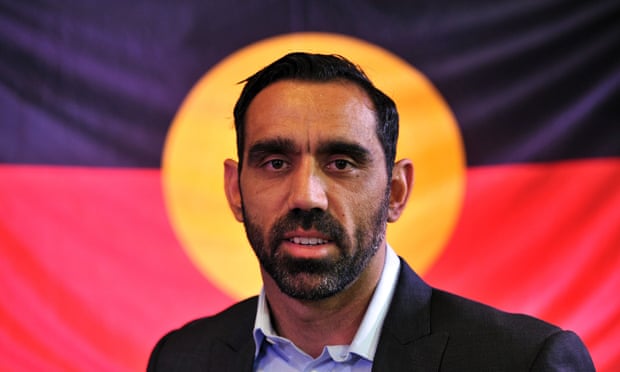
I Can Tell You How Adam Goodes Feels. Every Indigenous Person Has Felt It

by Stan Grant
The Guardian


Estranged in the land of our ancestors, living on the fringes of a rich society ? parse your words, but we see only race in the attacks on AFL player Adam Goodes

 I have wondered for days if I should say anything about Adam Goodes.

My inclination is to look for common ground, to be diplomatic. Some of the fault is with Adam. Maybe he’s been unnecessarily provocative. Racism? Perhaps. Perhaps the crowds just don’t like him.

Yes, I could make a case for all of that. But there are enough people making those arguments and all power to them.

Here’s what I can do. I can tell you what it is like for us. I can tell you what Adam must be feeling, because I’ve felt it. Because every Indigenous person I know has felt it.

It may not be what you want to hear. Australians are proud of their tolerance yet can be perplexed when challenged on race, their response often defensive.

I may be overly sensitive. I may see insult where none is intended. Maybe my position of relative success and privilege today should have healed deep scars of racism and the pain of growing up Indigenous in Australia. The same could be said of Adam. And perhaps that is right.

But this is how Australia makes us feel. Estranged in the land of our ancestors, marooned by the tides of history on the fringes of one of the richest and demonstrably most peaceful, secure and cohesive nations on earth.

The “wealth for toil” we praise in our anthem has remained out of our reach. Our position at the bottom of every socio-economic indicator tragically belies the Australian economic miracle.

“Australians all let us rejoice” can ring hollow to us. Ours is more troubled patriotism. Our allegiance to Australia, our pride in this country undercut by the dark realities of our existence.

Seeds of suspicion and mistrust are planted early in the Indigenous child. Stories of suffering, humiliation and racism told at the feet of our parents and grandparents feed an identity that struggles to reconcile a pride in heritage with the forlorn realities of a life of defeat.

From childhood I often cringed against my race. To be Aboriginal was to be ashamed. Ashamed of our poverty. Ashamed of the second-hand clothes with the giveaway smell of mothballs and another boy’s name on the shirt collar.

Ashamed of the way my mother and grandmother had to go to the Smith Family or Salvation Army for food vouchers. Ashamed of the onions and mince that made up too many meals.

We were ashamed of the bastardised wreckage of a culture that we clung to. This wasn’t the Dreamtime. This was mangy dogs and broken glass.

Like the Goodes family, we moved constantly as my father chased work. But wherever we went we found our place always on the fringes. What semblance of pride we carried too easily laid low by a mocking glance or a schoolyard joke.

We were the blacks. So easily recognised not just by the colour of our skin but by the whiff of desperation and danger we cloaked ourselves in. What resentment we harboured, we too often turned on ourselves, played out in wild scrambling brawls from the playground to the showgrounds that sent the same message: stay away from the blacks.

There was humour and there was love and there was survival. And as I grew older I pieced together the truth that we didn’t choose this. We are the detritus of the brutality of the Australian frontier.

As Australia welcomed waves of migrants and built a rich, diverse, tolerant society, we remained a reminder of what was lost, what was taken, what was destroyed to scaffold the building of this nation’s prosperity.

We survived the “smoothing of the dying pillow” of extermination to end up on the bottom rung of the ladder of assimilation. Too many of us remain there still. Look to the statistics: the worst health, housing, education, the lowest life expectancy, highest infant mortality. An Indigenous youth has more chance of being locked up than educated.

To Adam’s ears, the ears of so many Indigenous people, these boos are a howl of humiliation.
If good fortune or good genes means you are among the lucky few to find an escape route then you face a choice: to “go along to get along”, mind your manners, count your blessings and hide in the comfort of the Australian dream; or to infuse your success with an indignation and a righteousness that will demand this country does not look away from its responsibilities and its history.

I found a path through education that led to journalism. A love of knowledge and an inquisitiveness that has shot me through with anger. A deeper understanding of history, of politics, of economics, leaving me resentful of our suffering.

I wrestle with that anger as the boy I was wrestled with his shame. I want to see the good in a society that defies the history of its treatment of my people.

It is the legacy of my grandfather who signed up to fight a war for a country that didn’t recognise his humanity, let alone his citizenship. It is the lesson of the example of the lives of my mother and father, my uncles and aunties. Lives of decency and hard work and responsibility and rooted in our identity as Indigenous Australians.

When I was 16 I summoned the courage to speak to my class. As the only Indigenous kid, the only Aboriginal person my schoolmates had met, I wanted to tell my family’s story. My teacher was proud and encouraging. When class returned after lunch the words “be kind to abos” were scrawled across the blackboard.

The rejection, the humiliation, cut me to the core.

This is the journey too of Adam Goodes. A man whose physical gifts have set him above and given him a platform available to so few and whose courage demands that he use it to speak to us all.

Events in recent years have sent Adam on a quest to understand the history of his people, to challenge stereotypes and perceptions. I have spoken to him about this. I recognise in him the same quest I see in myself. It is a conversation I have had with so many of my Indigenous brothers and sisters.

This is rare air for anyone, let alone a footballer. He has faltered at times and the expression of his anger at our history and his pride in his identity has been challenging, if not divisive.

The events of 2013 when he called out a 13-year-old girl for a racial taunt opened a wound that has only deepened. To some the girl was unfairly vilified. Adam’s war dance of this year challenged and scared some people. His talent, the way he plays the game, alienates others.

And now we have this, a crescendo of boos. The racial motivation of some giving succour to the variously defined hatred of others.

To Adam’s ears, the ears of so many Indigenous people, these boos are a howl of humiliation. A howl that echoes across two centuries of invasion, dispossession and suffering. Others can parse their words and look for other explanations, but we see race and only race. How can we see anything else when race is what we have clung to even as it has been used as a reason to reject us.

I found refuge outside Australia. My many years working in Asia, the Middle East, Europe and Africa liberated me. Here were the problems of other peoples and other lands. Here I was an observer freed from the shackles of my own country’s history.

I still wonder if it would be easier to leave again.

But people ? like Adam Goodes, other Indigenous sportsmen and women who are standing with him, his non-Indigenous teammates and rivals who support him, and my non-Indigenous wife, my children and their friends of all colours and the people of goodwill who don’t have the answers but want to keep asking questions of how we can all be better ? maybe they all make it worth staying.

2015-07-27

Why I Support the BDS Movement Against Israel

by Chris Hedges
Truthdig


The Palestinians are poor. They are powerless. They have no voice or influence in the halls of power. They are demonized. They do not have well-heeled lobbyists doling out campaign contributions and pushing through pro-Palestinian legislation. No presidential candidate is appealing to donors?as Hillary Clinton did when she sent a letter to media mogul Haim Saban denouncing critics of Israel?by promising to advance the interests of the Palestinian people. Palestinians, like poor people of color in the United States, are expendable.

Justice for Palestine will never come from the traditional governmental institutions or political parties that administer power. These institutions have surrendered to moneyed interests. Justice will come only from us. And the sole mechanism left to ensure justice for Palestine is the boycott, divestment and sanctions (BDS) movement against Israel. Sanctions brought down the apartheid regime of South Africa. And they are what will bring down the apartheid regime of Israel. BDS is nonviolent. It appeals to conscience. And it works.

All Israeli products including Jaffa citrus fruits, Ahava cosmetics, SodaStream drink machines, Eden Springs bottled water and Israeli wine must be boycotted. We must refuse to do business with Israeli service companies. And we must boycott corporations that do business with Israel, including Caterpillar, HP and Hyundai. We must put pressure on institutions, from churches to universities, to divest from Israeli companies and corporations that have contracts with Israel. The struggle against apartheid in South Africa was long and hard. This struggle will be too.

Gaza, a year after Israel carried out a devastating bombing campaign that lasted almost two months, is in ruins. Most of the water is unsafe to drink. There are power outages for up to 12 hours a day. Forty percent of the 1.8 million inhabitants are unemployed, including 67 percent of the youths?the highest youth unemployment rate in the world. Of the 17,000 homes destroyed by Israel in the siege, not one has been rebuilt. Sixty thousand people remain homeless. Only a quarter of the promised $3.5 billion in aid from international donors has been delivered?much of it diverted to the Palestinian Authority, the Israeli puppet regime that governs the West Bank. And no one in Washington?Republican or Democrat?will defy the Israel lobby. No one will call for justice or stay the Israeli killing machine. U.S. senators, including Bernie Sanders, at the height of the Israeli bombardment last summer voted unanimously to defend the Israeli slaughter of a people with no army, navy, air force, mechanized units, artillery or command and control. It was a vote worthy of the old Soviet Union. Every senator held out his or her tin cup to the Israel lobby and chose naked self-interest over justice.

Israel, like the United States, is poisoned by the psychosis of permanent war. It too is governed by a corrupt oligarchic elite for whom war has become a lucrative business. It too has deluded itself into carrying out war crimes and then playing the role of the victim. Israeli systems of education and the press?again mirrored in the United States?have indoctrinated Israelis into believing that they have a right to kill anyone whom the state condemns as a terrorist. And Israel’s most courageous human rights campaigners, intellectuals and journalists are slandered and censored in their own country, just as American critics such as Norman Finkelstein, Max Blumenthal and Noam Chomsky are in the United States. 
Those who become addicted to the wielding of the instruments of war, blinded by hubris and a lust for power, eventually become war’s victims. This is as true for Israel as for the United States.

Israel’s goal is to make life a living hell for all Palestinians, ethnically cleansing as many as it can and subduing those who remain. The peace process is a sham. It has led to Israel’s seizure of more than half the land on the West Bank, including the aquifers, and the herding of Palestinians into squalid, ringed ghettos or Bantustans while turning Palestinian land and homes over to Jewish settlers. Israel is expanding settlements, especially in East Jerusalem. Racial laws, once championed by the right-wing demagogue Meir Kahane, openly discriminate against Israeli Arabs and Palestinians. Ilan Pappe calls the decades-long assault against the Palestinian people “incremental genocide.”

In Gaza, Israel practices an even more extreme form of cruelty. It employs a mathematical formula to limit outside food deliveries to Gaza to keep the caloric levels of the 1.8 million Palestinians just above starvation. This has left 80 percent of the Palestinians in Gaza dependent on Islamic charities and outside aid to survive. And the periodic military assaults on Gaza, euphemistically called “mowing the lawn,” are carried out every few years to ensure that the Palestinians remain broken, terrified and destitute. There have been three Israeli attacks on Gaza since 2008. Each is more violent and indiscriminate than the last. Israeli Foreign Minister Avigdor Lieberman has said that a fourth attack on Gaza is “inevitable.”

During its 51-day siege of Gaza last summer Israel dropped $370 million in ordinance on concrete hovels and refugee camps that hold the most densely packed population on the planet. Two thousand one hundred four Palestinians were killed. Sixty-nine percent?1,462?were civilians. Four hundred ninety-five were children. Ten thousand were injured. (During the attack six Israeli civilians and 66 soldiers were killed.) Four hundred Palestinian businesses were wiped out. Seventy mosques were destroyed and 130 were damaged. Twenty-four medical facilities were bombed, and 16 ambulances were struck, as was Gaza’s only electrical power plant. Israel tallied it up: 390,000 tank shells, 34,000 artillery shells, 4.8 million bullets. Most of the civilians who died were killed in their homes, many of the victims torn to shreds by flechette darts sprayed from tanks. Children were burned with white phosphorous or buried with their families under rubble caused by 2,000-pound iron fragmentation bombs. Others died from dense inert metal explosive, or DIME, bombs?experimental weapons that send out extremely small, carcinogenic particles that cut through both soft tissue and bone. The Israel Defense Forces, as Amira Hass has reported, consider any Palestinian over the age of 12 to be a legitimate military target. Max Blumenthal’s new book, “The 51 Day War,” is a chilling chronicle of savage atrocities carried out by Israel in Gaza last summer. As horrible as the apartheid state in South Africa was, that nation never used its air force and heavy artillery to bomb and shell black townships.

A report by Action on Armed Violence (AOAV) found Israel killed and injured more civilians with explosive weapons in 2014 than any other country in the world. Hamas’ indiscriminate firing of wildly inaccurate missiles?Finkelstein correctly called them “enhanced fireworks”?into Israel was, as a U.N. report recently charged, a war crime, although the report failed to note that under international law Hamas had a right to use force to defend itself from attack.

The disparity of firepower in the 2014 conflict was vast: Israel dropped 20,000 tons of explosives on Gaza while Hamas used 20 to 40 tons of explosives to retaliate. Israel’s wholesale slaughter of civilians is on a scale equaled only by Islamic State and Boko Haram. Yet Israel, in our world of double standards, is exempted from condemnation in Washington and provided with weapons and billions in U.S. foreign aid to perpetuate the killing. This is not surprising. The United States uses indiscriminate deadly force in Iraq, Syria, Afghanistan, Pakistan, Yemen and Somalia that outdoes even Israel, leaving behind civilian victims, refugees and destroyed cities and villages in huge numbers.

Israeli Prime Minister Benjamin Netanyahu, who during his last election campaign received 90 percent of his money from U.S. oligarchs such as Sheldon Adelson, has internally mounted a campaign of state repression against human rights advocates, journalists and dissidents. He has stoked overt racism toward Palestinians and Arabs and the African migrant workers who live in the slums of Tel Aviv. “Death to Arabs” is a popular chant at Israeli soccer matches. Thugs from right-wing youth groups such as Im Tirtzu routinely beat up dissidents, Palestinians, Israeli Arabs and African immigrants in the streets of Tel Aviv. It is a species of Jewish fascism.

Israel is not an anomaly. It is a window into the dystopian, militarized world that is being prepared for all of us, a world with vast disparities of income and draconian systems of internal security. There will be no freedom for Palestine, or for those locked in our own internal colonies and terrorized by indiscriminate police violence, until we destroy corporate capitalism and the neoliberal ideology that sustains it. There will be no justice for Michael Brown until there is justice for Mohammed Abu Khdeir. The fight for the Palestinians is our fight. If the Palestinians are not liberated none of us will be liberated. We cannot pick and choose which of the oppressed are convenient or inconvenient to defend. We will stand with all of the oppressed or none of the oppressed. And when we stand with the oppressed we will be treated like the oppressed.